By Kristina Cooke, Mimi Dwyer and Humeyra Pamuk
(Reuters) – When the phone rang Tuesday morning, Raul Romero had barely slept.
The 21-year-old Venezuelan, on a scholarship at Ohio’s Kenyon College, had spent hours pondering his options after U.S. Immigration and Customs Enforcement announced Monday that international students taking classes fully online for the fall semester would have to transfer to a school with in-person classes or leave the country.
A college employee called Romero to say he would not be immediately affected, but warned that a local outbreak of COVID-19 could force the school to suspend in-person classes during the year. If that happened, he may need to go home.
Romero is one of hundreds of thousands of international students in the United States on F-1 and M-1 visas faced with the prospect of having to leave the country mid-pandemic if their schools go fully online.
For some students, remote learning could mean attending classes in the middle of the night, dealing with spotty or no internet access, losing funding contingent on teaching, or having to stop participating in research. Some are considering taking time off or leaving their programs entirely.
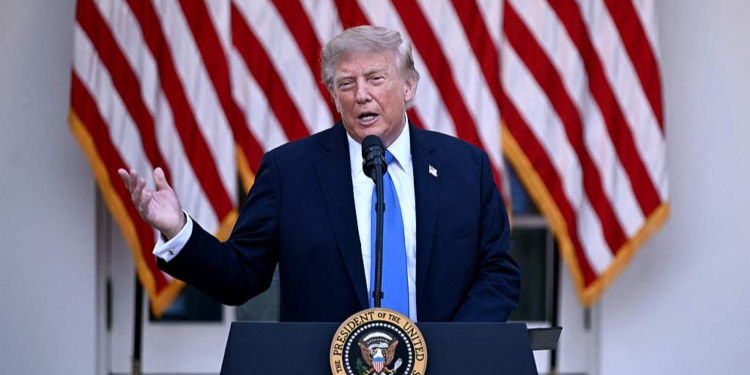
Reuters spoke with a dozen students who described feeling devastated and confused by the Trump administration’s announcement.
In a Venezuela beset by a deep economic crisis amid political strife, Romero said his mother and brother are living off their savings, sometimes struggle to find food and don’t have reliable internet at home.
“To think about myself going back to that conflict, while continuing my classes in a completely unequal playing field with my classmates,” he said. “I don’t think it’s possible.”
And that’s if he could even get there. There are currently no flights between the United States and Venezuela.
WORKING REMOTELY WON’T WORK
At schools that have already announced the decision to conduct classes fully online, students were grappling with the announcement’s implications for their personal and professional lives. Blindsided universities scrambled to help them navigate the upheaval.
Lewis Picard, 24, an Australian second-year doctoral student in experimental physics at Harvard University, has been talking nonstop with his partner about the decision. They are on F-1 visas at different schools.
Harvard said Monday it plans to conduct courses online next year. After the ICE announcement, the university’s president, Larry Bacow, said Harvard was “deeply concerned” that it left international students “few options.”
Having to leave “would completely put a roadblock in my research,” Picard said. “There’s essentially no way that the work I am doing can be done remotely. We’ve already had this big pause on it with the pandemic, and we’ve just been able to start going back to lab.”
It could also mean he and his partner would be separated. “The worst-case scenario plan is we’d both have to go to our home countries,” he said.
‘CAN’T TRANSFER IN JULY’
Aparna Gopalan, 25, a fourth-year anthropology PhD student at Harvard originally from India, said ICE’s suggestion that students transfer to in-person universities is not realistic just weeks before classes begin.
“That betrays a complete lack of understanding of how academia works,” she said. “You can’t transfer in July. That’s not what happens.”
Others were considering leaving their programs entirely if they cannot study in the United States, and taking their tuition dollars with them. International students often pay full freight, helping universities to fund scholarships, and injected nearly $45 billion into the U.S. economy in 2018.
“It doesn’t make much sense to me to pay for an American education, if you’re not really receiving an American education,” said Olufemi Olurin, 25, of the Bahamas, who is earning an MBA at Eastern Kentucky University and wants to pursue a career in healthcare management.
“It’s kind of heartbreaking,” she said. “I’ve been building my life here. As an immigrant, even if you are as law-abiding as it gets, you still are always waiting for the rug to be pulled out from under you.”
Benjamin Bing, 22, from China, who was planning to study computer science at Carnegie Mellon in the fall, said he no longer feels welcome in the United States. He and his friends are exploring the possibility of finishing their studies in Europe.
“I feel like it’s kicking out everyone,” he said, of the United States. “We actually paid tuition to study here and we did not do anything wrong.”
(Reporting by Mimi Dwyer, Humeyra Pamuk and Kristina Cooke; Editing by Mary Milliken and Leslie Adler)