- The pandemic’s heavy toll on people in Peru points to its disproportionate impact on many developing countries.
- The shadow economies and lack of social safety nets in these countries make COVID-19 especially deadly.
Repost from http://weforum.org
Those wondering if the threat of COVID-19 is receding should take a hard look at Peru.
The country, often cited as a poster child for economic development and home to 32 million people, registered more than 2,000 pandemic-related deaths in the first two weeks of June alone. It now has the third-highest reported case total in the World Health Organization’s Americas region, behind the US and Brazil.
Unlike those two bigger countries, Peru was widely recognized for proactive efforts to stem the spread of the coronavirus at an early stage. But while these efforts contributed to a 40% decline in GDP in April compared with the same month last year as official commercial activity dwindled, the outbreak only continued to worsen.
The WHO recently warned that the pandemic is accelerating in a number of low- and middle-income countries similar to Peru – where inadequate healthcare systems are an ongoing problem, and many people are unable to feed their families without risking their lives by continuing to work unofficially.

Peru’s difficulties with COVID-19 result in part from the predominance of its shadow economy. More than half of the country’s non-agricultural workforce is believed to be employed “informally” in a way that generally involves a hand-to-mouth existence and lack of legal protections, yet generates an estimated one-fifth of Peruvian GDP.
Countries with large informal economies have been especially vulnerable because so many people were unable to stop working as the pandemic spread. At least, not without losing their sole source of income, because they lack protective benefits like unemployment insurance.
While many have therefore continued working, others have only been able to avoid similar exposure to COVID-19 by seeing their livelihoods disappear entirely. One survey of Peruvians during the lockdown found that nearly half of those with informal work said they’d simply stopped receiving income entirely, compared with just 16% of those with formal employment.

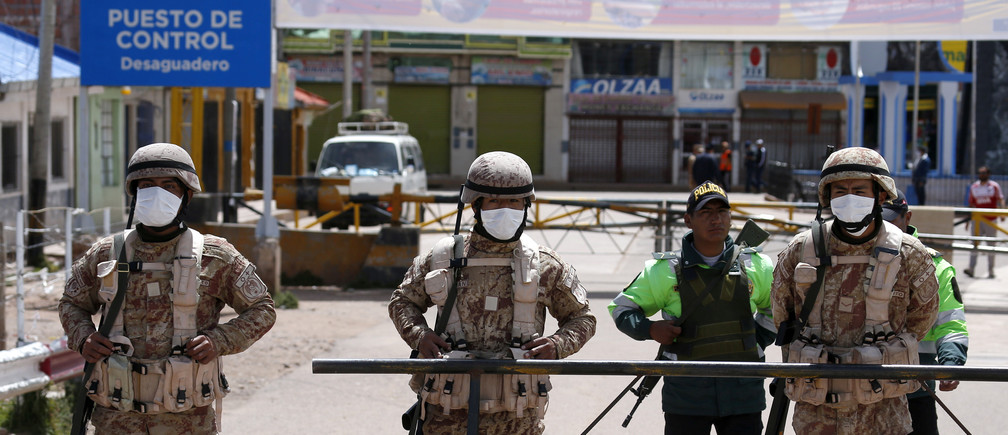
Peru’s president announced one of the earliest coronavirus lockdowns in Latin America in mid-March, and mobilized the army to enforce it. Yet, the impact of COVID-19 has been devastating. This past Sunday, the Archbishop of Lima had his church filled with more than 5,000 portraits of the dead before delivering a homily about a health system based on “business and not on mercy.”
Peru’s experience vividly demonstrates that even as some places attempt to reopen for business and travel, COVID-19 continues to exact a lethal toll on much of the world.
For more context, here are links to further reading from the World Economic Forum’s Strategic Intelligence platform:
- The pandemic has triggered a food crisis in Peru; a survey of families in metropolitan Lima and Callao in the first week of May found that 14% were unable to buy protein-containing food, mostly due to a new lack of financial means, according to this report. (Southern Voice)
- For one medical student, a stint providing medical care in remote Peruvian villages cut off from health services provided a glimpse of what she’d be facing as a resident in US hospitals overwhelmed by the pandemic after her return. (STAT)
- Many developing economies have made tremendous progress, but climate change-induced natural disasters and pandemics can easily expose their lingering lack of resilience, according to this analysis. (Center for Global Development)
- When two non-resident senior fellows at the Brookings Institution issued a call in April for ideas to boost development in low- and middle-income countries to help fight the coronavirus, they received a wave of submissions. (Brookings)
- The pandemic has exposed the predominance of informal economies in many African countries, and underlined a pressing need to formalize work there, according to a former Governor of the Bank of Tanzania. (Institute for New Economic Thinking)
- Some governments are considering providing COVID-19 assistance to firms in exchange for their registration in the formal economy, though direct cash transfers may be the best way to help people where informality pervades, according to this analysis. (LSE)
- Africa’s informal traders have been hit especially hard by COVID-19, according to this report, as 44 of the 54 countries on the continent – where one-third of the people live below the poverty line – have closed their borders. This has prevented many farmers from getting their produce to markets. (New African)
On the Strategic Intelligence platform, you can find visualizations and feeds of expert analysis related to Peru, COVID-19 and hundreds of additional topics. You’ll need to register to view.