Friday, September 18, 2026
Village Voice News
[adning id="37476"]
ADVERTISEMENT
  • Home
  • News
  • Sports
  • Editorial
  • Letters
  • Global
  • Columns
    • Eye On Guyana
    • Hindsight
    • Lincoln Lewis Speaks
    • Future Notes
    • Blackout
    • From The Desk of Roysdale Forde SC
    • Diplomatic Speak
    • Mark’s Take
    • In the village
    • Mind Your Business
    • Bad & Bold
    • The Voice of Labour
    • The Herbal Section
    • Politics 101 with Dr. David Hinds
    • Talking Dollars & Making Sense
    • Book Review 
  • Education & Technology
  • E-Paper
  • Contact Us
No Result
View All Result
  • Home
  • News
  • Sports
  • Editorial
  • Letters
  • Global
  • Columns
    • Eye On Guyana
    • Hindsight
    • Lincoln Lewis Speaks
    • Future Notes
    • Blackout
    • From The Desk of Roysdale Forde SC
    • Diplomatic Speak
    • Mark’s Take
    • In the village
    • Mind Your Business
    • Bad & Bold
    • The Voice of Labour
    • The Herbal Section
    • Politics 101 with Dr. David Hinds
    • Talking Dollars & Making Sense
    • Book Review 
  • Education & Technology
  • E-Paper
  • Contact Us
No Result
View All Result
Village Voice News
No Result
View All Result
Home Global

Health experts clash over use of certain drugs for COVID-19

Staff Reporter by Staff Reporter
November 20, 2020
in Global
FILE - In this Thursday Oct. 15, 2020 file photo, A bottle containing the drug Remdesivir is held by a health worker at the Institute of Infectology of Kenezy Gyula Teaching Hospital of the University of Debrecen in Debrecen, Hungary. Health officials around the world are clashing over the use of certain drugs for COVID-19, leading to different treatment options for patients depending on where they live. The World Health Organization guidelines panel advised against using the antiviral remdesivir for hospitalized patients, saying there’s no evidence it improves survival or avoids the need for breathing machines. (Zsolt Czegledi/MTI via AP, File)

FILE - In this Thursday Oct. 15, 2020 file photo, A bottle containing the drug Remdesivir is held by a health worker at the Institute of Infectology of Kenezy Gyula Teaching Hospital of the University of Debrecen in Debrecen, Hungary. Health officials around the world are clashing over the use of certain drugs for COVID-19, leading to different treatment options for patients depending on where they live. The World Health Organization guidelines panel advised against using the antiviral remdesivir for hospitalized patients, saying there’s no evidence it improves survival or avoids the need for breathing machines. (Zsolt Czegledi/MTI via AP, File)

0
SHARES
0
VIEWS
Share on FacebookShare on Twitter
FILE – In this Thursday Oct. 15, 2020 file photo, A bottle containing the drug Remdesivir is held by a health worker at the Institute of Infectology of Kenezy Gyula Teaching Hospital of the University of Debrecen in Debrecen, Hungary. Health officials around the world are clashing over the use of certain drugs for COVID-19, leading to different treatment options for patients depending on where they live. The World Health Organization guidelines panel advised against using the antiviral remdesivir for hospitalized patients, saying there’s no evidence it improves survival or avoids the need for breathing machines. (Zsolt Czegledi/MTI via AP, File)

AP – Health officials around the world are clashing over the use of certain drugs for COVID-19, leading to different treatment options for patients depending on where they live.

On Friday, a World Health Organization guidelines panel advised against using the antiviral remdesivir for hospitalized patients, saying there’s no evidence it improves survival or avoids the need for breathing machines.

READ ALSO

As freshwater reserves shrink, countries must prepare for a new water reality

U.S. faces global criticism after deploying weapons in space

But in the U.S. and many other countries, the drug has been the standard of care since a major, government-led study found other benefits — it shortened recovery time for hospitalized patients by five days on average, from 15 days to 10.

Within the U.S., a federal guidelines panel and some leading medical groups have not endorsed two other therapies the Food and Drug Administration authorized for emergency use — Eli Lilly’s experimental antibody drug and convalescent plasma, the blood of COVID-19 survivors. The groups say there isn’t enough evidence to recommend for or against them.

Doctors also remain uncertain about when and when not to use the only drugs known to improve survival for the sickest COVID-19 patients: dexamethasone or similar steroids.

And things got murkier with Thursday’s news that the anti-inflammatory drug tocilizumab may help. Like the key WHO study on remdesivir, the preliminary results on tocilizumab have not yet been published or fully reviewed by independent scientists, leaving doctors unclear about what to do.

“It’s a genuine quandary,” said the University of Pittsburgh’s Dr. Derek Angus, who is involved in a study testing many of these treatments. “We need to see the details.”

Dr. Rochelle Walensky, infectious disease chief at Massachusetts General Hospital, agreed.

“It’s really hard to practice medicine by press release,” she said on a podcast Thursday with a medical journal editor. Until the National Institutes of Health’s guidelines endorse a treatment, “I’m really reluctant … to call that standard of care.”

Angus said there are legitimate questions about all of the drug studies.

“It’s not unusual for professional guidelines to disagree with each other, it’s just that it’s all under the microscope with COVID-19,” he said.

The rift over remdesivir, sold as Veklury, by Gilead Sciences Inc., is the most serious. The WHO guidelines stress that the drug does not save lives, based heavily on a WHO-sponsored study that was larger but much less rigorous than the U.S.-led one that found it had other benefits.

The drug is given through an IV for around five days, and its high cost and lack of “meaningful effect” on mortality make it a poor choice, the WHO panel concluded.

Gilead charges $3,120 for a typical treatment course for patients with private insurance and $2,340 for people covered by government health programs in the U.S. and other developed countries. In poor or middle-income countries, much cheaper versions are sold by generic makers.

This week, the Institute for Clinical and Economic Review, a nonprofit group that analyzes drug prices, said remdesivir should be priced around $2,470 for hospitalized patients with moderate to severe disease because of the cost savings from fewer days of care. However, it’s worth only $70 for patients hospitalized with milder disease, the group concluded.

Price also may be driving lower demand. In October, U.S. health officials said that hospitals had bought only about one-third of the doses of remdesivir that they were offered over the previous few months, when the drug was in short supply. Between July and September, 500,000 treatment courses were made available to state and local health departments but only about 161,000 were bought.

In a separate development, the FDA on Thursday gave emergency authorization to use of another anti-inflammatory drug, baricitinib, to be used with remdesivir. Adding baricitinib shaved an additional day off the average time to recovery for severely ill hospitalized patients in one study.

Lilly sells baricitinib now as Olumiant to treat rheumatoid arthritis, the less common form of arthritis that occurs when a mistaken or overreacting immune system attacks joints, causing inflammation. An overactive immune system also can lead to serious problems in coronavirus patients.
ShareTweetSendShareSend

Related Posts

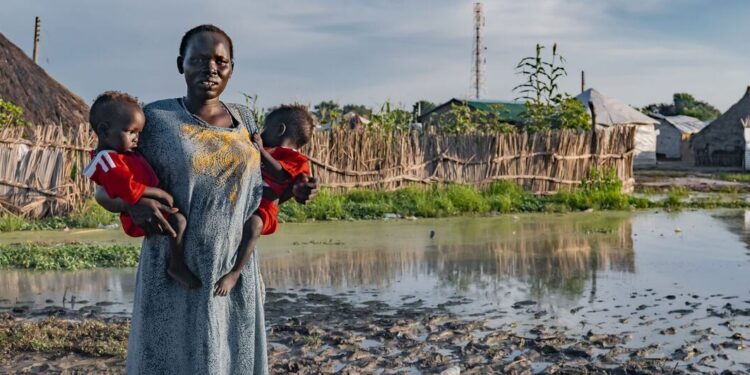
© UNICEF A woman holds her children in front of her flood-affected house in South Sudan.
Global

As freshwater reserves shrink, countries must prepare for a new water reality

by Admin
September 17, 2026

“This is not a single bad year, but a persistent decade-long signal,” said Celeste Saulo, Secretary-General of the World Meteorological...

Read moreDetails
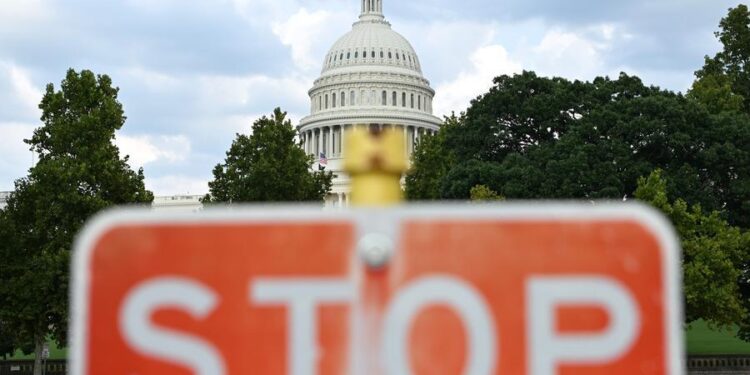
This photo, taken on Aug. 28, 2026, shows a stop sign with the U.S. Capitol building in the background in Washington, D.C., the United States. (Xinhua/Li Rui)
Global

U.S. faces global criticism after deploying weapons in space

by Admin
September 17, 2026

WASHINGTON,  (Xinhua) -- The United States faces global doubts and criticism after announcing for the first time that it has...

Read moreDetails
A drone photo taken on Sept. 8, 2026 shows harvesters working in a rice field of Youyi Farm Co., Ltd. under Beidahuang Group in Shuangyashan, northeast China's Heilongjiang Province. (Xinhua/Wang Song)
Global

China unveils crop farming plan to boost grain capacity by 2030

by Admin
September 17, 2026

BEIJING, Sept. 17 (Xinhua) -- China will steadily enhance its comprehensive grain production capacity by 2030 and hold the bottom...

Read moreDetails
Next Post
FILE - In this Nov. 10, 2020, file photo President-elect Joe Biden smiles as he speaks at The Queen theater in Wilmington, Del. President-elect Biden turns 78 on Friday, Nov. 20. (AP Photo/Carolyn Kaster, File)

Birthday time: Biden turns 78, will be oldest U.S. president


EDITOR'S PICK

(FILES) In this file photo taken on November 09, 2018 Cuba's President Miguel Diaz-Canel Bermudez (C) speaks during a meeting with Vietnamese Prime Minister Nguyen Xuan Phuc (not pictured) at the Government Office in Hanoi. - Born after the victory of the 1959 revolution, Miguel Diaz-Canel, president and now first secretary of the Communist Party, embodies the new generation in power in Cuba, more connected but not necessarily more flexible. (Photo by LUONG THAI LINH / POOL / AFP)

CUBA | “Independence or Death”: Díaz-Canel Fires Back as Trump Floats a “Friendly Takeover” of Cuba

February 28, 2026

Guyana to receive first set of COVID-19 vaccines in February

January 31, 2021

OP-ED: We Are Being Ruled by a Cabal of Villains, Let’s Take our Country Back!

May 7, 2025
Students of the Hosororo Primary School (Newsroom photo)

Editorial: A New School Year, A New Chance to Build the Future

August 30, 2026

© 2024 Village Voice

No Result
View All Result
  • Home
  • News
  • Sports
  • Editorial
  • Letters
  • Global
  • Columns
    • Eye On Guyana
    • Hindsight
    • Lincoln Lewis Speaks
    • Future Notes
    • Blackout
    • From The Desk of Roysdale Forde SC
    • Diplomatic Speak
    • Mark’s Take
    • In the village
    • Mind Your Business
    • Bad & Bold
    • The Voice of Labour
    • The Herbal Section
    • Politics 101 with Dr. David Hinds
    • Talking Dollars & Making Sense
    • Book Review 
  • Education & Technology
  • E-Paper
  • Contact Us

© 2024 Village Voice