By Ban Barkawi
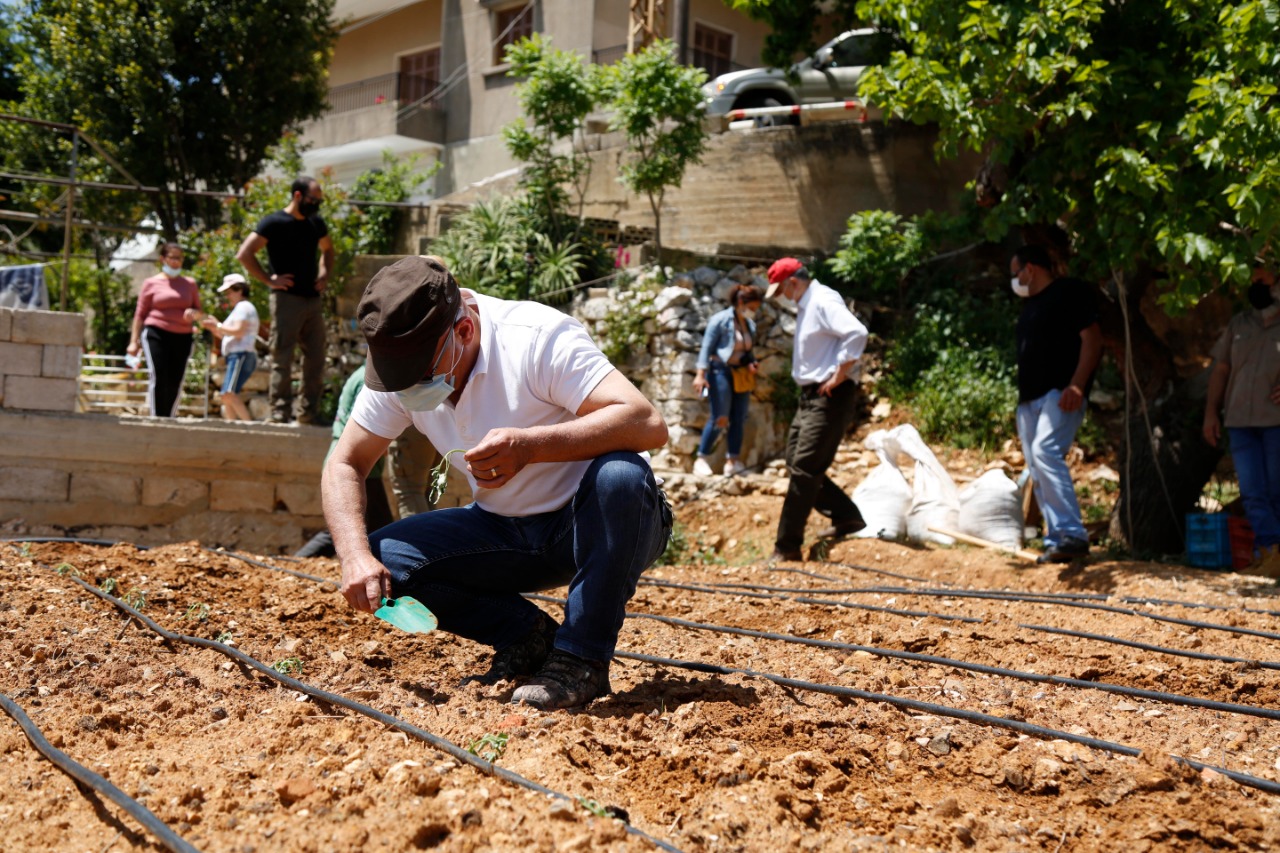
AMMAN (Thomson Reuters Foundation) – As Lebanon’s coronavirus lockdown puts further strain on its already shrinking workforce and compounds dire food shortages, insurance specialist Fares Mdawar has invested his free time into converting the patch of land by his home into a farm.
In the mountainous district of Keserwan, north of the capital Beirut, about 400 families have joined Mdawar, 62, to grow vegetables and other produce under a new initiative to promote home agriculture and self-sufficiency.
“I’m from the mountains and my family farmed their entire lives, but we no longer farm,” said Mdawar, one of the beneficiaries of the Ghaletna project, which since March has been giving families seedlings, training and other resources.
“It’s not my profession, but I have this land and because of circumstances caused by coronavirus and job scarcity, we got excited about this project.”
The initiative, which means “our crop” in Arabic, was founded in in March by university professor and former social affairs minister Selim Sayegh, and receives a mix of public and private funding.
With lockdowns to slow the spread of COVID-19 closing borders and stalling transportation networks around the world, people in import-dependent cities are turning to urban farming as they realize how easily their food supplies can be disrupted.
As inflation and unemployment soar in Lebanon – where food accounts for nearly a fifth of total imports, according to data from the World Bank – the movement to promote home-based farming has been gaining popularity.
As well as the Ghaletna project, Oscar-nominated Lebanese filmmaker Nadine Labaki joined the call to grow-your-own.
In May, she launched the “Plant of my Heart” campaign, bringing together several sustainable agriculture initiatives to help prospective home farmers.
“Everything is affected, everything is more expensive. That’s why local production – anything people can do – is so important,” Mdawar said.
FOOD CRISIS
By the time the novel coronavirus reached Lebanon in March, shutting down businesses and disrupting imports, a financial crisis exacerbated by months of political instability had already taken a toll on the country of about 7 million people.
More than 220,000 jobs were lost between October and February, according to research firm InfoPro, and banks have imposed capital controls as dollars have become scarce and the value of the Lebanese pound has fallen by more than half.
Staple food prices have gone up in recent months, with the cost of rice rising by 41% and sugar by 50% between September and February, according to government statistics.
The economy ministry has set up new plans to monitor costs, protect consumers and prevent illicit trade in an effort to combat price hikes, ministry media adviser Sally Haddad told the Thomson Reuters Foundation.
Last month, the Lebanese central bank issued a decision allowing importers to acquire essential items – such as rice and grains – at a fixed exchange rate of 3,200 pounds to the dollar, which is expected to lower food prices soon, Haddad said.
‘CONNECT PEOPLE TO THEIR LAND’
While food prices continue to soar in Lebanon’s frail economic climate, poverty is affecting nearly everyone, said Sayegh of Ghaletna.
“There’s an issue of food security – communities are largely lacking resources that have become more expensive than the Lebanese people can afford,” he told the Thomson Reuters Foundation in a phone interview.
“We want to connect people to their land again and motivate them.”
Traditionally, homeowners from previous generations would build multi-level farming basins in small, often steep, plots of land adjacent to their houses, but as a consumer economy flourished, people stopped farming, Sayegh said.
Using its network of about 80 volunteers, Ghaletna reached out to more than 70 villages across Keserwan to recruit the first group of families for its pilot project, identifying those who had the capacity to farm and those who needed help.
The first set of farmers under the initiative should be able to begin harvesting their yield this month, Sayegh said.
FREE TO FARM
In his family’s 50-square-meter (538-square-foot) plot, electrical engineering graduate Joe Daccache, 22, is growing parsley, rocket, zucchini and cucumbers.
“At this point, we’re producing enough just for the household,” said Daccache, who lives with his family of five.
Families with larger plots might choose to sell their surplus in local markets in the future, but for Daccache home farming is a way to relieve at least some of the burden of paying extortionate food prices.
The real value will come from conserving or freezing portions of his harvest to use out of season, when items in the market can cost up to three times their original price, he said.
Sayegh has future plans to expand the project if the results of the pilot are promising.
People have even reached out to Ghaletna offering their land for free to be farmed so that its yield can be distributed to families in need, he said.
As Lebanon eases restrictions and re-opens businesses, there’s a risk people might not have the same time to tend to their land, said Daccache.
But he expects as more people lose their jobs in the long term, they’ll have to turn to more self-sufficient practices like home farming.
“We’re now opening our eyes to the large amount of consumption we had been relying on without thinking of sustainability for the future,” he said.
Credit the Thomson Reuters Foundation, the charitable arm of Thomson Reuters, that covers the lives of people around the world who struggle to live freely or fairly.