Saturday, October 17, 2026
Village Voice News
ADVERTISEMENT
  • Home
  • News
  • Sports
  • Editorial
  • Letters
  • Global
  • Columns
    • Eye On Guyana
    • Hindsight
    • Lincoln Lewis Speaks
    • Future Notes
    • Blackout
    • From The Desk of Roysdale Forde SC
    • Diplomatic Speak
    • Mark’s Take
    • In the village
    • Mind Your Business
    • Bad & Bold
    • The Voice of Labour
    • The Herbal Section
    • Politics 101 with Dr. David Hinds
    • Talking Dollars & Making Sense
    • Book Review 
  • Education & Technology
  • E-Paper
  • Contact Us
No Result
View All Result
  • Home
  • News
  • Sports
  • Editorial
  • Letters
  • Global
  • Columns
    • Eye On Guyana
    • Hindsight
    • Lincoln Lewis Speaks
    • Future Notes
    • Blackout
    • From The Desk of Roysdale Forde SC
    • Diplomatic Speak
    • Mark’s Take
    • In the village
    • Mind Your Business
    • Bad & Bold
    • The Voice of Labour
    • The Herbal Section
    • Politics 101 with Dr. David Hinds
    • Talking Dollars & Making Sense
    • Book Review 
  • Education & Technology
  • E-Paper
  • Contact Us
No Result
View All Result
Village Voice News
No Result
View All Result
Home Feature

Plantation Enmore: A History of African and Indian Laborers’ Struggles for Freedom and Dignity

Staff Writer by Staff Writer
March 19, 2023
in Feature, Village Education, village stories
0
SHARES
0
VIEWS
Share on FacebookShare on Twitter

Plantation Enmore was a well-known cotton and sugar plantation in British Guiana, now known as Guyana. Its owner, Henry Porter, arrived from Tobago in 1782 and named it after his ancestral home in England. However, long before Indian indentured laborers arrived on the plantation, Africans were brought to Guyana as enslaved people by the British colonizers to work on sugar plantations along the coast. Plantation Enmore was one such plantation where they endured harsh and inhumane conditions until slavery was abolished in 1834. They still had to work as apprentices for four more years until they were fully freed. After emancipation, many Africans left the plantations and bought their own lands to form villages. One of the first such purchases was made by 83 laborers from five estates – Dochfour, Ann’s Grove, Hope, Paradise and Enmore – who bought Plantation Northbrook for $10,000 in 1839.

To replace the African labor force, the British colonizers brought indentured laborers from India and other parts of Asia. The first ship carrying Indian laborers arrived in Guyana in 1838. They were contracted to work on the plantations for five years and then return to their homeland or stay in Guyana as free citizens. Many of them chose to stay and settled in villages near the plantations. One of these villages was Enmore, which was originally a cotton and sugar plantation. The Indian laborers lived in logies (mud huts) until they were granted plots of land in the late 1940s or early 1950s. However, they also faced exploitation and oppression by the plantation owners and managers.

READ ALSO

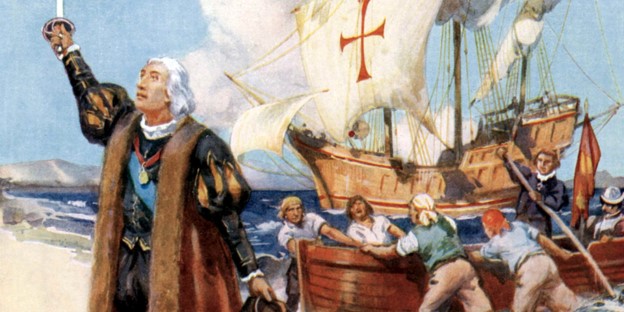
On This Day In History: Columbus reaches the “New World”

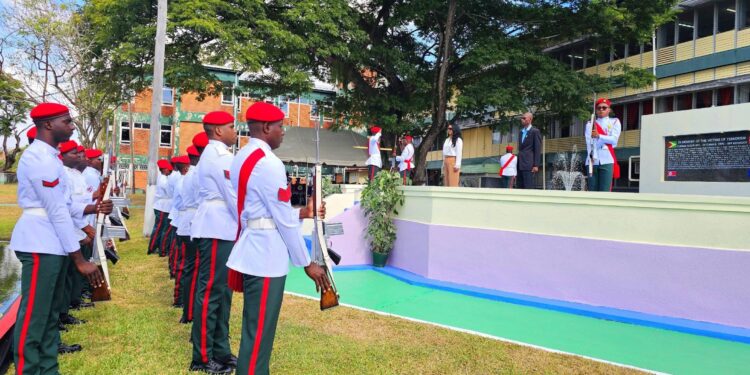
Fifty Years Later, Guyana Remembers Its Eleven Victims of Cubana Flight 455

Although Africans were forced to work on Plantation Enmore before Indian laborers, both groups faced struggles for freedom and dignity and for Africans, a struggle for freedom from brutality. The Enmore martyrs incident is a significant event that marked a turning point in industrial relations within the sugar industry and heralded the improvement of working conditions. Five sugar workers were shot and killed by the police during a strike for better wages and working conditions. The strike was led by the Guyana Industrial Workers Union (GIWU), which challenged the authority of the Man Power Citizen’s Association (MPCA), which was seen as ineffective and corrupt by the workers. The strike also opposed the ‘cut and load’ system that forced cane cutters to both cut and load the sugar punts with cane they cut.
ShareTweetSendShareSend

Related Posts

Christopher Columbus (History)
Feature

On This Day In History: Columbus reaches the “New World”

by Admin
October 12, 2026

(History)- After sailing across the Atlantic Ocean, Italian explorer Christopher Columbus sights a Bahamian island on October 12, 1492, believing...

Read moreDetails
Cubana Air Disaster Monument at the University of Guyana (Guyana Chronicle photo)
Feature

Fifty Years Later, Guyana Remembers Its Eleven Victims of Cubana Flight 455

by Admin
October 11, 2026

By Mark DaCosta-On the afternoon of Wednesday, 6 October 1976, a Douglas DC-8 lifted off the runway at Seawell Airport...

Read moreDetails
Kristal Aiyambi Alexis James
Feature

Kristal James: From Heavy-Duty Equipment Operator to Pageant Trailblazer

by Admin
October 8, 2026

At just 18 years old, Kristal Aiyambi Alexis James is already challenging expectations of what a young woman can be....

Read moreDetails
Next Post
Charles Ramson Snr

Opposition says Charles Ramson Snr. unfit to hold office as Commissioner of Information


EDITOR'S PICK

Former President David Granger

Fmr President Granger revisits the 1964 Mahaicony murders, PPP Campaign of Terrorism

July 21, 2024
Assistant Commissioner of Police Calvin Brutus

Asst Comm of Police Brutus Files Multi-Million Dollar Lawsuit Against Police Force, SOCU

November 21, 2024
Former President David Granger

PNCR Secures Granger’s Unwavering Support Ahead of September Vote

June 23, 2025

WORD OF THE DAY: CHASTISE

November 26, 2024

© 2024 Village Voice

No Result
View All Result
  • Home
  • News
  • Sports
  • Editorial
  • Letters
  • Global
  • Columns
    • Eye On Guyana
    • Hindsight
    • Lincoln Lewis Speaks
    • Future Notes
    • Blackout
    • From The Desk of Roysdale Forde SC
    • Diplomatic Speak
    • Mark’s Take
    • In the village
    • Mind Your Business
    • Bad & Bold
    • The Voice of Labour
    • The Herbal Section
    • Politics 101 with Dr. David Hinds
    • Talking Dollars & Making Sense
    • Book Review 
  • Education & Technology
  • E-Paper
  • Contact Us

© 2024 Village Voice