The International Labour Organisation (ILO) has intensified its call for stronger wage policies across Latin America and the Caribbean, bringing together representatives of governments, employers and workers from 15 countries to confront persistent low pay, labour-market inequalities and the growing disconnect between economic development and workers’ living standards.
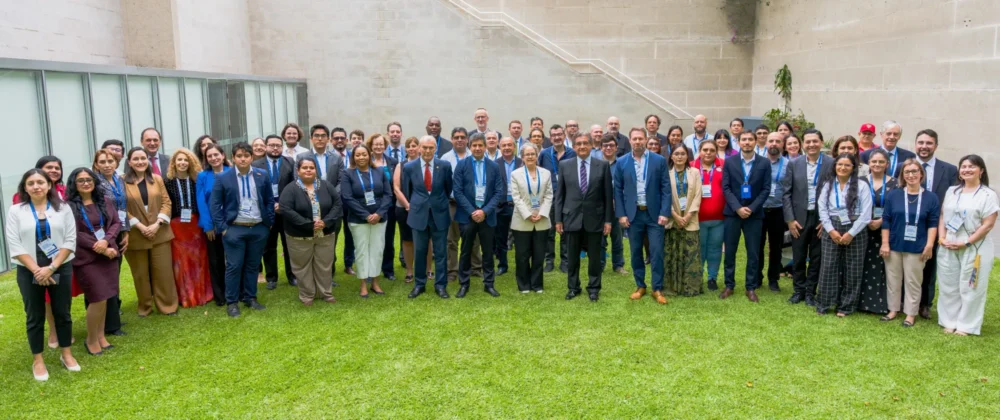
The four-day regional conference, held in Lima, Peru, from November 24–27, focused on strengthening wage policies and advancing the implementation of living wages across the region. Organised under the ILO’s Living Wages Programme, the discussions examined how governments and social partners can develop evidence-based wage-setting systems that ensure workers receive remuneration sufficient to support a decent standard of living.
The conference comes at a time when workers across much of Latin America and the Caribbean continue to face the combined pressures of rising living costs, low wages, informal employment, insecure working arrangements and unequal access to economic opportunities. For many households, employment does not necessarily guarantee financial security, with earnings frequently insufficient to meet the costs of housing, food, healthcare, transportation, education and other essential needs.
The ILO’s Regional Director for Latin America and the Caribbean, Ana Virginia Moreira Gomes, emphasised that living wages must be understood as more than a numerical target.
She said the discussion was not simply about establishing a figure but about ensuring that wage policies contribute to improving the living conditions of workers and their families.
The regional discussions brought together representatives from Argentina, The Bahamas, Belize, Brazil, Chile, Colombia, Costa Rica, Ecuador, Guatemala, Honduras, Mexico, Panama, Paraguay, Peru and Uruguay.
The participation of governments, employers’ organisations and trade unions was particularly significant because wage determination remains one of the most contentious issues in industrial relations. While employers frequently raise concerns about labour costs, productivity and competitiveness, workers’ organisations argue that wages must reflect the actual cost of living and provide sufficient income to sustain households.
The ILO’s initiative seeks to strengthen dialogue between these parties rather than impose a single wage-setting formula across countries with different economic circumstances.
What constitutes a living wage?
The discussions build on an important international development in February 2024, when an ILO Meeting of Experts representing governments, employers and workers reached a common understanding of what constitutes a living wage. The conclusions were subsequently endorsed by the ILO Governing Body in March 2024.
Under the agreed definition, a living wage is the level of remuneration necessary to provide workers and their families with a decent standard of living, taking into account national circumstances and the work performed during normal working hours.
The framework recognises that a living wage should enable workers to meet essential needs without having to rely on excessive overtime, multiple jobs or other arrangements that undermine their health and family life.
It also distinguishes the concept of a living wage from the statutory minimum wage. Although minimum-wage legislation establishes a legal floor for remuneration, that minimum does not automatically guarantee that workers can afford a decent standard of living.
The ILO’s approach therefore places emphasis on reliable data, transparent calculations, regular wage reviews and meaningful participation by workers and employers in determining appropriate remuneration.
Wage-setting institutions and collective bargaining
During the Lima conference, participants examined methodologies for estimating living wages, the economic factors influencing remuneration and the institutional arrangements required to establish and implement wage policies.
Discussions also covered the importance of collective bargaining, tripartite social dialogue and stronger institutions capable of ensuring that wage decisions are based on reliable evidence.
Peru’s Minister of Labour and Employment Promotion, Juan Manuel Sheput Moore, underscored the importance of remuneration that allows workers to meet their needs, maintain purchasing power and enjoy reasonable living conditions.
Patrick Belser, Chief of the ILO’s Inclusive Labour Markets, Labour Relations and Working Conditions Branch, explained that living-wage estimates must translate into practical improvements for workers.
He cautioned against treating a living-wage calculation as a substitute for existing wage-setting institutions. Rather, the objective is to strengthen those institutions through better information, technical capacity and more effective decision-making.
The distinction is important. Establishing a living-wage figure without mechanisms to influence wage negotiations, minimum-wage reviews and labour-market policies could leave workers with little practical benefit.
Fabio Bertranou, Deputy Regional Director of the ILO’s Regional Office for Latin America and the Caribbean, outlined four priorities for advancing the living-wage agenda:
- Strengthening wage-setting institutions.
- Addressing the structural causes of low labour incomes.
- Improving data collection and technical capacities.
- Promoting cooperation and partnerships among governments, employers and workers.
Bertranou also stressed that wage policies cannot operate in isolation. They must be linked to employment creation, productive development, formalisation of the workforce and stronger social protection systems.
He highlighted the importance of addressing gender inequalities and productivity gaps, which continue to affect the distribution of income and opportunities across the region.
Women and vulnerable workers disproportionately affected
The regional wage debate also has important implications for women, informal workers and employees in low-paid sectors.
Women frequently encounter barriers to equal pay, occupational advancement and access to secure employment. They are also disproportionately represented in some lower-paid occupations and informal working arrangements.
Domestic workers, agricultural workers, employees in hospitality, retail and other service industries, and workers without formal contracts can face particular difficulties securing adequate remuneration and employment protections.
The ILO’s position is that improving wage policies must be accompanied by efforts to reduce discrimination, strengthen labour inspections, promote formal employment and ensure that workers can exercise their rights without fear of retaliation.
For trade unions, the living-wage agenda also reinforces the importance of collective bargaining. Workers must have meaningful opportunities to negotiate wages and working conditions rather than remain dependent solely on decisions made by employers or government authorities.
Implications for the Caribbean and Guyana
Although Guyana was not among the 15 countries listed as participants in the Lima conference, the discussions have particular relevance to the country’s rapidly changing economy.
Oil production and expanding investment have transformed Guyana’s economic landscape, creating new employment opportunities across construction, infrastructure, manufacturing, transportation, services and the energy sector.
However, the central labour question is whether the benefits of economic expansion are translating into improved wages, purchasing power and working conditions for ordinary Guyanese.
Economic growth figures alone cannot establish whether workers are experiencing meaningful improvements in their standard of living. Rising national production and government revenues must be considered alongside household expenditure, wage levels, inflation, employment security and access to social protection.
For Guyana’s trade union movement, the ILO’s emphasis on living wages provides an important framework for examining whether current wage arrangements adequately reflect the cost of living.
The issue is particularly relevant to workers earning statutory minimum wages and those employed in sectors where wages have not necessarily kept pace with increases in food prices, housing costs, transportation and other household expenses.
It also raises questions about whether workers in the country’s expanding oil-related economy are receiving sufficient training, fair remuneration and opportunities for advancement.
The ILO’s conference reinforces the principle that economic growth should not be measured solely by investment, production and government revenue. The quality of employment, the distribution of economic gains and the ability of workers to maintain a decent standard of living must also be considered.
Training and follow-up
Following the regional discussions, technical training continued through November 27 to help participating representatives deepen their understanding of living-wage estimation methodologies and identify areas where countries may require additional technical assistance.
The conference was conducted under the auspices of the ILO’s Global Coalition for Social Justice, with financial support from the governments of Germany and the Netherlands.
The broader objective is to help countries move from discussions about living wages to practical policies supported by reliable information, institutional capacity and cooperation among governments, employers and trade unions.
The ILO has not proposed one uniform wage for all countries. Instead, it is encouraging national authorities to establish wage-setting arrangements that reflect their respective economic conditions while ensuring that workers’ basic needs and rights are recognised.
For Caribbean governments and trade unions, the challenge will be translating these discussions into national policies, stronger collective bargaining arrangements and wage adjustments that genuinely improve workers’ circumstances.
Ultimately, a country’s economic success cannot be assessed only by the size of its economy or the wealth generated by its industries. It must also be measured by whether the people whose labour drives that growth can afford decent housing, adequate food, healthcare, education and a reasonable quality of life.
The ILO’s message from Lima is that decent work must provide more than employment. It must provide workers with the means to live with dignity.