The Guyana government has poured billions of dollars into the Guyana Power and Light (GPL) Inc. over the past six years, ostensibly to strengthen electricity generation, expand the national grid and shield consumers from rising fuel costs. Yet prolonged blackouts, mounting public frustration and repeated demands for explanations are exposing a troubling disconnect between public expenditure and the reliability of electricity services.
The figures are substantial. Between 2020 and 2023, the government provided more than G$10 billion in capital investment to GPL, partly to help the utility absorb high international fuel prices and prevent those costs from being passed directly to consumers through increased electricity tariffs.
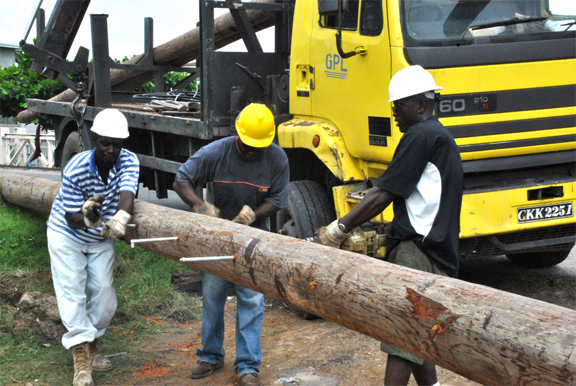
That commitment was followed by a reported G$28.1 billion investment since 2020 in expanding generation, transmission and distribution infrastructure. According to a Guyana Standard report published on October 17, 2024, the investment added 127.7 megawatts (MW) of generating capacity to the GPL grid.
The government presented the spending as evidence of its efforts to address longstanding electricity constraints and accommodate growing demand.
However, increased generating capacity does not automatically guarantee reliable electricity. The system also requires properly maintained transmission lines, substations, distribution networks, adequate backup arrangements and competent operational management.
Those requirements are becoming increasingly difficult to ignore.
In 2025, another G$18 billion was allocated to support GPL’s fuel costs, within a wider G$88 billion electricity-generation initiative. The objective was to cushion consumers against international fuel-price volatility and maintain existing electricity rates.
Now, the government is seeking another substantial injection of public funds.
In November 2026, Finance Minister Dr Ashni Singh presented supplementary financial papers to the National Assembly, including a request for G$8 billion for GPL to offset higher fuel costs. The government attributed the additional expenditure to increases in international oil prices during the year.
While protecting consumers from escalating fuel costs is a legitimate policy objective, the recurring need for substantial financial assistance raises questions about GPL’s long-term financial sustainability and the effectiveness of its operations.
Fuel subsidies can stabilise electricity tariffs, but they cannot repair defective equipment, strengthen vulnerable substations or compensate for inadequate maintenance.
The central question is whether billions of dollars in public investment are translating into a dependable electricity supply.
Berbice blackout exposes the problem
The prolonged blackout that crippled sections of East Berbice in November has brought these concerns into sharp focus.
Residents and businesses endured approximately 45 hours without electricity following a failure at GPL’s Canefield Substation. The disruption affected thousands of customers, interrupted business operations and created difficulties for households and other essential services, including water supply.
GPL subsequently identified an insulation failure involving equipment associated with the substation’s grounding transformer. The company explained that replacement and testing were necessary before electricity could safely be restored.
The Berbice Chamber of Commerce and Development Association demanded answers, calling for greater transparency and a clear explanation of the failure. Businesses reported financial losses, including spoiled perishable goods, while households endured prolonged disruption.
President Irfaan Ali subsequently described the outage as unacceptable, apologised to affected residents and ordered an investigation into the failure and GPL’s response.
He also announced a 50 per cent reduction in November electricity bills for customers affected by the outage.
Although the concession offers some financial relief, it does not compensate fully for business losses, spoiled goods, interrupted services or the inconvenience suffered by thousands of residents.
Nor does it answer the fundamental question: why was the electricity system unable to prevent or adequately manage such a prolonged disruption?
An investigation must establish more than the immediate technical cause. It must examine maintenance records, equipment inspections, contingency arrangements, emergency response procedures and whether management acted appropriately.
Demand is rising, but is the network ready?
The pressure on GPL’s infrastructure is also increasing.
In September 2026, GPL Executive Management Committee Team Leader Kesh Nandlall disclosed that peak electricity demand had risen from 221 MW in 2025 to approximately 257 MW in 2026.
The heaviest consumption occurs between 7 p.m. and 9 p.m., placing additional pressure on the distribution network.
This raises questions about whether infrastructure improvements are keeping pace with Guyana’s expanding population, commercial activity and electricity consumption.
The government has committed substantial resources to the wider energy sector. Budget 2026 allocated G$119.4 billion to energy, with G$44.7 billion reportedly spent during the first half of the year.
A major component is the 300 MW Gas-to-Energy project at Wales, West Bank Demerara, which is intended to reduce dependence on imported fuel and lower electricity-generation costs. The first phase is expected to provide additional generating capacity, with completion of the combined-cycle facility projected for the first half of 2027.
However, the promise of cheaper electricity in the future does not excuse deficiencies in the system consumers depend on today.
The International Monetary Fund, in its 2026 Article IV consultation, also highlighted electricity instability and outages affecting businesses. It underscored the importance of greater transparency in reporting the costs and financial obligations associated with the Gas-to-Energy project and called for more timely publication of financial statements.
These concerns reinforce the need for proper oversight of public expenditure.
Where is the accountability?
Guyanese taxpayers deserve a comprehensive accounting of the billions committed to GPL. They should know how much has been spent on fuel subsidies, how much has gone towards infrastructure, which projects have been completed and whether those investments have delivered measurable improvements.
The government cannot continually announce billions in allocations and infrastructure expansion while consumers remain vulnerable to prolonged electricity failures without demanding clear performance assessments from the utility’s management.
The figures represent different spending categories and periods and should not simply be added together. Nevertheless, they demonstrate the scale of public resources committed to the electricity sector.
The Berbice blackout should therefore serve as a wake-up call, not another incident followed by apologies, temporary concessions and promises of improvement.
After years of substantial public investment, GPL must be held accountable for its operational performance, maintenance standards and quality of service.
Guyanese are not simply asking for electricity bills to remain affordable. They are demanding electricity when they switch on their lights, operate their businesses and depend on essential services.
Billions have been spent. The public deserves to see the results.