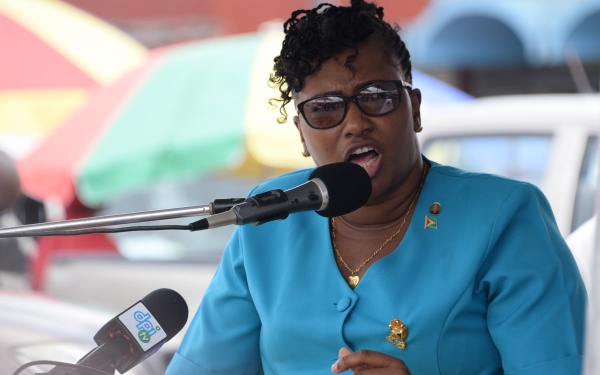
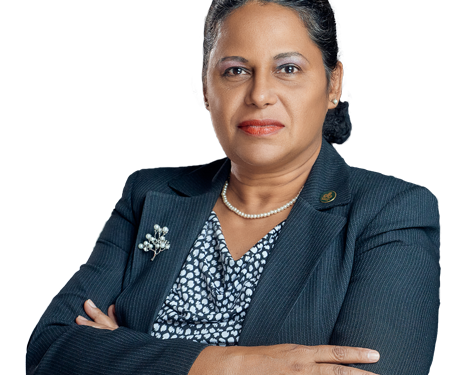
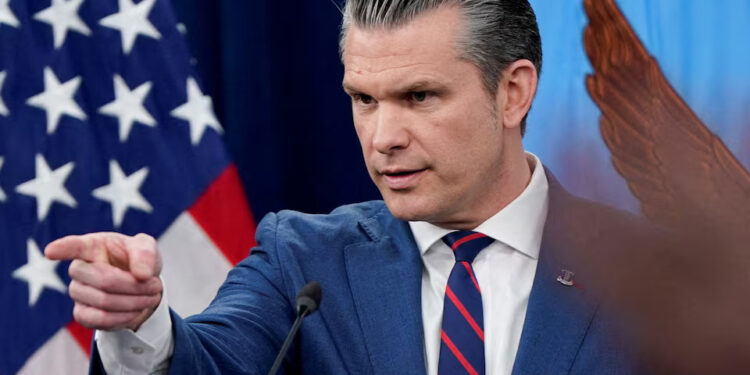
Forward Guyana Movement (FGM) leader and lone parliamentarian Amanza O.R. Walton has called on the Government of Guyana to urgently seek clarification from the United States Government over remarks by US Secretary of War Pete Hegseth concerning Venezuela’s borders and territory.
In a statement issued on November 20, Walton said Guyanese had legitimate concerns about the implications of Hegseth’s comments and that the Government had a responsibility to obtain clear answers and communicate them to the public.
She was responding to remarks reportedly made by Hegseth during a November 18 visit to Caracas, where the United States and Venezuela announced a renewed military partnership.
According The Associated Press, Hegseth discussed cooperation between the two countries, including security and defence reforms, in the context of efforts to address criminal groups and narcoterrorism.
The US Department of War, in its account of the visit published on November 19, reported that Hegseth said peace would require Venezuela to “regain its borders and territory,” together with its national identity.
Walton acknowledged that the remarks were made in the context of cooperation against security threats but argued that references to Venezuela recovering its territory required an explanation, particularly given the longstanding territorial controversy between Guyana and Venezuela.
“Guyanese are gravely concerned about these developments and the questions they raise for our sovereignty and territorial integrity. The Government of Guyana has a duty to address and assuage those concerns by urgently seeking clear answers and communicating them to the nation.”
The FGM leader also welcomed a November 19 statement by the United States Embassy in Georgetown reaffirming Washington’s support for the 1899 Arbitral Award, which established the land boundary between Guyana and Venezuela.
The Embassy stated that the boundary should be respected unless or until a new boundary is established by a competent legal body or with the consent of both parties.
Walton-Desir described the reaffirmation as welcome, noting the longstanding relationship between Guyana and the United States and Washington’s expressed support for Guyana’s sovereignty and territorial integrity.
However, she said the Embassy’s statement did not remove the need for the Government to establish precisely what Hegseth meant.
“In light of these remarks and the subsequent statement by the United States Embassy, we call on the Government of Guyana to seek urgent clarification from the United States Government as to exactly what Secretary Hegseth meant by Venezuela recovering its territory and regaining its borders and territory.”
Walton reiterated the FGM’s support for Guyana’s case before the International Court of Justice (ICJ), maintaining that the 1899 Arbitral Award constitutes a “full, perfect and final settlement” of the land boundary between the two countries.
Guyana took the matter to the ICJ after Venezuela intensified its longstanding claim to the Essequibo region, which represents approximately two-thirds of Guyana’s territory. The Court is being asked to affirm the validity of the 1899 Award and the boundary it established. Guyana has rejected Venezuela’s attempts to resolve the controversy through negotiations outside the judicial process.
Walton said she rejected any negotiated settlement of the controversy over the Award and was awaiting the Court’s judgment.
She further urged the Government to consult the parliamentary Opposition and provide the public with a full account of its diplomatic engagement with Washington.
“The Government cannot treat the Guyanese people as bystanders on a matter that goes to the heart of our sovereignty and territorial integrity. It must engage the Opposition in timely and meaningful consultation and address the nation fully and frankly.”
She added that citizens were entitled to know what concerns the Government had raised with the United States, what clarification it had requested and what responses or assurances it had received.
“On a matter of such consequence, silence and ambiguity simply will not suffice,” she said.