Guyana’s offshore oil industry has reached another milestone with the commencement of production from the Errea Wittu, the country’s fifth floating production, storage and offloading (FPSO) vessel. However, as daily production capacity climbs towards 1.15 million barrels, fundamental questions remain about the country’s share of the wealth, public accountability, environmental protection and whether ordinary Guyanese are benefiting from the petroleum boom.
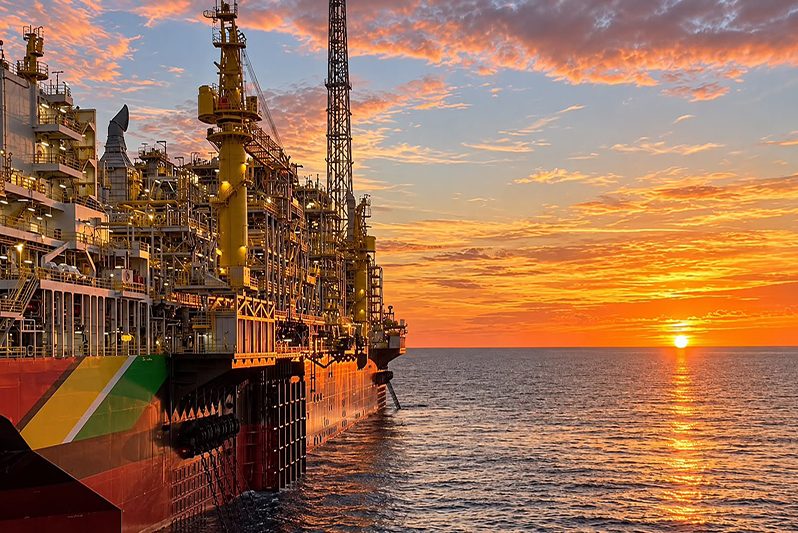
The Ministry of Natural Resources announced on Monday that the Errea Wittu had achieved first oil, marking the start of production from the Uaru Development, the fifth offshore project in the Stabroek Block.
The vessel is expected to produce approximately 250,000 barrels of crude oil daily, increasing Guyana’s total production capacity from just over 900,000 barrels to approximately 1.15 million barrels per day.
Built by Japanese shipbuilder MODEC, the vessel will operate approximately 200 kilometres offshore Guyana. It has storage capacity for two million barrels of crude oil and is designed to process up to 540 million cubic feet of associated gas daily.
Named after a Warrau word meaning “abundance”, the Errea Wittu will develop the Snoek, Mako and Uaru resources through 44 production and injection wells across as many as 10 drill centres.
The milestone further reinforces Guyana’s emergence as a major oil producer. Yet, the expansion also raises a more pressing question: how much of this extraordinary resource wealth is translating into meaningful and lasting improvements in the lives of ordinary citizens?
Who captures the oil wealth?
The expansion brings renewed scrutiny to the 2016 Production Sharing Agreement (PSA), which governs petroleum operations in the Stabroek Block involving ExxonMobil, Hess and CNOOC.
Under the agreement, the consortium can recover up to 75 per cent of production to cover eligible petroleum costs. The remaining profit oil is divided equally between Guyana and the companies, while Guyana receives a two per cent royalty.
When the maximum cost-recovery provision is utilised, Guyana’s share amounts to 12.5 per cent of total production in profit oil, in addition to its two per cent royalty. The actual share can increase when recoverable costs are lower.
This arrangement makes the auditing of petroleum expenditure particularly important. As additional developments are approved and billions of US dollars are committed to offshore expansion, the amount of recoverable expenditure directly affects the revenue available to Guyana.
On November 16, the Ministry of Natural Resources also addressed concerns about Guyana’s share of production following approval of the US$12.5 billion Longtail development. The ministry acknowledged that expenditure on new projects can reduce the share of profit oil available to Guyana, although it disputed suggestions that the country’s share would return to the previous 12.5 per cent level.
The explanation does little to diminish the need for independent scrutiny of petroleum costs, expenditure claims and the calculations determining the country’s earnings.
Billions in revenue, but accountability remains essential
Guyana received approximately US$2.1 billion in profit oil payments in 2025, alongside US$330.7 million in royalty payments, according to the 2026 Budget presentation.
The International Monetary Fund reported that the Natural Resource Fund accumulated approximately US$3.3 billion by the end of 2025. However, its October 2026 assessment also highlighted the need for stronger spending oversight, institutional accountability and improved auditing capacity in the petroleum sector.
The IMF’s concerns, including outstanding petroleum cost audits, should not be brushed aside.
The arrival of a fifth FPSO should not be celebrated solely through production figures, investment announcements and projections of billions in revenue. The real measure of success must include improved healthcare, education, housing, infrastructure, employment opportunities and the purchasing power of citizens.
Economic growth figures cannot, by themselves, establish whether the benefits of oil wealth are being distributed fairly.
The government has repeatedly presented petroleum production as the engine of national transformation. Yet Guyanese must be able to assess that transformation through improvements in their everyday circumstances, not simply official announcements.
Local participation and environmental risks
There are also questions about the extent to which Guyanese businesses and workers are benefiting from the expanding industry.
ExxonMobil has reported that the Stabroek Block partners spent more than US$3.9 billion with Guyanese vendors since 2015. While this represents substantial local business participation, greater transparency is needed regarding who receives these contracts, the proportion going to genuinely Guyanese-owned businesses and the quality of employment created.
Environmental protection is equally important. With the Errea Wittu designed to process up to 540 million cubic feet of associated gas daily, rigorous monitoring of emissions, gas handling and other environmental impacts is essential.
The government cannot afford to treat environmental protection as secondary to increased production. Guyana’s coastal communities, marine ecosystems and future generations have a direct stake in responsible petroleum development.
The real test of abundance
In little more than a decade, Guyana has moved from having no commercial offshore oil production to becoming a major petroleum producer. The Errea Wittu represents another significant step in that transformation, but increased production must be matched by greater accountability.
With national production capacity approaching 1.15 million barrels daily, the government must demonstrate that petroleum wealth is being managed transparently, that Guyana is securing a fair return from its resources and that the proceeds are translating into tangible improvements in citizens’ lives.
Five FPSOs and production capacity approaching 1.15 million barrels daily are impressive achievements. The ultimate measure of success, however, will be whether ordinary Guyanese share meaningfully in the wealth being extracted from their country.