Thursday, November 12, 2026
Village Voice News
ADVERTISEMENT
  • Home
  • News
  • Sports
  • Editorial
  • Letters
  • Global
  • Columns
    • Eye On Guyana
    • Hindsight
    • Lincoln Lewis Speaks
    • Future Notes
    • Blackout
    • From The Desk of Roysdale Forde SC
    • Diplomatic Speak
    • Mark’s Take
    • In the village
    • Mind Your Business
    • Bad & Bold
    • The Voice of Labour
    • The Herbal Section
    • Politics 101 with Dr. David Hinds
    • Talking Dollars & Making Sense
    • Book Review 
  • Education & Technology
  • E-Paper
  • Contact Us
No Result
View All Result
Village Voice News
No Result
View All Result
Home Global

From Japan to Rwanda, early warnings are saving lives – but millions remain unprotected

Admin by Admin
November 12, 2026
in Global
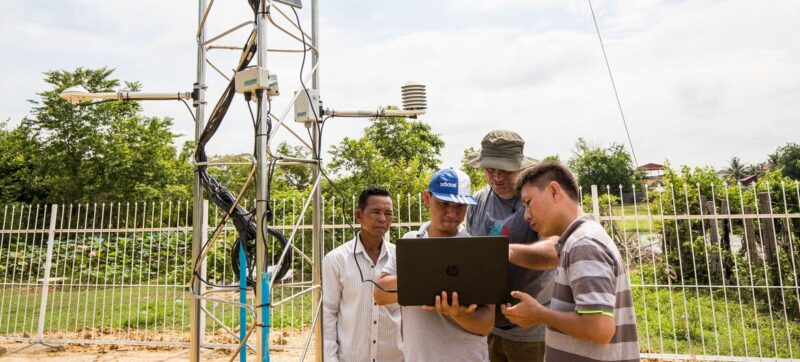
© UNDP Early warning systems are being installed in Cambodia.

© UNDP Early warning systems are being installed in Cambodia.

0
SHARES
0
VIEWS
Share on FacebookShare on Twitter

UN News – “No one should lose their life simply because a warning came too late – or never came at all,” he told a high-level event on the Early Warnings for All initiative at the COP31 climate conference, which runs until 20 November in Antalya, Türkiye.

His appeal came as a new report from the UN Office for Disaster Risk Reduction (UNDRR) and the World Meteorological Organization (WMO) showed that 136 countries – 70 per cent of the total – now report having multi-hazard early warning systems, 17 more than in March 2025.

READ ALSO

Update: China’s foreign trade growth picks up pace on stellar imports, booming AI demand

Trump’s Regrets on Immigration Enforcement and Other Takeaways from His ‘60 Minutes’ Interview

Yet major gaps remain in the most vulnerable countries, as a powerful El Niño raises the stakes.

Warnings that worked

The report, Global Status of Multi-Hazard Early Warning Systems 2026, finds that countries with substantial to comprehensive systems record disaster-related mortality 6.1 times lower than those with limited to moderate ones, and 3.2 times fewer people affected.

It also shows what that means on the ground. When a magnitude 8.8 earthquake struck off Russia’s Kamchatka Peninsula in July 2025, the Pacific Tsunami Warning Center issued its first threat messages within 10 minutes.

Japan evacuated approximately 1.9 million people, while in Ecuador’s Galápagos islands, more than 2,300 people were moved out of high-risk areas hours before waves of about 1.3 metres reached the shore.

In Madagascar, an early action plan developed by the Malagasy Red Cross was partially activated before Tropical Cyclone Gezani made landfall in February, with some 600 door-to-door visits reaching 80,000 to 100,000 people with warnings and evacuation support.

And in Rwanda’s Karongi district, a tea farmer and her daughters were warned – through women’s cooperatives, SMS, local radio and loudspeakers – that heavy rain was expected within 48 hours, giving her time to reinforce her terraces, clear water channels and store her dried tea leaves before the downpour.

Gaps where risk is greatest

Around one in three countries still has no early warning system, Mr. Guterres said, with the widest gaps in least developed countries, small island developing States and countries affected by conflict.

“They did the least to cause the climate crisis, but are being hit first and hardest,” he said.

“Some European countries have more weather stations that meet global standards than the entire continent of Africa,” the Secretary-General added. “We cannot warn people about what we cannot see.”

WMO chief Celeste Saulo warned that the current El Niño “could be literally off our monitoring charts”.

“While we cannot stop El Niño, we can prevent many of its worst human consequences,” she said.

‘Build systems that last’

Urging countries to “accelerate and build systems that last”, Mr. Guterres set out three priorities:

  • making early warnings a permanent public service;
  • closing financing and capacity gaps; and
  • moving from fragmented projects to coordinated, long-term support for country-led plans.

Since 2022, some $2 billion has been mobilised and around 160 countries are receiving support, he noted. But finance must cover the entire warning chain, he said; “from weather forecasting to communication tools to volunteers knocking on doors”.

Warnings are also increasingly triggering action before disaster strikes: in 2025, 146 anticipatory action activations in 54 countries reached 9.6 million people, the report found.

“Countries have made significant progress in strengthening their early warning systems, but too many people remain unprotected,” said Kamal Kishore, head of UNDRR.

“The climate crisis is accelerating. Our protection of people must accelerate with it,” Mr. Guterres said. “Together, let us make sure that every warning arrives in time.”


ShareTweetSendShareSend

Related Posts

This aerial drone photo taken on Sept. 18, 2026 shows a view of Tianjin Port in Tianjin, north China. (Xinhua/Sun Fanyue)
Global

Update: China’s foreign trade growth picks up pace on stellar imports, booming AI demand

by Admin
November 10, 2026

BEIJING, Nov. 10 (Xinhua) -- China's foreign trade in goods maintained strong growth momentum in the first 10 months of...

Read moreDetails
US President Donald Trump 2026. /VCG
Global

Trump’s Regrets on Immigration Enforcement and Other Takeaways from His ‘60 Minutes’ Interview

by Admin
November 9, 2026

(CNN) President Donald Trump offered his most extensive assessment yet of historic Republican losses in an interview with “60 Minutes”...

Read moreDetails
L-R King Charles III, President Irfaan Ali
Global

King Charles Brushes Off Pres Ali’s Flattery with Witty Two-Word Comeback

by Admin
November 8, 2026

(Hello Magazine) -His Majesty King Charles III has brushed off attempts of flattery during a visit to the Global Biodiversity...

Read moreDetails

EDITOR'S PICK

Zara computer centre in Kwakwani

Police conduct free computer training commences at Zara Computer Centre in Kwakwani

October 27, 2022
Asahi Pompey

From a little country girl to President, Goldman Sachs Foundation

December 5, 2021
Dr. Janet Bulkan

Dr. Bulkan Says Government Has Duty to Raise MV Barima, Warns Rule of Law Must Guide Response

August 3, 2026
Dr Frank Anthony, Minister of Health

Health Minister Pushes Stronger Oversight of Rehabilitation Services

December 30, 2025

© 2024 Village Voice

No Result
View All Result
  • Home
  • News
  • Sports
  • Editorial
  • Letters
  • Global
  • Columns
    • Eye On Guyana
    • Hindsight
    • Lincoln Lewis Speaks
    • Future Notes
    • Blackout
    • From The Desk of Roysdale Forde SC
    • Diplomatic Speak
    • Mark’s Take
    • In the village
    • Mind Your Business
    • Bad & Bold
    • The Voice of Labour
    • The Herbal Section
    • Politics 101 with Dr. David Hinds
    • Talking Dollars & Making Sense
    • Book Review 
  • Education & Technology
  • E-Paper
  • Contact Us

© 2024 Village Voice