By Mark DaCosta- A stern public rebuke from the Director of Public Prosecutions’ Chambers has put Guyana’s newsrooms on alert. The warning is rooted in legitimate concern for fair trials. But its breadth carries a chilling effect for journalists and citizens alike, and nowhere more so than where the evidence touches a matter of intense public interest.
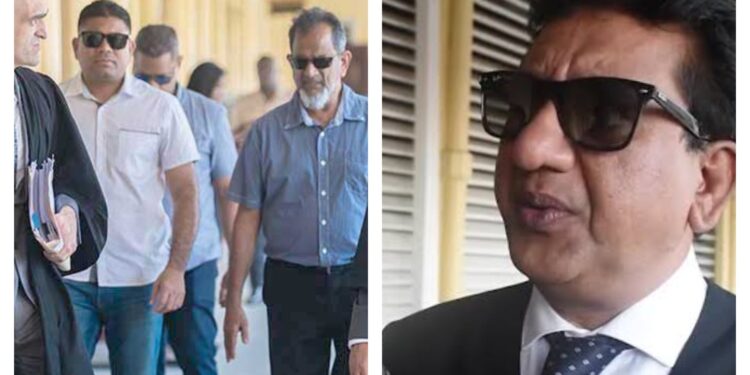
On Monday, 9 November, the Chambers complained of the reckless spread of a video clip on social media and of the prejudicial commentary surrounding it. It said the footage was handed to defence lawyers in court on Friday, 6 November, and that it comes from a prosecution witness’s home camera system, submitted alongside a written police statement. The statement named no one, but local media have linked the clip to the shooting outside the home of Special Branch head Prem Narine, a matter now before the Georgetown Magistrate’s Court.
The footage is politically combustible. The newly circulated clip challenges the police account, and that politicians and civil society figures have demanded an independent investigation. Narine, questioned in court about surveillance, initially invoked the Official Secrets Act. Opposition Leader Azruddin Mohamed, who features in the matter, is already before the courts on separate charges.
The DPP’s reasoning deserves a fair hearing. Prosecutors argue that a video is one link in a wider chain of evidence and should not be judged apart from the witness statements that explain it. A short excerpt, stripped of that context, can mislead. Few reasonable Guyanese would dispute that trials belong in courtrooms rather than on Facebook timelines. The sub judice principle exists to protect accused persons and complainants alike, and the statement does acknowledge the constitutional right to comment on important matters while insisting that the court alone weighs evidence.
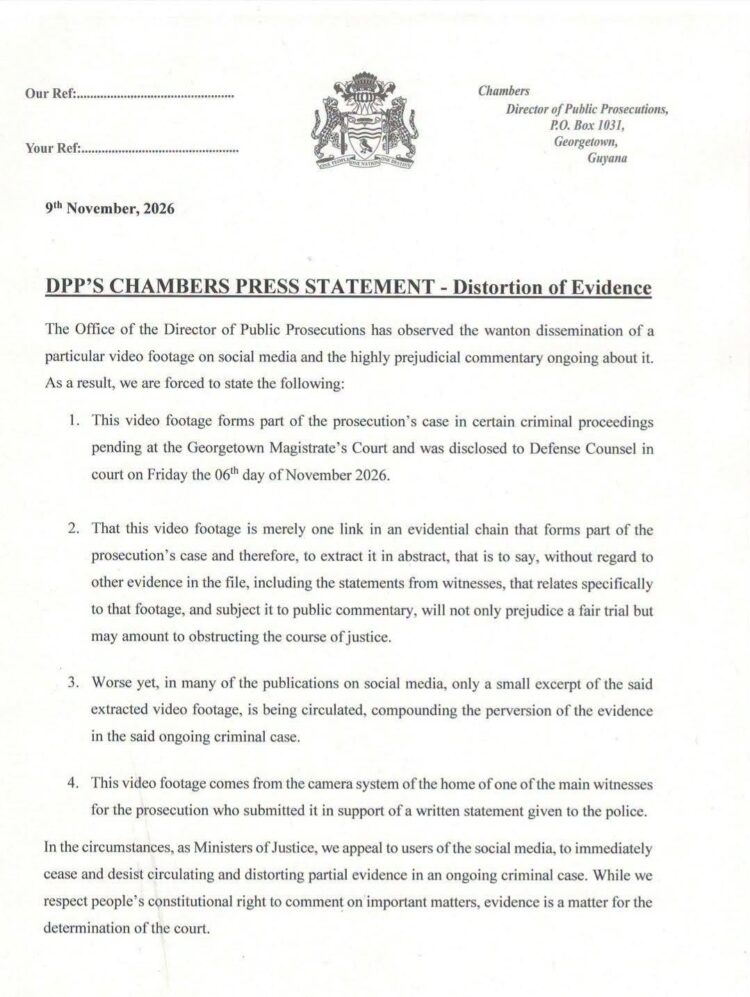
Yet the manner of this intervention is troubling. The Chambers warns that the commentary may amount to obstructing the course of justice, a criminal allegation, without identifying any specific post, publisher or demonstrable harm. A warning so loosely drawn invites self-censorship. A conscientious reporter, weighing whether to examine what a public video appears to show, may conclude that silence is safer than a summons.
So can this be considered a threat to journalists? Not explicitly. The appeal is addressed to social media users, and it carries no stated sanction. But in a small society, where the line between citizen posts and professional reporting is thin, vague warnings from a powerful state office land on everyone. The chilling effect requires no prosecution; the possibility alone is enough.
Context sharpens the concern. The footage reportedly bears on the conduct of senior police officers, and the public has an undeniable interest in whether their account withstands scrutiny. Where agents of the state are implicated, transparency is a democratic safeguard, not a courtesy. Evidence already disclosed to the defence is, by its nature, no longer confined to the prosecution’s files. If the DPP fears distortion, the remedy is more information, not less: publish the full footage, or explain plainly what the excerpt omits. A complete record corrects a misleading clip far more convincingly than a plea for silence.
The leaking of material is a separate question, and one the courts are already examining in other proceedings. Punishing improper disclosure at source is a different matter from discouraging public debate about what the disclosed material shows.
Freedom of expression is the oxygen of democracy, and any perceived threat from any arm of the state is unacceptable in a free republic. Guyana’s courts are fully capable of managing contempt through targeted, transparent orders wherever genuine prejudice is demonstrated. They do not need a public climate in which citizens and reporters must guess where the boundary lies. Our nation can have fair trials and a free press. It must insist on both.