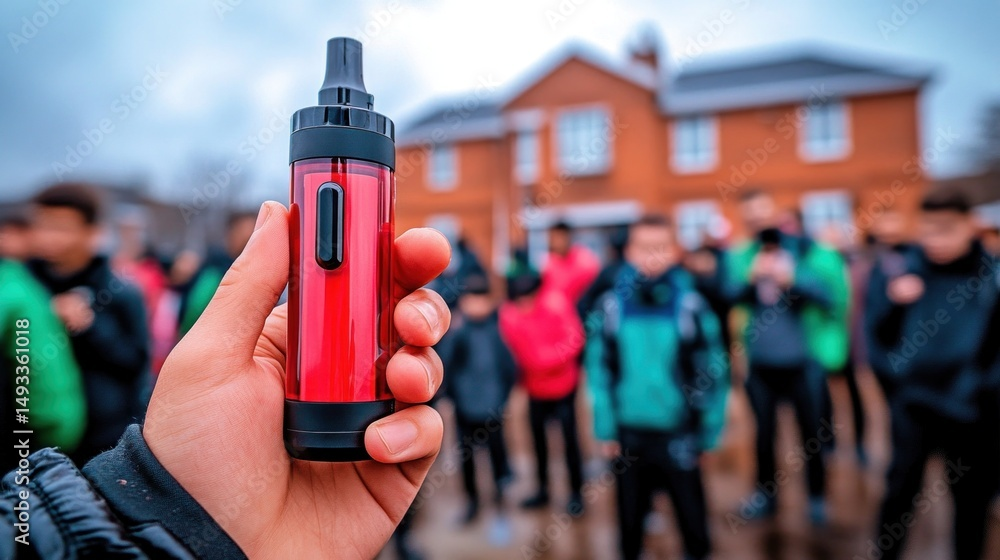
Fast raised the concern following Wednesday’s, November 4, 2026, meeting of the Region Four RDC Education Committee, where the presence of vaping products among schoolchildren, including those at the primary level, was identified as an ongoing problem.
Her intervention comes just over two weeks after President Ali, on October 17, announced that his Government would restrict the importation of vaping products into Guyana, citing growing concerns about their accessibility and use among children and teenagers, particularly within the school system.
During a national address, Ali said Finance Minister Dr Ashni Singh would sign an order under the Customs Act, Chapter 82:01, prohibiting the importation of vaping products, except those approved by the Minister of Health or the relevant tobacco control authorities.
The President described the proposed restriction as a measure to protect children and the wider population, declaring: “We have to protect our children. We have to protect our schools. We have to protect our society.”
However, the latest concerns raised at the Region Four Education Committee indicate that the problem of children’s access to vaping products remains a pressing issue, raising questions about the effectiveness of existing safeguards, enforcement against retailers and the timeline for implementing the announced restrictions.
Stoll is now demanding that the Government move beyond its announcement and provide a definite implementation schedule, while calling on consumer protection authorities to take action against supermarkets and other establishments selling vaping products to minors.
In her statement, she said:
Today’s meeting of the Education Committee of the Region 4 Regional Democratic Council, November 4, 2026, highlighted an ongoing and troubling problem where vapes are being found in the possession of schoolchildren, including children at the primary level. The government has indicated that it intends to introduce measures to address this issue. I urge it to expedite those measures and provide a clear timeline for implementation.
The issue also raises questions about the enforcement of existing legislation. Guyana’s Tobacco Control Act of 2017 already provides a regulatory framework for electronic delivery systems, including restrictions on sales where a purchaser’s age has not been verified, alongside requirements governing packaging, labelling and advertising.
Meanwhile, Attorney General and Minister of Legal Affairs Anil Nandlall subsequently explained that the Government had considered different approaches, including legislation outlawing vaping and possession of vaping products, but had opted to pursue restrictions on importation through the Customs Act.
The distinction is significant. Restricting imports may limit the entry of additional products into the country, but it does not, by itself, explain how authorities will address vaping devices already in circulation or prevent retailers from selling them to children.
Fast is insisting that meaningful penalties and effective enforcement must form part of the Government’s response.
The presence of these products among primary schoolchildren underscores the urgency of protecting children from accessing them. The government and the relevant consumer protection authorities must address the sale of vaping products to children by supermarkets and other establishments, with meaningful penalties and effective enforcement.
She also placed responsibility on parents and guardians, warning that vaping products kept in households can find their way into schools if adults fail to secure them properly. She urged parents to have direct conversations with their children about the risks associated with vaping.
Parents and guardians also have a critical responsibility. Adults who use vaping products at home must keep them securely out of children’s reach to prevent children from accessing them and taking them to school. Families should also speak with their children about the risks associated with vaping.
President Ali, when announcing the proposed restrictions, had cited warnings from the World Health Organization about potential exposure to toxic substances, respiratory problems and nicotine addiction, including the potential effects of nicotine on brain development in children and adolescents.
The Government has also indicated that legitimate medicinal and therapeutic applications could be exempted, subject to approval by the relevant health authorities.
Stoll’s latest intervention therefore places renewed attention on whether the announced measures will be accompanied by a comprehensive enforcement and public education programme addressing the supply of vaping products, their availability in communities and children’s access to them.
She concluded by demanding that the Government respond promptly to the concerns raised by educators and regional officials.
The concerns raised at today’s Education Committee meeting require a prompt response. I call on the government to move swiftly from announced intentions to implementation, supported by enforcement and education for retailers, parents and schoolchildren.
FGM holds one seat in Guyana’s 65-member National Assembly, giving the party a parliamentary platform through which to raise matters of public policy and accountability.
The latest concerns present a challenge that extends beyond school discipline. While schools can introduce rules and educate pupils, preventing children from obtaining vaping products also requires effective regulation of commercial outlets, enforcement of existing laws and accountability from those supplying the devices.
With primary schoolchildren now being identified among those possessing vaping products, the central question is no longer simply whether the Government intends to act, but when its announced measures will become enforceable and how authorities will ensure that children are protected.