Belize will end its longstanding medical cooperation agreement with Cuba but allow Cuban doctors and other medical professionals already working in the country to remain under individual employment contracts, the government has announced.
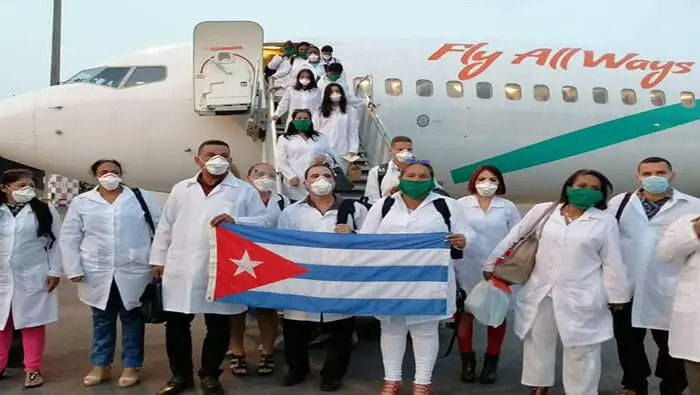
The decision marks a change in the arrangement that has supported Belize’s health system for more than three decades. Members of the Cuban Medical Brigade have served in Belize since 1990, providing medical services under an agreement between the two governments.
In a statement issued Tuesday, Nov. 3, the Ministry of Foreign Affairs said Belize and Cuba would not renew the agreement. However, the Ministry of Health and Wellness will offer individual employment contracts to each Cuban professional to ensure the continued delivery of medical services.
“The Government of Belize assures the Belizean public of its unwavering commitment to the delivery of professional medical services by Belizean and foreign medical professionals for the health and wellness of all Belizeans,” the statement said.
The announcement follows months of uncertainty over the brigade’s future amid growing pressure from the United States on countries that maintain medical cooperation agreements with Cuba.
Belize Prime Minister John Briceño said in May that his administration was seeking a way to retain Cuban medical personnel under an arrangement that would address US concerns about the programme. Washington has described Cuba’s overseas medical missions as exploitative and a form of forced labour, allegations rejected by Havana.
Briceño said Belize had paid Cuban doctors directly rather than routing their salaries through the Cuban government, and that his administration was working to ensure professionals who wished to remain could do so voluntarily.
Foreign Affairs Minister Francis Fonseca said in October that negotiations over the brigade’s future were nearing a resolution. The government had been exploring individual contracts as a way to retain the workers while changing the formal agreement with Cuba.
The issue carries significant implications for Belize’s public health system, which faces shortages and an uneven distribution of medical personnel, particularly in underserved areas.
A September report by the San Pedro Sun estimated that the Cuban medical brigade comprised 82 professionals at the time, with some serving at health facilities across the country, including the Dr. Otto Rodriguez San Pedro Polyclinic II on Ambergris Caye.
Health Minister Kevin Bernard had previously warned that the departure of Cuban professionals could affect healthcare delivery. The government has been exploring other recruitment options, including nurses from the Philippines and medical professionals from Honduras, Nicaragua and Mexico.
Belize has also been looking to strengthen its domestic health workforce. Bernard said Cabinet had approved a BZ$33 million, 10-year investment programme to expand training and scholarship opportunities for Belizeans pursuing nursing and other medical specialties.
Cuba’s medical cooperation with Belize began on Dec. 8, 1990. The programme has been part of a wider international effort through which Cuban doctors and other health workers have provided services in countries facing shortages of medical personnel.
The new arrangement will allow Belize to retain the services of Cuban professionals while ending the government-to-government agreement that has governed their deployment for more than 35 years.
caribbeannationalweekly.com