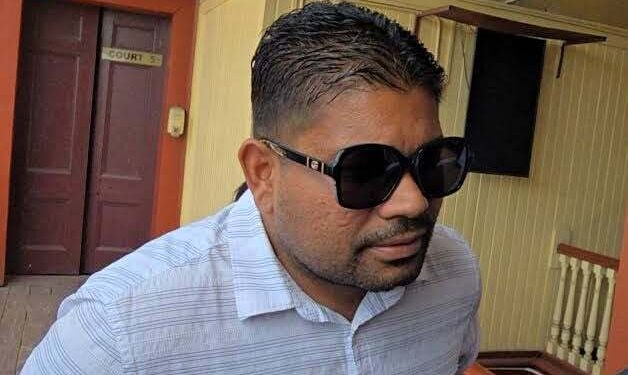
By Mark DaCosta- Veteran trade unionist and Guyana Trades Union Congress (GTUC) General Secretary Lincoln Lewis has challenged the parliamentary Opposition to unite behind a concrete legislative reform proposal to give effect to Article 13 of the Constitution, declaring that decades of political promises have failed to deliver meaningful inclusive governance.
In his weekly Eye on Guyana column published on October 25, 2026, Lewis said Guyana’s failure to implement the constitutional commitment to inclusionary democracy represents an indictment of the country’s political leadership. He urged the Opposition to seize Vice President Bharrat Jagdeo’s recent overtures on shared governance and demand enforceable changes that would limit unilateral political control.
Article 13, which commits the State to establishing an inclusionary democracy, was assented to in 2001 by then President Jagdeo following pressure from organised labour, the leadership of the late Desmond Hoyte and regional involvement through CARICOM.
Yet, Lewis argued, the constitutional provision has remained largely unfulfilled.
“It cannot be reduced to mere words on paper.”
He said meaningful participation by other stakeholders in national decision-making remains limited, despite the constitutional commitment made more than two decades ago.
Lewis credited former People’s National Congress (PNC) leader Robert Corbin with advancing the inclusionary governance agenda through negotiations with the Jagdeo administration, including the 2003 Communiqué, budget consultations with the GTUC and appeals to international bodies over extrajudicial killings, which contributed to the establishment of a Commission of Inquiry.
He also highlighted Corbin’s role in securing national hero status for Hubert Nathaniel Critchlow, the father of trade unionism.
For Lewis, that political history demonstrates that constitutional reform requires organised pressure and deliberate action rather than reliance on assurances from those who hold power.
“Reform is not achieved by waiting for goodwill from those who benefit from existing arrangements.”
Against that background, he expressed caution over Jagdeo’s recent overtures to the People’s National Congress, arguing that the real test of the Government’s commitment to shared governance is whether it is prepared to accept meaningful constraints on its political authority.
“We must use the law to secure what political promises have repeatedly failed to deliver.”
Lewis called on Opposition parliamentarians to act collectively and develop a substantive reform proposal in consultation with organised labour and civil society, rather than allow the governing party to dictate the terms of any political arrangement.
The proposal, he said, should identify legislative and institutional changes to strengthen regional and local government, institutionalise consultation and broaden participation in decisions of national importance.
He stressed that reform must serve the national interest rather than produce an arrangement designed simply to accommodate political leaders.
The trade unionist also challenged the Opposition to demonstrate greater political responsibility, arguing that it must move beyond reacting to Government decisions and develop a sustained strategy for institutional change.
“Political responsibility means sustained strategy and results, not merely speeches and tributes.”
Lewis noted that the trade union movement has advanced proposals of its own, including reform of the Appropriation Act and consideration of a two-thirds majority requirement for specified legislation. Such measures, he said, could prevent one political side from making decisions of national importance without broader agreement, although their constitutional implications require careful examination.
He argued that the need for stronger checks and accountability has become even more urgent as Guyana’s petroleum wealth expands and the country develops relationships with foreign governments and investors.
“Stronger accountability, not greater concentration of decision-making.”
Lewis insisted that workers must be recognised as citizens with a legitimate stake in the country’s political and economic future, not simply as contributors to production.
“Workers are not merely an economic resource to be mobilised when production is required.”
He also raised concerns about the transparency surrounding major international agreements and engagements, arguing that citizens have a right to know what commitments are being made on their behalf and what obligations may arise.
He recalled the practice of national leaders addressing the country before major overseas visits and reporting back afterwards, saying that greater public accountability is necessary to prevent national affairs from becoming the private business of political leaders.
“Our leaders are public servants, not masters of the people.”
On national security and defence, Lewis said decisions in these areas should not be treated as the exclusive responsibility of the governing party. While recognising the need for legitimate confidentiality, he maintained that the Opposition and relevant stakeholders should be consulted on matters with far-reaching national implications.
He directed a similar message to President Irfaan Ali, reminding him that his constitutional responsibilities extend beyond those who voted for him.
Lewis warned that excluding elected representatives and other legitimate stakeholders weakens national cohesion and could undermine Guyana’s ability to protect its interests as foreign partners pursue their own strategic priorities.
In closing, he said tributes to Hoyte and Corbin would mean little unless their commitment to reform was translated into legislation, stronger institutions and genuine engagement among Government, Opposition, labour and civil society.
“Our salvation is not beyond our reach,” Lewis wrote, adding that “what is missing is the political will to use them.”
Invoking the Guyanese saying that “cat will eat our dinner”, he warned that the country risks losing valuable opportunities if the mechanisms for constitutional reform remain unused.
His central message was that Article 13 must move beyond a constitutional declaration and become a practical framework for how Guyana is governed.