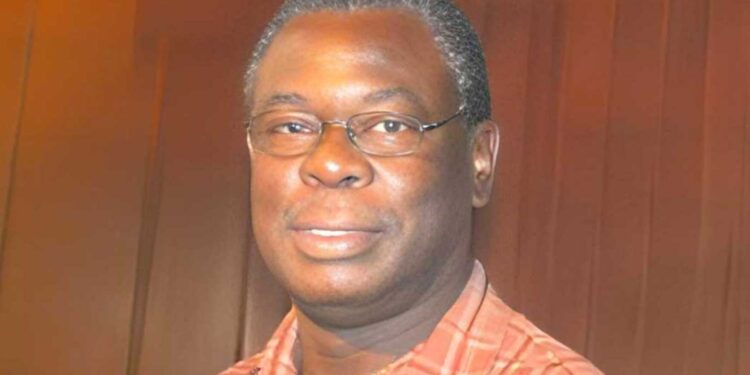
Before anything else, I hasten to apologise for a massive mistake I made last week. I said that Mark Twain wrote Oliver Twist. A colleague texted that I should be caned by my now deceased English teacher. He was right. Any literate person knows that Oliver Twist was written by Charles Dickens. To this day, I am not allowed to forget that mistake.
There are other mistakes; all are being made by parents and compounded by the government. As far back as many older folk can remember, parents tried their best to ensure that their children had at least, one good meal per day. The parents knew the importance of feeding their children. Hunger affects a child’s ability to learn.
At the same time, the parents knew enough to keep their children out of the arms of the law. Enterprising parents, most of whom were not academically inclined, but were smart enough to read and write, produced children that at one time Guyana was rated as the most literate country in the region.
Guyana enjoyed this reputation for decades. At the Mona Campus of the University of the West Indies, many lecturers, among them the late Prof. Rex Nettleford and the late Prof. Roy Augier, often commented that the Guyanese were always expected to perform excellently.
The slide witnessed today can be attributed to many things, the most common being that parents did not want their children to suffer as they did.
The parents of yore encouraged their children to earn during the holidays. Boys went with carpenters or other skilled people. Girls often went to the homes of the better placed in society to undertake domestic chores. Of course, these children were paid. Often, that money went to buy school clothes for the next term. Some went into the pot. There was dignity in labour. The children who did those things later said that they were pushed to escape the clutches of poverty. And most did through education.
The school system was designed to help children to learn. There were inspectors who visited schools, checked on attendance. They noted the performance of the teachers. Head teachers also monitored the teachers. There was constant contact between the school and the home. It was common to see parents turn up at schools having been summoned. The result was that parents paid keen interest in what their children did. The system also allowed for visits to homes.
Those days are long gone. Parents do not check on their children. Some can’t even talk to their children. School-age children can be seen roaming the streets. Some graduate to petty crimes during school hours. That is the start of things to come. In fact, it was the start because things are already here.
Many in the city can tell tales of young motorcyclists committing robberies. The comment is that they have to eat. And their numbers have increased.
It is here that the government must accept blame. The wages and salaries are abysmally low; there is very little monitoring in schools because the support system is not in place. The government talks about job creation. It should revert to creating jobs in the education system. The excuse cannot be money to support the public service wage bill.
There are now the so-called 40-hour workers. They do nothing but turn up many through force to support government and PPP-sponsored events. They could be put to better use. A better qualified 40-hour worker could be put to work in schools as inspectors or at least, as monitors. They could be made to visit homes.
The effect of the declining education system has permeated every section of the society. The quality of teachers has declined drastically; it is the same with the nurses and even the policemen.
Policemen can barely take a statement. When they do the spelling is atrocious. Of course, the people giving the statement may not be scholars but that is no excuse. Scholars would write their own statements. There is the old joke about a police constable taking a man to Water Street from the scene of an accident on Urquhart Street because he couldn’t spell Urquhart.
One view is that many police ranks on traffic duties don’t write traffic tickets because they have difficulty writing. They are products of the present education system.
On Monday, Azruddin Mohamed, at a press conference hosted by We Invest in Nationhood–WIN—read a press release that came from the police press unit. Poor spelling and grammar were prevalent. Mohamed pointed to the word that passed for ‘tinted’. It could have been typographical. But in the same release, Mohamed was described as a ‘treat’. One can assume that the statement intended to describe Mohamed as a threat. The person who should have vetted the statement was probably none the wiser to the mistakes.
Many people take pride in writing Facebook posts. If there is any doubt about the quality of education in Guyana, those posts would verify the reality.
Once a year the country is forced to compete with the other countries in the region. The officials at the local Ministry of Education would boast when a Guyanese matches skills with other top students in the region. The few who actually do well represent a fraction of those who emerge from the morass we call the education system. With parents who can afford, they take extra lessons at great cost.
In fact, the situation is such that very small children are being thrust into the extra lessons syndrome. Play, an integral part of development, is shunned.
Billions of dollars are spent on school buildings and hospitals but the human resource for these places is lacking.
China addressed its problems by closing schools for two years and training the trainers. Guyana may need to spend money on hiring trained people to under this task.