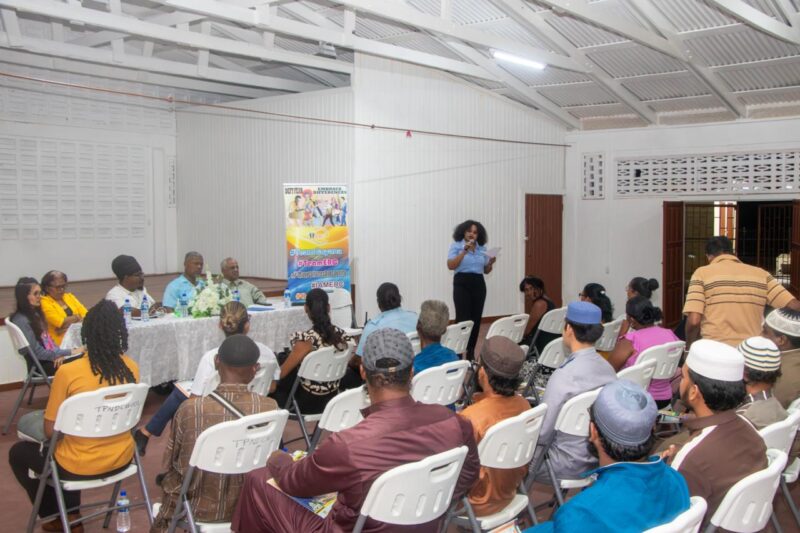
The Ethnic Relations Commission (ERC) engaged residents of Wales and neighbouring communities in a lively stakeholder consultation on Wednesday, October 28, 2026, at the Toevlugt/Patentia Neighbourhood Democratic Council (NDC), Region Three. The engagement provided a platform for citizens to raise community concerns, exchange perspectives with Commissioners, and explore practical ways to strengthen social cohesion, mutual respect and harmonious relations.
The ERC delegation was led by Deputy Chairman Charles Ogle and included Commissioners Norris Witter, Deon Dick (Ras Khafra), Chandrowtie Sarran and Pandit Krishn Sharma, alongside Chief Executive Officer (ag) Oma Devi-Sukhu. Regional officials and members of the Guyana Police Force also attended, reflecting the importance of collaboration among constitutional bodies, local authorities and other institutions in addressing concerns affecting communities.
The engagement formed part of the Commission’s ongoing efforts to hear directly from citizens across Guyana. Through these consultations, the ERC seeks to better understand the experiences and challenges confronting communities, identify concerns relating to ethnic relations, and receive recommendations from residents who are best placed to explain local circumstances and propose solutions.
Opening the discussion, Deputy Chairman Ogle reaffirmed the Commission’s commitment to listening to citizens and addressing matters within its constitutional mandate.
“The ERC is working to eliminate ethnic and religious discrimination, and meaningful engagement requires us to listen to you. We want to hear directly from residents about the challenges they face in their communities and the solutions they believe can make a difference. Where concerns fall outside our mandate, we will direct them to the relevant agencies for attention,” Mr. Ogle stated.
He further underscored the importance of sustained public education, particularly among young people, noting that schools, churches and other community institutions have important roles to play in building understanding, encouraging respect and preventing prejudice. He emphasised that education must begin early and continue throughout society if citizens are to develop the attitudes and values necessary for peaceful coexistence.
Commissioner Deon Dick (Ras Khafra) highlighted the importance of community participation in guiding the Commission’s work and ensuring that residents’ concerns reach the appropriate institutions. He noted that the ERC works alongside sister constitutional commissions, including
1
the Rights of the Child Commission and the Women and Gender Equality Commission, as well as relevant public agencies, to help address issues affecting citizens.
“Every community experiences challenges, and we recognise that some people may be hesitant to speak openly about the difficulties they face. We want residents to feel that their voices matter. Whether a concern requires engagement with the Guyana Police Force, the NDC or another relevant agency, the Commission can help bring the appropriate stakeholders to the table. Our role is to promote harmony, encourage dialogue and help ensure that concerns are directed to those best positioned to address them,” Commissioner Khafra explained.
He also noted that the Commission can make recommendations to relevant authorities on measures that encourage greater community participation in development initiatives, thereby helping residents contribute meaningfully to decisions affecting their villages.
Commissioner Chandrowtie Sarran, who represents women on the Commission, emphasised the importance of inter-agency collaboration in responding to issues raised by residents. She indicated that the ERC would engage the relevant ministries and agencies on matters affecting the continued development of Wales and neighbouring communities.
Commissioner Sarran also drew attention to the influence of social media in shaping public discourse. She encouraged citizens to exercise responsibility when expressing their views online, particularly when discussions touch on ethnicity, religion or other sensitive matters.
“Much of our public discussion now takes place on social media, where words and comments can quickly reach large audiences. The ERC wants to promote peace and harmony, but we must also recognise that people will not always agree. Disagreement is part of public life; what matters is that we disagree respectfully and avoid language that can demean others, encourage prejudice or create unnecessary divisions,” she said.
Commissioner Norris Witter focused on the importance of individual responsibility and early intervention in addressing prejudice. He pointed to the Commission’s Harmony Clubs initiative in schools as one of the ways the ERC is working to encourage positive relationships among children and young people.
“No one is born a racist. The attitudes we develop are influenced by our experiences, our surroundings and what we learn from others. That is why the work of educating young people and encouraging them to respect one another is so important,” Commissioner Witter said. “We often hear the saying that if a tree is allowed to grow bent, it becomes more difficult to straighten as it matures. In the same way, the work of building respect and understanding must begin early. Ultimately, the transformation we want to see in our communities begins with each of us.”
Commissioner Pandit Krishn Sharma encouraged residents to reflect on their individual contributions to the well-being of others and the wider community. He urged citizens not to ignore situations where people may be struggling or where harmful conduct needs to be addressed constructively.
“Each of us should ask: How can I become the best version of myself, and what can I do to make my community better? We cannot simply ignore someone who may be heading in the wrong
direction. If we want positive change, we must be willing to help one another, understand each other’s burdens and offer guidance where it is needed. Building a harmonious society requires compassion, personal responsibility and a willingness to act for the good of others,” Commissioner Sharma stated.
The discussions were lively and interactive, with residents raising concerns relating to community welfare, local development, civic responsibility and the importance of maintaining respectful relationships among people from different backgrounds. Commissioners listened to the issues raised, offered guidance where appropriate and identified matters requiring further engagement or referral to relevant institutions.
The Commission also highlighted the importance of recognising and responding responsibly to speech and ethnic discrimination, both within communities and on online platforms. Citizens were encouraged to approach differences through constructive dialogue, seek appropriate assistance when necessary and remain mindful of the impact that words and actions can have on relations among neighbours and communities.
The engagement concluded with a shared recognition of the importance of maintaining open channels of communication among residents, community leaders, regional authorities and the ERC. The Commission will continue engaging communities across Guyana to build understanding of its mandate, address concerns relating to ethnic relations, and foster greater harmony among all ethnic groups residing in Guyana.