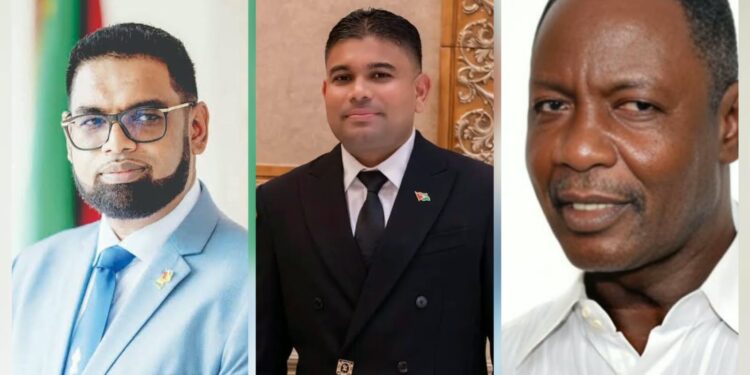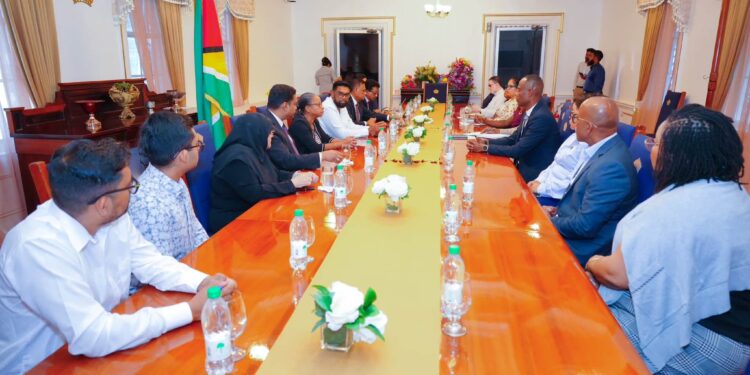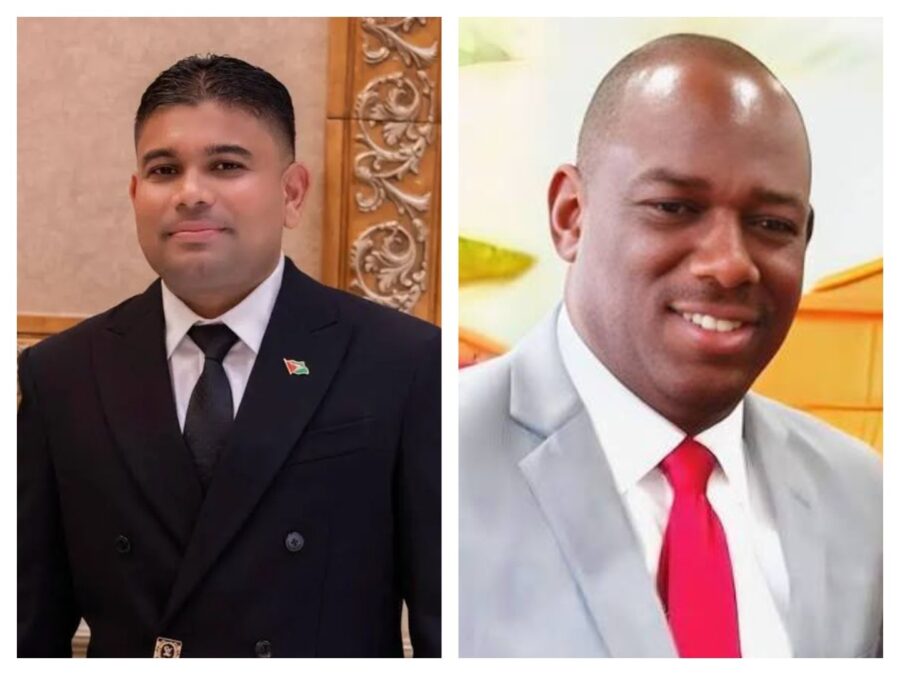
Caribbean Guyana Institute for Democracy (CGID) President Rickford Burke is challenging Opposition Leader Azruddin Mohamed to account for his family’s financial support of the People’s Progressive Party/Civic (PPP/C) and condemn the extrajudicial killings linked to Guyana’s phantom death squad, amid renewed calls by the United Nations for an investigation into the historic killings.
In statements issued this week, Burke demanded that Mohamed apologise to his constituents for his family’s contributions to the PPP/C, support efforts to secure justice for victims and explain why he financially supported a party accused of being linked to the killings.
Mohamed has publicly acknowledged his family providing substantial financial support to the PPP/C while it was in opposition. During the February 2026 parliamentary budget debate, he told the National Assembly his family had bankrolled the party and that its business provided it with significant financial assistance between 2015 and 2020.
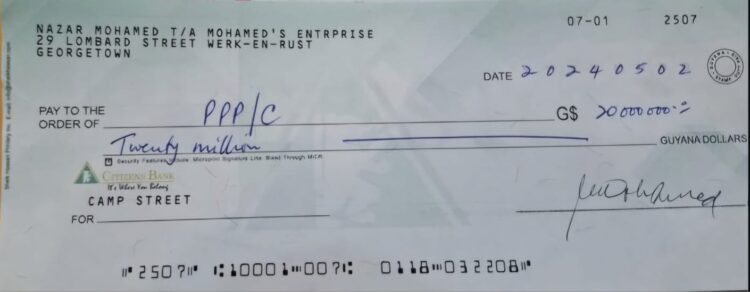
Evidence of the financial contributions also includes a cheque provided by Mohamed showing a donation of $20 million to the PPP/C. Despite Mohamed’s public admission and the documentary evidence of at least one substantial contribution, the party declined to comment when questioned by Stabroek News. The silence leaves questions about the extent of the financial support and the party’s willingness to account publicly for the funds it received.
Burke argued that Mohamed’s youth during the period of the alleged killings did not absolve him of the responsibility to address his family’s subsequent financial support for the PPP/C. Mohamed was in his teens during the 2002–2006 period when many of the alleged extrajudicial killings occurred, but Burke maintains that the central issue is the financial backing provided to the party in the years that followed.
“CGID is not assigning responsibility for the genocide to Azruddin Mohamed. We are encouraging and urging him to condemn the actions of the PPP, to apologise to his constituents for financing the people responsible for the perpetration of those said acts, and to call for justice to take its course,” Burke said.
Burke stated that the phantom squad, reportedly associated with convicted drug trafficker Roger Khan and former Home Affairs Minister Ronald Gajraj, was responsible for more than 1,400 deaths of African Guyanese men during the period. He characterised the killings as “genocide.”
The history of the phantom squad and allegations of extrajudicial killings have been documented in official reports and human-rights investigations.
Phantom squad and the Gajraj inquiry
The phantom squad became a major issue during Guyana’s violent crime wave following the February 2002 escape of prisoners from Georgetown’s Camp Street prison. Then Head of the Presidential Secretariat Dr Roger Luncheon referred to a “phantom” group during a press conference in December 2002, and the term became widely used in public discussion of the killings.
In January 2004, George Bacchus, who identified himself as a former informant for the group, alleged that the squad was involved in killings and accused Gajraj of links to its activities. A presidential commission of inquiry was subsequently established to investigate allegations concerning the former minister. Bacchus was shot dead at his home in June 2004 before he could testify.
The inquiry examined whether Gajraj had promoted, directed or otherwise engaged in activities involving the squad. Its findings cleared him of involvement in promoting, directing or otherwise engaging in the squad’s activities. However, the findings did not end international concerns surrounding the alleged killings.
In April 2005, the United States Department of State questioned the decision to reinstate Gajraj as Home Affairs Minister, citing serious procedural irregularities identified by the commission concerning his official conduct and individuals alleged to have carried out extrajudicial killings. Washington said significant questions remained unanswered.
UN calls for a new inquiry
On March 28, 2024, the United Nations Human Rights Committee called on Guyana to establish a presidential commission of inquiry into alleged extrajudicial killings between 2002 and 2006.
In its concluding observations on Guyana’s human-rights record, the Committee expressed concern that the alleged killings had not been adequately investigated and prosecuted and that those responsible had not been duly sanctioned. It also raised concerns about reports of continuing extrajudicial killings, including those involving police officers.
The Committee urged Guyana to investigate allegations promptly, impartially, transparently and thoroughly and called for a commission of inquiry into the killings during the 2002–2006 period.
A separate 2009 United Nations report documented accounts from members of the Afro-Guyanese community who attributed deaths to the alleged phantom squad.
The UN Committee’s call for an inquiry did not establish criminal responsibility on the part of the PPP/C, Gajraj or any other individual. It underscored the need for an effective investigation and accountability where wrongdoing is established.
Donations and accountability
Burke claimed that Mohamed and his family contributed hundreds of millions of dollars to the PPP/C, including towards the party’s 2020 election campaign. While Mohamed has acknowledged providing substantial financial support, the specific figure was not provided by him.
Burke questioned why Mohamed had not condemned the alleged killings before entering the 2025 presidential race and becoming Leader of the Opposition. He also challenged him to explain the donations and clarify his position on accountability for the historic allegations.
Burke also referred to Mohamed’s calls for justice in the killing of Ricardo Fagundes, known as “Paper Shorts”, who was shot dead in March 2021. He challenged Mohamed to demonstrate that his demands for accountability extended to victims of the alleged phantom squad killings.
Roger Khan, who was accused of leading the phantom death squad, was sentenced in the United States in 2009 after pleading guilty to drug-trafficking conspiracy, obstruction of justice and firearms offences. His prosecution brought renewed attention to allegations that the squad was involved in extrajudicial killings in Guyana, including the 2006 murder of journalist Ronald Waddell. However, Khan’s US convictions were for the offences to which he pleaded guilty, not for the alleged murders in Guyana.
Burke said CGID would continue demanding accountability, insisting that Mohamed address his family’s financial support for the PPP/C and that Guyana pursue a credible, independent investigation into the historic killings to establish the full truth and bring those responsible to justice.