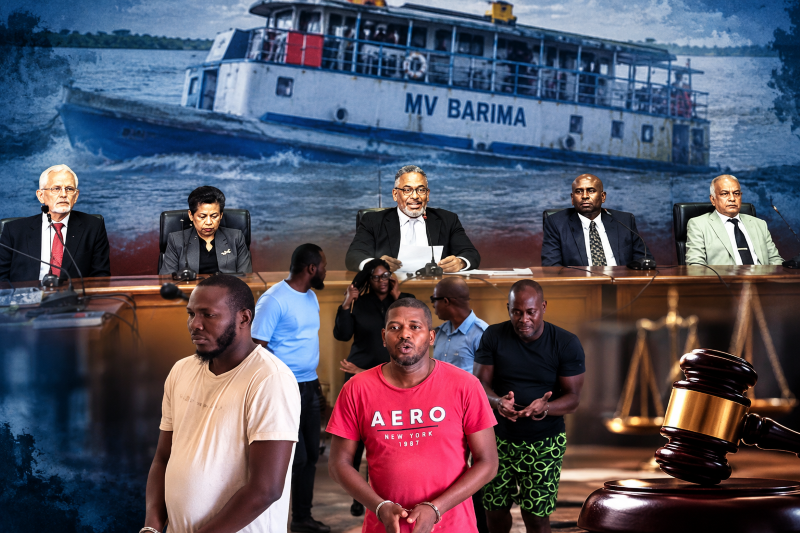
By Mark DaCosta-The inquiry surrounding the tragic sinking of the MV Barima continues to unfold, as legal proceedings against the vessel’s captain and crew gain momentum. This incident, which occurred on July 18, 2026, has left a significant mark on our nation, claiming some 73 lives, according to reports, with an additional some 30 individuals still unaccounted for. As the investigation progresses, questions remain about the responsibilities and possible negligence associated with the ferry disaster, alongside the ongoing murder charges against the accused.
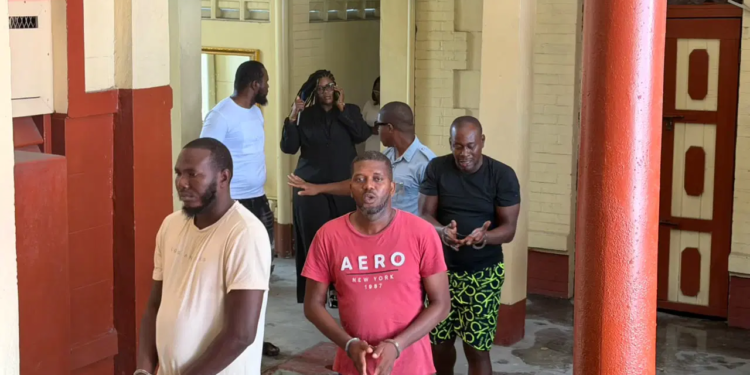
The Commission of Inquiry (COI), led by retired Justice Godfrey Smith, is faced with pivotal decisions regarding the testimonies of Delon Granderson, the goods superintendent of the MV Barima, along with captain Kevin Price and first mate Rondell Roberts. Their involvement in the tragedy has led to murder charges that threaten to complicate the already fraught legal landscape.
During recent proceedings, Commission of Inquiry Chairman retired Justice Godfrey Smith acknowledged the potential value of testimony from the three men facing murder charges but has yet to confirm whether they will be called to testify.
“We think that Mr Granderson and the other two men could give useful testimony to the commission,” Smith stated.
However, the prospect of their participation raises legal concerns, particularly regarding their right against self-incrimination while criminal proceedings remain pending.
Bullen, who represents Granderson, told the commission that she had no immediate instructions regarding whether her client would testify voluntarily but indicated that she was willing to follow up on the matter.
Smith acknowledged Granderson’s right to decline to give evidence, reflecting the legal complexities surrounding the parallel inquiry and criminal case.
Meanwhile, some commentators have alleged that the men were charged to prevent them from giving evidence that could implicate more senior individuals in the circumstances surrounding the disaster. That allegation remains unproven and has not been established through the proceedings.
Separately, the Magistrates’ Court has cleared the way for the murder case against the trio to proceed. Magistrate Ravindra Mohabir ruled that allowing the criminal proceedings to continue alongside the Commission of Inquiry does not constitute an abuse of process.
“It is not an abuse of process to have these proceedings conducted in this court,” the magistrate ruled.
The decision paves the way for preliminary committal proceedings scheduled for November 16, 2026, when the court is expected to assess the evidence and determine whether the accused should stand trial.
The defence had argued that the ongoing inquiry should preclude criminal proceedings, pointing to the Shipping Act and its framework for investigating maritime incidents. The prosecution countered that the Director of Public Prosecutions derives constitutional authority to institute criminal proceedings independently of the commission’s work.
The case raises broader questions about maritime safety, accountability and the relationship between public inquiries and criminal prosecutions. The commission is examining the circumstances surrounding the sinking, including the vessel’s maintenance and the crew’s competencies, with the aim of establishing what contributed to the disaster and identifying measures to prevent similar tragedies.
As the inquiry and criminal proceedings continue, transparency and accountability remain central to the public’s demand for answers. The commission’s findings and the outcome of the court proceedings will be important in establishing the circumstances surrounding the MV Barima’s sinking and determining whether those responsible can be held accountable.