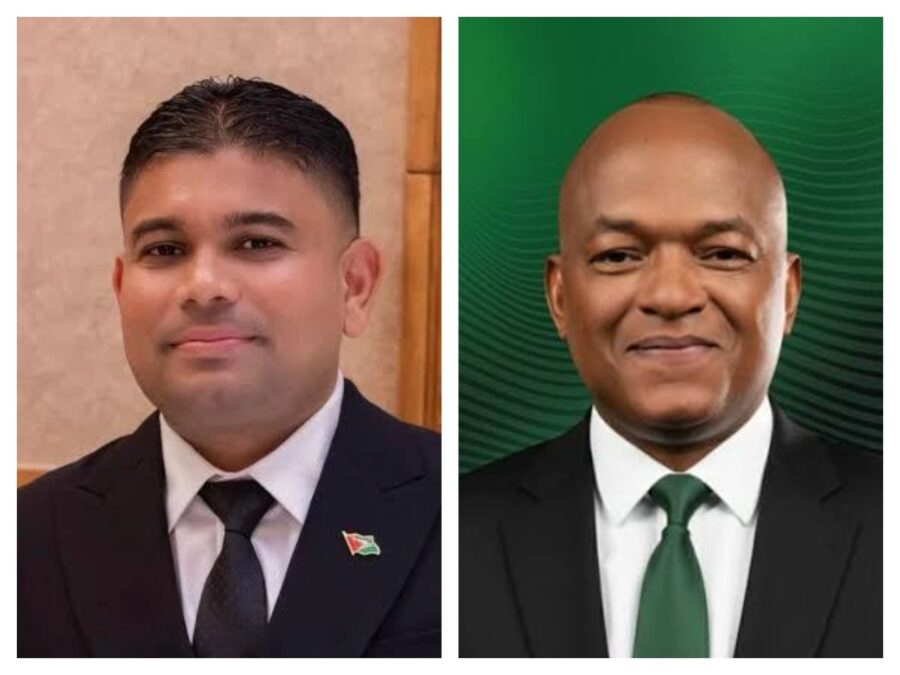
A Partnership for National Unity (APNU) Member of Parliament Sherrod Duncan has called for an independent forensic investigation into the disputed firearm incident involving Opposition Leader Azruddin Mohamed, accusing the Director of Public Prosecutions (DPP) of applying a double standard in the handling of the case.
Duncan’s intervention is notable because he belongs to a different political party from Mohamed, who leads the We Invest in Nationhood (WIN) party. Despite their separate political affiliations, Duncan has questioned why the DPP has recommended charges against Mohamed and two members of his staff while, he argues, the actions of police officers who reportedly fired shots at the opposition leader’s vehicle require further scrutiny.
In a social media post, Duncan wrote:
“When the Director of Public Prosecutions recommends charges against the Leader of the Opposition while ignoring police bullets fired at his car, state prosecution becomes a political weapon.”
He further criticised what he described as the use of criminal proceedings against political opponents.
“Using state prosecution to criminalize political rivals is the hallmark of an authoritarian regime,” he said.
Duncan called for an independent inquiry, adding:
“The justice system must serve the Constitution, not executive vendettas. We demand an independent forensic inquiry into this entire setup.”
The incident occurred near the Kitty, Georgetown, residence of Senior Superintendent Prem Narine, head of the Guyana Police Force’s Special Branch.
According to the police account, Narine heard gunfire in the area and discharged his weapon before stopping a vehicle occupied by Mohamed, his relative Mario Mohamed and driver Eugene Thorne. Police alleged that a .32 Taurus pistol without a serial number and three live rounds were found in connection with the incident.
Mohamed has disputed the police account, saying he and his companions were recording security activity outside Narine’s residence when shots were fired at their vehicle. He denies knowing about the firearm and alleges that it was planted after his arrest. The defence has questioned the circumstances surrounding the weapon’s discovery. Those allegations have not been established as fact.
The case has drawn additional attention because Narine is a witness in United States extradition proceedings involving Mohamed and his father, Nazar Mohamed.
Following the DPP’s advice, Mohamed and the two other men appeared at the Georgetown Magistrates’ Court on October 16. They pleaded not guilty and were each granted $750,000 bail.
Duncan’s call centres on the need to establish the sequence of events, examine the reported discharge of police firearms and determine how the weapon was recovered. His criticism adds a voice from outside Mohamed’s own party to the calls for scrutiny of the incident.
The allegations must be tested through the appropriate legal processes. The recommendation to pursue charges does not establish guilt, and the accused remain entitled to the presumption of innocence.