The Guyana Development Bank officially begins operations today with an initial capitalisation of US$100 million, offering zero-interest, no-collateral loans of up to G$3 million to individuals and small and medium-sized businesses.
The state-backed institution is being presented by the Government as a means of expanding access to financing for Guyanese who have traditionally struggled to meet the requirements of commercial banks.
President Irfaan Ali said the bank fulfils a 2025 manifesto commitment to establish a more inclusive financial architecture, particularly for young entrepreneurs, women, farmers, skilled tradespeople and other groups.
“For far too long, many aspiring entrepreneurs—young innovators, single mothers, farmers, and skilled tradesmen—have lacked the financial resources to get started or to expand,” Ali said.
The bank will also provide business-development services, mentorship, technical assistance and capacity-building programmes, with the stated aim of helping entrepreneurs strengthen their operations and eventually graduate to conventional commercial financing.
Under a proposed co-financing arrangement, successful borrowers could access an additional G$7 million from commercial banks at favourable interest rates.
Government says dozens of proposals have already been received from individuals and businesses across the country.
A mobile platform is also being developed to allow citizens in urban, hinterland and riverain communities to access financing for activities including agriculture, agro-processing, tourism and technology.
Concerns over inclusion and management
The launch comes amid concerns expressed by civil society and opposition forces about the bank’s governance, management and whether access to its resources will be genuinely inclusive.
A key issue raised is whether qualified Guyanese will have equal access to financing regardless of political affiliation. Given that the institution is being capitalised with public funds, calls have been made for clear safeguards to ensure that loans are awarded according to transparent criteria and the viability of proposals.
Concerns have also focused on the management of unsecured, interest-free loans and the potential risks to public funds if applications are not properly assessed or loans are inadequately monitored.
The Government says the bank will be subject to oversight, with its accounts audited by the Auditor General and annual reports submitted to the National Assembly.
There have also been calls for greater public disclosure of the bank’s operations, including the number and value of loans approved, beneficiaries by region and sector, repayment rates, defaults, administrative costs and loan recovery measures.
Such information would provide a basis for assessing whether the bank is reaching its intended beneficiaries and managing public resources effectively.
Seven-member board
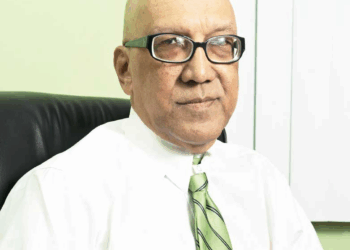
The Government has appointed a seven-member Board of Directors headed by Abu Zaman, who has more than a decade of experience in retail and small-business banking.
Kathy Smith, President of the Georgetown Chamber of Commerce and Industry and Vice Chairperson of the Private Sector Commission, is Deputy Chairperson.
The other directors are Finance Secretary Sukrishnalall Pasha, attorney and businessman James Bond, Caribbean Airlines executive Dion Inniss, governance specialist Nalinie Singh, and entrepreneur and educator Praem Rambharak.
The board brings experience spanning banking, public financial management, law, business, governance, aviation, entrepreneurship and youth development.
The Guyana Development Bank Act was passed by the National Assembly in July, paving the way for the institution’s establishment.
Senior Minister with Responsibility for Finance Dr Ashni Singh, who tabled the legislation, has said the bank is intended to strengthen access to capital and support entrepreneurship.
The institution enters operation as Guyana seeks to use its growing oil revenues to broaden economic activity beyond the petroleum sector.
Its performance will be closely watched against its stated objectives of expanding financial inclusion, supporting small businesses and ensuring that public resources are managed transparently and responsibly.