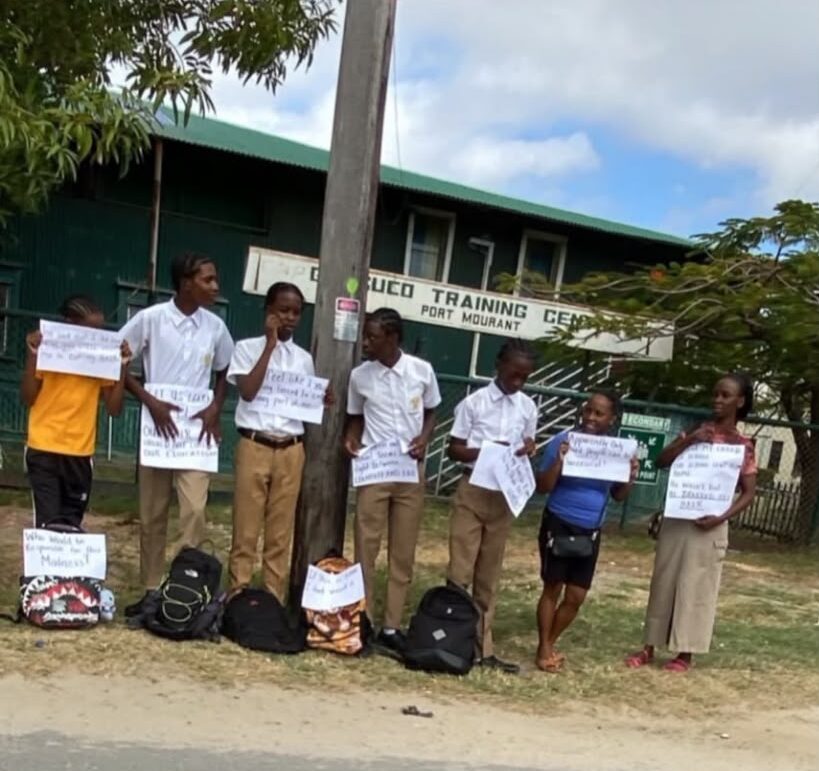
Students at Corentyne Comprehensive High School gathered outside the school compound on Friday morning with placards to voice their concerns over the school’s hairstyle rules, with male students reportedly being told they must cut their hair and that failure to comply could result in their transfer to another school.
Joined by three parents, the students stood peacefully outside the compound, insisting that they were not staging a protest but were making their concerns known about the school’s demand that they change their hairstyles.
The Friday action follows concerns raised earlier this week over the enforcement of the school’s grooming requirements. The issue has now escalated, with students and parents questioning not only the hairstyle rule itself but also the reported consequences for students who refuse to comply.
The situation reportedly intensified when school authorities intervened in Friday’s gathering. One student was reportedly summoned after the exercise was video-recorded and was accused of participating in a protest. Some students were subsequently sent home, while others were reportedly sent to the school office and instructed to remain there.
Students were also allegedly told to cut their hair, while some were reportedly instructed to have their hair plaited in the interim. The matter was also said to have been referred to welfare authorities.
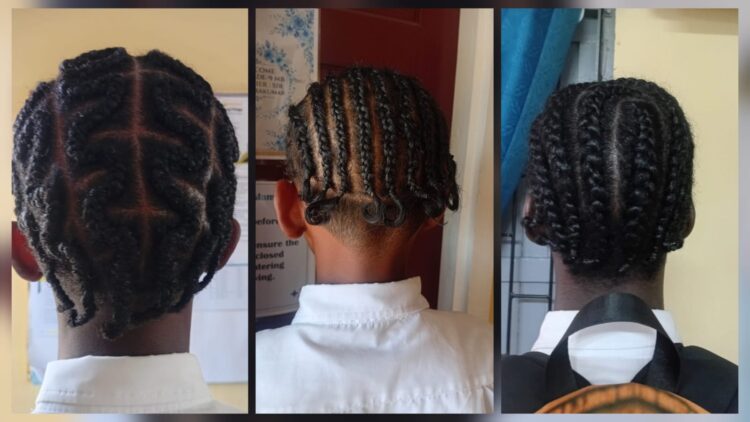
The most serious concern for parents and students is the reported position that students who do not comply with the hairstyle requirement could ultimately be transferred to another school.
Some teachers have also privately expressed concern about the handling of the dispute. Those who spoke on condition of anonymity, citing fears of retaliation or victimisation, said there is growing frustration among some students and parents, with one sentiment repeatedly expressed: “Everything is a problem.”
The controversy has also brought renewed attention to the Ministry of Education’s position on hairstyle rules.
The Ministry has the instructed headteachers that students should not be suspended, sent home or denied access to learning because of hairstyle breaches. Instead, parents or guardians should be invited to discuss the matter with the school.
The Ministry has also acknowledged that hairstyle rules can disproportionately affect some learners and has said consideration should be given to children’s rights, self-esteem, individuality and cultural expression.
Against that background, the reported developments at Corentyne Comprehensive raise questions about whether the measures being applied are consistent with the Ministry’s guidance, particularly if non-compliance with a hairstyle rule can result in a student being transferred.
The dispute also raises questions of cultural sensitivity and potential discrimination. Hair can be closely connected to culture, identity and natural hair texture, meaning that grooming requirements can affect students differently. The manner in which such rules are developed and enforced therefore matters, particularly where disciplinary consequences are involved.
What began as a disagreement over hairstyles has now developed into a broader dispute over discipline, student rights and the appropriate response when students and parents challenge a school rule.
For the students who gathered outside the school on Friday, their message was that they wanted their concerns heard. The question now is how the school and education authorities will resolve the dispute without allowing a disagreement over hairstyles to further disrupt the students’ education.