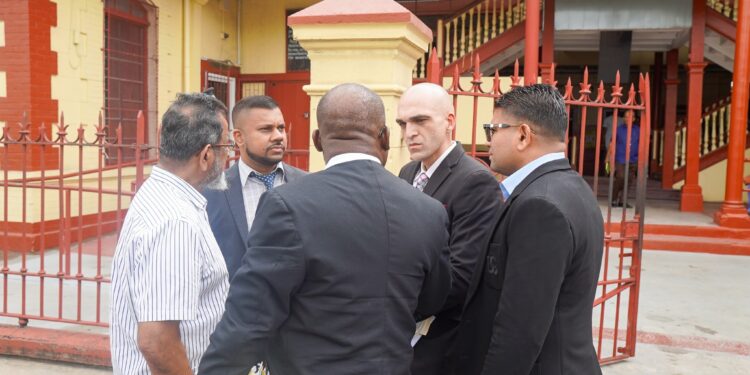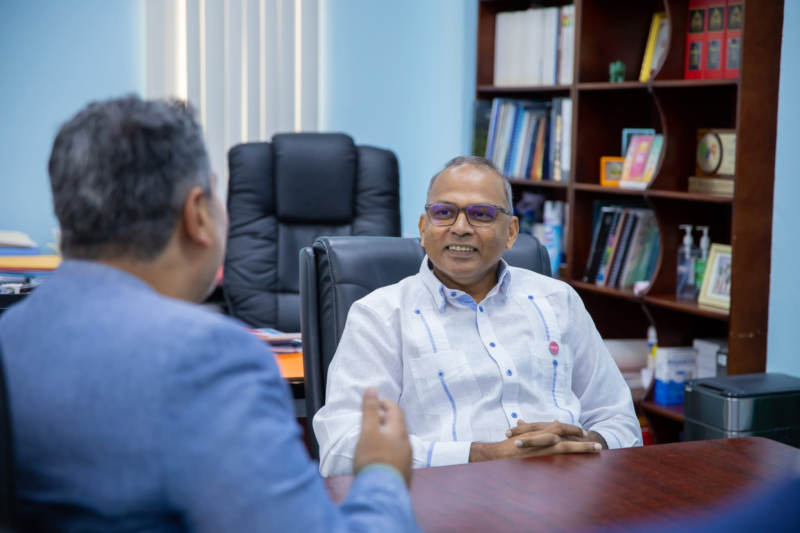
Guyana is exploring the use of artificial intelligence to improve healthcare delivery, with Health Minister Dr Frank Anthony meeting with a visiting OpenAI team as the government considers wider applications of the technology across the health system.
The meeting, held last week, according to the minister’s social media post, focused on how AI could support doctors and nurses, improve diagnostics, strengthen health-data management, enhance training and assist with patient care.
Anthony said the government’s objective is to use the technology responsibly to improve health outcomes.
“From supporting our doctors and nurses to improving diagnostics, health data, training and patient care, the possibilities are significant. Our goal is simple: use technology responsibly to improve health outcomes for every Guyanese. The future of healthcare is here and Guyana will be ready.”
No further details were immediately released about the scope of the discussions with OpenAI, including whether a formal agreement or specific implementation programme is being contemplated.
AI Already Operating in 21 Facilities
The engagement comes as Guyana is already introducing AI-assisted technology into healthcare.
According to the 2026 Mid-Year Report, AI is currently being used at 21 health facilities, with plans for expansion to another 15 sites.
The technology has been deployed to assist with interpretation of medical images, including X-rays, CT scans and ultrasounds. At facilities such as Enmore Regional Hospital, AI software can flag potential abnormalities and pathologies within seconds, allowing medical personnel to prioritise cases for review.
The government is also expanding telemedicine as part of its effort to improve access to specialised healthcare in hinterland and riverine communities.
The Mid-Year Report said approximately 50 new telemedicine sites had been installed in Regions One, Two, Seven, Eight, Nine and 10, with another 70 proposed for the second half of 2026.
Digital Health Expansion
Guyana is simultaneously moving toward greater digitalisation of medical records.
The Electronic Health Records system continued to be rolled out in 2026, including at Festival City Polyclinic, where more than 5,900 patient profiles had been created.
The Georgetown Public Hospital Corporation has also been expanding digital medical, surgical and paediatric records, while training and infrastructure testing continue.
The government has additionally begun using drones to deliver essential medical supplies and robotic technology to support specialised care.
The discussions with OpenAI therefore come as Guyana attempts to combine AI, telemedicine, electronic records and other technologies as part of a broader transformation of healthcare delivery.
The key questions ahead will include how AI will be integrated into clinical decision-making, how patient information will be protected, and what safeguards will govern its use.