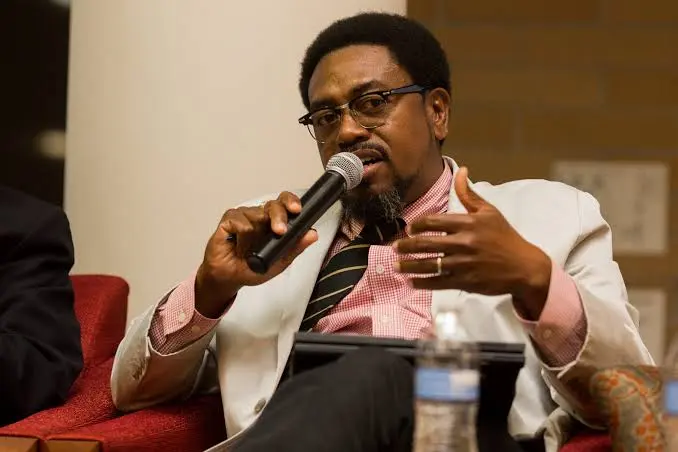
Guyana must protect and strengthen the communication channels that allow citizens to speak, challenge authority and engage across political, racial and social divisions, argues Dr. Terrence Richard Blackman, in a new essay warning that the country is becoming increasingly unable to “hear itself.”
Blackman, a mathematician, professor and founder and publisher of the Guyana Business Journal, makes the case in “The Country That Cannot Hear Itself,” published on September 20.
His intervention places communication at the centre of the country’s democratic health, arguing that free speech has little practical value if citizens do not have meaningful channels through which their voices can reach one another and those in authority.
Drawing on Martin Carter’s famous declaration that “all are involved,” Blackman argues that genuine national involvement requires citizens to communicate across the divisions that have historically shaped Guyanese society.
“A people can only be involved together if they can speak to one another.”
The argument goes beyond the traditional definition of free speech as simply the right to express an opinion. Blackman links communication to three functions essential to any functioning society: establishing purpose, enabling coordination, and providing correction when something goes wrong.
Without the ability to question decisions and have criticism heard, institutions lose an essential mechanism for identifying and correcting failure.
Who controls the channel?
Blackman draws on the scholarship of Guyanese-born media scholar and Ohio University professor emeritus Vibert C. Cambridge, whose work examines the relationship between culture, media and political power in Guyana.
Cambridge’s research, Blackman argues, demonstrates that communication channels are never entirely neutral.
“A channel is never neutral. It is built by someone, and it carries what its builders permit.”
That history is particularly important to Guyana’s free-speech debate.
Blackman traces the development of broadcasting from the colonial period through independence, noting the increasing concentration of broadcasting in state hands after 1966. The government took over the British Guiana Broadcasting Service in 1968, while Radio Demerara was eventually sold to the government in 1979.
Guyana’s history of state control over broadcasting later produced a significant legal confrontation over access to the airwaves, highlighting the connection between media access and freedom of expression.
Blackman’s lesson is not simply about which political party controls government; It is about control of the channels themselves.
A democracy needs a common conversation
The essay argues that Guyana’s problem today may be less about the absence of communication than the fragmentation of communication.
Social media and digital platforms have multiplied the number of voices, but they can also place citizens inside separate political and social information environments. People may be speaking more than ever while listening to one another less. Blackman identifies that breakdown as a democratic danger.
“The great loss was not disagreement. It was translation.”
His argument is ultimately a call to protect the spaces through which Guyanese can encounter competing views, challenge institutions and participate in a shared national conversation.
Guyana’s long history of political and social division makes the preservation of free and open communication particularly important. A democracy cannot function fully when citizens are free to speak but lack meaningful avenues to be heard, when information is concentrated in too few hands, or when competing communities increasingly inhabit separate information worlds.
The public interest therefore demands more than the formal protection of freedom of expression. It requires independent media, fair access to the public airwaves, diverse sources of information, protection for journalists and citizens who challenge authority, and institutions that do not treat criticism as a threat.
The responsibility extends beyond government and media owners. Citizens also have a stake in protecting the spaces where disagreement can occur without intimidation and where facts can be tested rather than simply asserted.
A country cannot sustain democratic participation if its people can no longer hear one another.
That is the warning at the heart of Blackman’s essay. The question facing Guyana is not simply how many voices it has, but whether those voices can still cross the boundaries that divide the country.
Protecting those channels is a public-interest obligation. Free speech is not merely the right to speak; it is also the right of a society to hear, question, challenge and respond.
Blackman’s full essay, including his examination of Martin Carter, Vibert Cambridge and Guyana’s communication history, is available through the Guyana Business Journal.