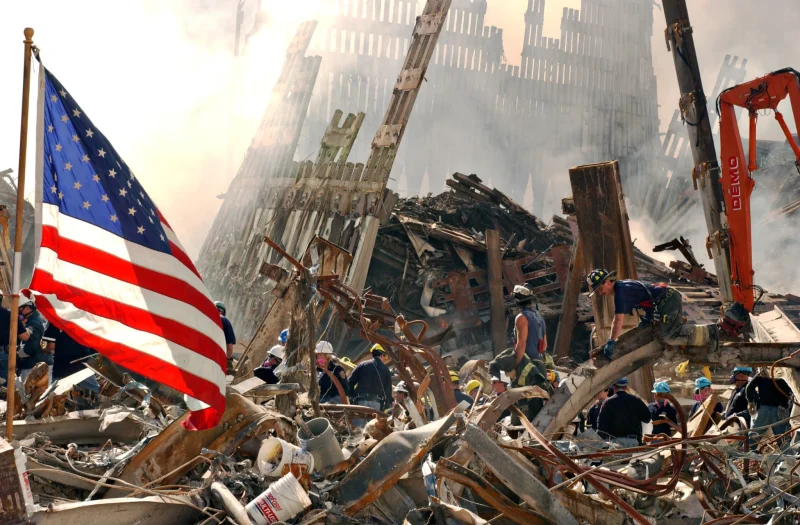
The United States is marking 25 years since the September 11, 2001 terrorist attacks, with ceremonies being held Friday to remember the nearly 3,000 people killed and reflect on the consequences of an event that transformed American society and global politics.
On the morning of September 11, 2001, 19 al-Qaeda hijackers seized four commercial aircraft. Two were flown into the World Trade Center’s twin towers in New York, a third struck the Pentagon in Arlington, Virginia, and the fourth crashed near Shanksville, Pennsylvania, after passengers and crew attempted to retake control.
The attacks killed almost 3,000 people and triggered profound changes in US foreign policy, national security and international counterterrorism efforts.
At Ground Zero in New York, victims’ relatives are again reading the names of those who died. Similar commemorations are taking place at the Pentagon and the Flight 93 National Memorial in Pennsylvania.
This year’s anniversary has added significance because it marks a quarter-century since the attacks.
A new moment of silence is also being observed to remember people who died in subsequent years from illnesses linked to exposure to toxic dust and debris following the collapse of the World Trade Center.
The anniversary has increasingly become a story about two generations — those who experienced September 11 firsthand and those born afterward who know it largely through history, photographs and the memories of others.
The consequences remain visible.
The attacks led to the US-led invasion of Afghanistan in October 2001, followed by the Iraq War in 2003. They also resulted in major changes to airport security, intelligence operations and counterterrorism laws.
The human toll did not end on September 11, 2001. First responders and others exposed to the toxic environment around Ground Zero subsequently developed serious illnesses.
The legal consequences also remain unresolved.
Khalid Sheikh Mohammed, accused by US authorities of being the mastermind of the attacks, remains detained at Guantánamo Bay without having gone to trial. His case has been delayed for years amid disputes over evidence obtained while he was held and interrogated by US authorities.
Twenty-five years after the attacks, Friday’s commemorations therefore serve two purposes: remembering those who died on September 11, 2001, and reflecting on the political, security and human consequences that have continued long after the smoke cleared