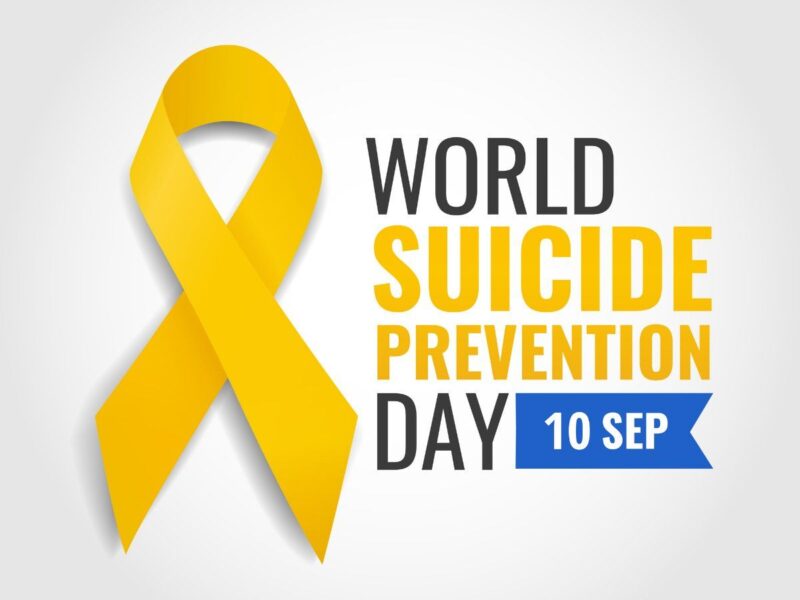
On World Suicide Prevention Day 2026, Blossom Inc. asks Guyana to consider a simple but meaningful question: What would change if every person who was struggling knew that they could speak – and that someone would truly listen?
Behind every discussion about suicide are human beings. A son. A daughter. A mother or father. A friend. A student sitting quietly in a classroom. A farmer in a hinterland community. A young person trying to understand who they are. A man who has been taught that strength means carrying pain silently.
And behind every life lost is a family and community left with grief, questions and often the painful thought: What did we miss? What could we have done?
At Blossom, we believe that our national conversation must move beyond statistics alone. Suicide is not simply an individual mental-health issue. It is a complex public-health and social challenge shaped by relationships, culture, stigma, economic pressures, access to services, gender expectations, geography and the environments in which people live. Most importantly, suicide is preventable.
Guyana has made progress. Now policy must reach people.
Guyana has taken important steps to strengthen its national response, including the Suicide Prevention Act 2022 and the development of national mental-health and suicide-prevention frameworks. But legislation, strategies and services achieve their purpose only when people know about them, can access them, trust them and experience them in their everyday lives.
That is why suicide prevention cannot belong to the health sector alone.
It belongs in our homes and schools. It belongs in workplaces and places of worship. It belongs within Indigenous villages and hinterland communities. It belongs in our universities, businesses and community organisations. It belongs in the conversations between parents and children and between friends who notice that something has changed. And it belongs in public policy.
Through Voices for Life: Empowering Guyanese for Suicide Prevention, Blossom is working to strengthen the ability of communities and advocates to participate meaningfully in that process – as recipients of policy and as contributors to the decisions that affect their lives. Our approach recognises that effective advocacy must combine credible evidence with the lived realities of communities.
We have been listening to Guyana
One of the most important principles underpinning Voices for Life is that we should not presume to know what communities need without first listening to them.
Through eight national consultations, 108 people from all ten administrative regions of Guyana contributed their perspectives. Participants included community leaders, young people, women-led organisations, Indigenous stakeholders, frontline service providers, LGBTQ+ persons and other civil-society actors. One-third of participants identified as Indigenous and one-third as young people.
What emerged reinforces something that must become central to Guyana’s suicide-prevention response: there is no single Guyanese experience of distress, and therefore there can be no single pathway to prevention.
Geography matters. Culture matters. Gender matters. Age matters. Poverty and opportunity matter. Family relationships matter. Stigma matters. Whether a service exists is important – but so too is whether a person feels safe enough to use it.
Our consultations also exposed an issue that deserves particular national attention: men and boys.
Men participated in our consultations, but they were often reluctant to speak directly about their own emotional struggles. Women, by contrast, frequently spoke about the unmet mental-health needs of their husbands, sons, brothers and partners. These conversations pointed towards gender expectations that can make vulnerability difficult for men and can discourage help-seeking.
This requires more than telling men to “talk.”
We must create environments in which talking feels possible. We need services and community approaches that understand how Guyanese men experience and communicate distress. We must challenge the idea that silence is strength, while recognising that changing deeply embedded expectations about masculinity requires patience, trust and culturally responsive approaches.
Strength can also mean saying: “I am not okay.”
Strength can mean asking for help.
And strength can mean noticing that someone else is struggling and staying beside them while they find support.
Our children should not have to find the words alone
This World Suicide Prevention Day, Blossom is placing particular emphasis on children, adolescents and the adults who surround them.
One of the gaps we have identified is deceptively simple: many parents and caregivers have never been given the language or practical tools to recognise when a child may be struggling emotionally and socially.
Sometimes distress does not announce itself.
It may appear as withdrawal. Anger. A change in behaviour. Difficulty sleeping. Loss of interest. Hopelessness. A child who suddenly seems different. And sometimes the signs are subtle enough that a loving parent simply does not understand what they are seeing.
This is why Blossom has introduced Raising Calm Minds, the public-awareness component of Voices for Life, focused particularly on building suicide literacy among parents and caregivers of children and young people. Its three priorities are straightforward: helping adults become comfortable with mental-health language; helping them recognise signs of emotional distress; and helping them know how to respond through calm, open and supportive conversations.
There is a message here that we want every Guyanese parent and caregiver to hear:
You do not have to be a psychologist to make a difference in your child’s life. You can notice. You can ask. You can listen. You can take what they tell you seriously. You can seek professional support when it is needed. And you can create a home in which difficult feelings do not have to be hidden.
We must become more comfortable saying the word “suicide”
For generations, many families have approached suicide through silence, shame, fear, judgement or euphemism. That silence can itself become a barrier. Responsible suicide-prevention communication means speaking without sensationalising, avoiding graphic descriptions, respecting people’s dignity and privacy, emphasising hope and recovery, and always directing people towards appropriate support.
But responsible communication does not mean avoiding the subject.
When someone we love appears deeply distressed, we should not allow our discomfort with the word suicide to prevent a compassionate conversation.
We need a Guyana in which asking someone whether they are struggling is understood not as interference, but as care. A Guyana in which mental-health difficulties are not treated as moral weakness. A Guyana in which seeking psychological or psychiatric support attracts no more shame than seeking medical attention for any other serious health concern. And a Guyana in which a person can say, “I need help,” without fearing ridicule, rejection or judgement. That cultural change begins in ordinary conversations.
From awareness to action
World Suicide Prevention Day is not an annual moment when we speak passionately for twenty-four hours and then return to silence. Awareness matters. But awareness without systems, services, accountability and sustained action is insufficient.
Our work through Voices for Life therefore deliberately connects community voice with advocacy. We are strengthening advocates’ ability to identify suicide-prevention problems in their communities; examine their root causes; gather credible evidence; understand the social and cultural context; engage decision-makers; develop advocacy goals; analyse policy; build coalitions; communicate safely; and monitor whether advocacy actually results in change.
The intention is to create more people who can talk about suicide and to develop people who can help change the conditions in which suicide prevention takes place. That distinction is critical.
If services are inaccessible in a rural community, advocacy should ask why. If young people do not know where to seek confidential support, advocacy should address it. If men are consistently absent from mental-health services, we should investigate the barriers rather than simply blaming men for not attending. If policies exist nationally but communities do not know about them or experience their benefits, we must examine the distance between policy intent and implementation. And when Indigenous, LGBTQ+, rural or other marginalised communities tell us that existing systems do not adequately reflect their realities, those voices must influence how programmes and policies are designed.
Prevention is something we build together
Government has an indispensable role, but government cannot do this alone. Neither can Blossom.
Suicide prevention requires a genuinely whole-of-society response. We need health professionals who recognise risk and respond compassionately. Teachers who notice changes in their students. Employers who create psychologically safer workplaces. Religious and community leaders who replace judgement with support. Journalists who report responsibly. Businesses willing to invest in mental wellbeing. Civil-society organisations that bring community evidence to policymakers. Parents who listen. Friends who check again when “I’m fine” does not sound fine. And we need policymakers willing not only to speak to communities, but to listen to them.
Through Raising Calm Minds, this work will extend into communities through public information, radio conversations, schools, community organisations and religious bodies, alongside freely accessible suicide-literacy and crisis-pathway resources. Knowledge should not remain in a training room or policy document. It should travel. From a workshop to a village. From a radio conversation to a kitchen table. From a teacher to a parent. From one parent to another. From someone who once suffered silently to someone who now knows that asking for help is possible. That is how culture changes.
On this World Suicide Prevention Day, let us make a different promise
Let us promise not simply to tell people that their lives matter. Let us build communities that demonstrate that they do. Let us listen before distress becomes crisis. Let us take emotional pain seriously. Let us make it easier for men and boys to seek help without feeling that they have surrendered their strength. Let us teach our children that difficult emotions can be spoken. Let us ensure that Indigenous, rural, hinterland, LGBTQ+ and other communities mentioned in national strategies and meaningfully represented in the decisions that shape them. Let us continue strengthening mental-health services while also confronting the social and cultural conditions that make accessing those services difficult. Let us hold institutions accountable for translating good policies into lived realities.
And when someone finds the courage to tell us, “I am struggling,” let our first response not be judgement, disbelief or advice.
Let it be: “I hear you. I am here. We will find support together.”
Because suicide prevention does not begin only when somebody reaches crisis. It begins much earlier. It begins when a child knows home is a safe place to speak. It begins when a man learns that vulnerability and strength can coexist. It begins when a teacher notices. When a friend checks in. When a community refuses to stigmatise. When services are accessible. When policymakers listen. When evidence leads to action. And when, across Guyana, we decide that protecting life and nurturing mental wellbeing are responsibilities we share.
This World Suicide Prevention Day, Blossom Inc. invites Guyana to move from silence to conversation, from stigma to understanding, and from awareness to sustained action.
Every conversation can open a door. Every community can create connection. Every life matters.
Blossom Inc.
Voices for Life: Empowering Guyanese for Suicide Prevention
Raising Calm Minds – building knowledge, recognising distress and supporting conversations that can change lives.
The project was funded by the Commonwealth Foundation