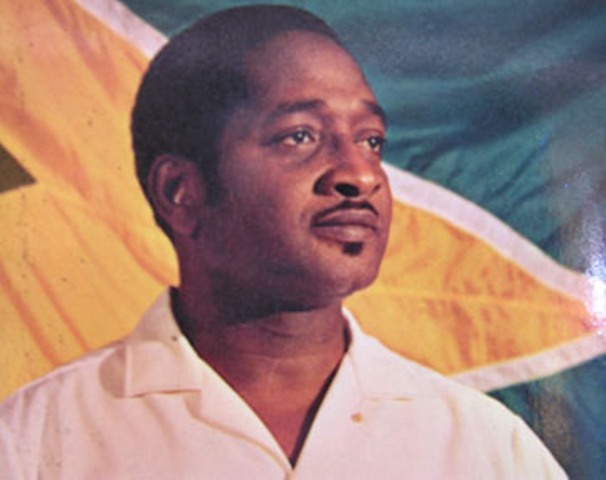
By Rannie Whyte- Forbes Burnham remains one of the most influential and controversial figures in the political history of the Caribbean. As Guyana’s first Prime Minister and later President, he played a significant role in shaping the country’s post-independence direction and in advancing the cause of Caribbean integration.
His contribution to the Caribbean Community (CARICOM) and the broader vision of Caribbean unity was grounded in his belief that small states could better protect their sovereignty and promote development through cooperation. For Burnham, political independence could not be fully meaningful without a corresponding measure of economic independence.
The Road to Regional Integration
Burnham came to political prominence during a period when Caribbean societies were moving toward independence. Across the region, leaders were confronting the legacies of colonialism, economic dependence, social inequality and political marginalisation.
Independence offered new opportunities, but it also exposed the limitations of small economies that relied heavily on foreign markets, imported goods and external investment.
Burnham understood that the Caribbean needed to cooperate to strengthen its bargaining power, develop its resources and reduce its dependence on former colonial powers. This conviction shaped his approach to Guyana’s foreign policy and his support for regional integration.
Guyana’s participation in the movement toward regional integration was central to Burnham’s regional vision. Although Guyana is located on the South American mainland, its history and culture are deeply connected to the Caribbean. Its political institutions, language, education system, cultural traditions and colonial experience developed within the British Caribbean world.
Burnham recognised that Guyana’s future was linked to that of the Caribbean.
He supported Guyana’s involvement in the Caribbean Free Trade Association (CARIFTA), established in 1965, and in the discussions that eventually led to the creation of CARICOM. CARICOM’s own historical record traces the development from CARIFTA to the Caribbean Community and identifies Burnham as one of the four founding leaders who signed the Treaty of Chaguaramas in 1973.
The Treaty of Chaguaramas was signed on July 4, 1973, by Barbados, Guyana, Jamaica and Trinidad and Tobago. It established the Caribbean Community and Common Market and came into force on August 1, 1973.
Guyana, under Burnham’s leadership, was therefore not merely a participant in the process. Burnham was one of the four leaders who formally established the Community.
At the April 1973 Heads of Government Conference in Georgetown, where Burnham was elected chairman, regional leaders agreed to establish the Caribbean Community and Common Market. The Georgetown Accord described deeper integration as a means of promoting industrial and agricultural development, employment and improved living standards, while strengthening the region’s bargaining power internationally.
Economic Cooperation and Self-Reliance
A major part of Burnham’s regional outlook was his emphasis on economic self-reliance.
He argued that Caribbean nations had inherited economies designed primarily to serve colonial interests. Many depended on a limited number of exports and remained vulnerable to international prices and external economic policies.
Regional integration offered a way to address these weaknesses.
By expanding trade among Caribbean countries, coordinating production and sharing resources, the region could create a stronger economic base. A larger regional market could also encourage industrial development and reduce reliance on imported goods.
Burnham supported the idea that the Caribbean should make greater use of its own resources. This included agriculture, manufacturing, education, technology and financial cooperation.
Although complete self-sufficiency was difficult to achieve, the principle of regional self-reliance became an important part of the Caribbean development agenda.
The CARICOM framework reflected these objectives through economic integration, foreign-policy coordination and functional cooperation. The original Treaty of Chaguaramas specifically provided for integration in economic matters, coordination of foreign policies and cooperation in areas including labour, social security and other fields.
The objective was not simply to increase commerce. It was also to strengthen the economic position and independence of Caribbean states.
Burnham’s economic policies in Guyana were controversial. His government introduced state ownership and cooperative forms of economic management, while the country later experienced serious economic challenges.
Nevertheless, the concerns that informed those policies—external dependence, unequal trade and the need for greater national control over resources—were shared by many Caribbean leaders.
Collective Diplomacy
Burnham also recognised the importance of collective diplomacy.
Individually, Caribbean countries had limited influence in international affairs. Acting together, however, they could present a stronger voice on issues affecting developing countries.
CARICOM provided a mechanism for consultation and coordination on international matters. Its founding framework explicitly included foreign-policy coordination as one of its objectives.
Through collective diplomacy, Caribbean states could pursue common positions in international organisations, including the United Nations and the Commonwealth, while seeking greater influence in global economic and trade negotiations.
Burnham’s foreign policy also reflected the influence of the Non-Aligned Movement and the wider struggle against colonialism and racial domination.
He maintained relations with countries in Africa, Asia, Latin America and the Caribbean that were pursuing independent development paths. His international outlook placed Caribbean unity within a broader global movement.
He believed the Caribbean should support peoples struggling for independence and resist domination by powerful external states.
This approach helped reinforce the region’s political identity as part of the developing world.
A Broader Definition of the Caribbean
One of Burnham’s important contributions was his insistence that the Caribbean should not be defined solely by geography.
The region was more than a collection of islands. It was a community shaped by common historical experiences, including colonialism, slavery, indentureship, migration, cultural exchange and resistance.
Guyana’s membership in CARICOM broadened the organisation’s geographic and political identity. It demonstrated that mainland territories could be fully part of the Caribbean community when their historical and cultural connections were strong.
That understanding remains relevant today.
The Caribbean includes societies with different languages, political systems, geographic features and economic structures. Yet these differences do not eliminate the possibility of unity. Instead, they make cooperation more valuable and demonstrate that regional identity can accommodate diversity.
Guyana has also contributed significantly to the wider Caribbean through migration, culture, education, politics and professional expertise. Burnham’s regional outlook helped establish the foundation for these continuing connections.
Functional Cooperation
Burnham understood that Caribbean unity had to be expressed through practical action.
Political statements alone could not address the region’s challenges. Cooperation was needed in areas that directly affected the lives of Caribbean people.
CARICOM’s work in education, health, agriculture, transportation, culture, communications and disaster response reflects this principle of functional cooperation. By sharing expertise and coordinating policies, member states can achieve results that may be beyond the capacity of any one country.
This approach has become increasingly important in the face of modern challenges.
The Caribbean must respond collectively to climate change, hurricanes, public health emergencies, food insecurity, energy costs, crime, migration and economic vulnerability.
Many of these challenges are regional in nature. They cannot be effectively addressed by individual states acting alone.
The continuing need for cooperation underscores the importance of the regional framework created by Burnham and the other founding leaders.
The Question of Sovereignty
For Burnham, Caribbean unity was not intended to undermine national sovereignty. Rather, he believed cooperation could strengthen it.
Small countries often face pressure from larger states and international institutions. By coordinating their policies, Caribbean governments could defend their interests more effectively.
This idea remains central to the importance of CARICOM.
Regional integration allows member states to pool their influence without surrendering their national identities. Each country retains its sovereignty while participating in collective decision-making.
Burnham’s approach reflected a practical understanding of power in international relations.
Sovereignty has limited meaning when a country lacks the economic strength or diplomatic influence to protect its interests. Regional cooperation, therefore, becomes a means of making sovereignty more effective.
A Complex and Contested Legacy
Any discussion of Forbes Burnham must acknowledge the controversies surrounding his domestic rule.
His government was criticised for its approach to elections, political competition, civil liberties and economic management. Guyana’s political tensions and divisions also shaped perceptions of his leadership.
These issues complicate his legacy.
The pursuit of national and regional unity must be accompanied by democracy, accountability, respect for human rights and inclusion. Unity imposed without political freedom cannot produce a stable or genuinely democratic society.
At the same time, Burnham’s domestic controversies should not obscure his contribution to Caribbean integration.
Historical figures must be assessed in their full complexity. Burnham’s record contains both serious shortcomings and important achievements.
His regional ideas reflected concerns that remain relevant: the need for economic independence, stronger diplomacy, greater control over natural resources and cooperation among small states.
These principles continue to influence discussions about the future of CARICOM.
Burnham’s Continuing Relevance
The Caribbean today faces many of the challenges Burnham identified during the early years of independence.
Caribbean economies remain vulnerable to external shocks, climate change, international debt, high food and energy costs and unequal access to global markets.
At the same time, the region has opportunities to strengthen cooperation.
CARICOM can promote greater regional food production, improve transportation links, expand renewable energy, develop digital infrastructure, coordinate foreign policy and deepen collaboration in education and public health.
These priorities are consistent with Burnham’s belief that Caribbean countries must work together to protect their interests.
His vision of self-reliance does not require isolation from the world. Rather, it calls for engagement with the global economy from a position of greater regional strength.
Conclusion
Forbes Burnham made a significant contribution to CARICOM and to the wider cause of Caribbean unity.
As one of the founding leaders of independent Guyana, he helped ensure that the country became an active participant in the regional integration movement. He was one of the four signatories to the Treaty of Chaguaramas and chaired the 1973 Georgetown conference that helped move the region toward the establishment of CARICOM.
He promoted economic cooperation, collective diplomacy and the principle that Caribbean states could achieve greater security and influence by acting together.
His legacy remains complicated by the political and economic difficulties associated with his rule. Nevertheless, his regional vision continues to speak to enduring Caribbean concerns.
The challenges facing Caribbean countries today—economic vulnerability, climate change, public health threats, food insecurity and limited international influence—cannot be addressed effectively through isolation.
The future of the Caribbean still depends on cooperation.
In that sense, Burnham’s central message remains relevant: Caribbean unity is not merely a symbol of shared history. It is a practical necessity for protecting sovereignty, promoting development and giving the people of the region a stronger voice in the world.
By Rannie Whyte