

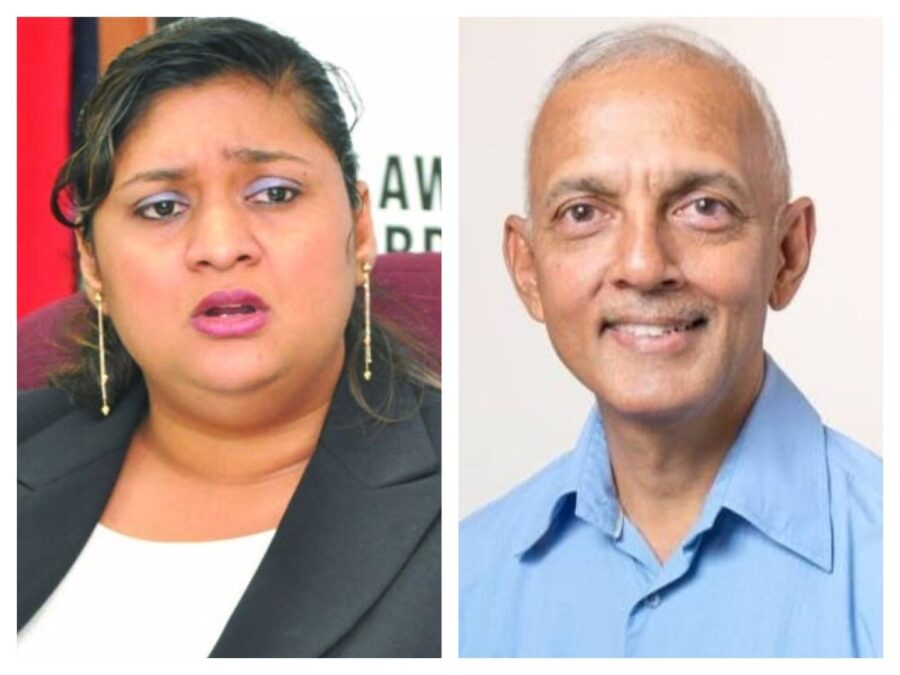
The Government is facing questions over the legal authority used to revoke the Linden Town Council’s 2016 toll by-laws, with former Local Government Minister Ronald Bulkan challenging whether the current Local Government Minister has the power to unilaterally cancel an already approved and gazetted municipal by-law.
The controversy follows the issuance of Order No. 172 of 2026, which purports to revoke the Linden Town Council (Toll) By-Laws 2016, published in the Official Gazette on August 20, 2016. The Order cites sections 304 and 305 of the Municipal and District Councils Act. But those provisions do not expressly confer a power on the Minister to revoke an approved by-law.
Section 304 gives a council the authority to make by-laws for the good rule and government of its area. Section 305 sets out the approval process. A council-made by-law must be submitted to the Minister, who may approve it, approve it with amendments, or reject it. The same section provides that a by-law has no force of law until it has received ministerial approval. What section 305 does not expressly say is that the Minister, after approving and gazetting a by-law, may subsequently revoke it. That omission is at the centre of Bulkan’s challenge.
The former minister has questioned the legal basis for Order No. 172, arguing that sections 304 and 305 cannot simply be read as giving the Minister a power of revocation that Parliament did not expressly provide. The distinction is critical.
The Linden Town Council made the by-laws. The Minister’s role was to approve them. Once approved and published in the Official Gazette, the by-laws became operative subsidiary legislation. The issue now is whether the Minister can subsequently extinguish that legislation by ministerial order without a specific statutory provision authorising such action.
The Government could argue that the Minister’s statutory approval role carries an implied continuing authority over municipal by-laws, or that another provision of the Act provides the necessary authority. However, if sections 304 and 305 are the sole statutory basis for Order No. 172, the Government faces the obvious question:
Where in those sections is the power to revoke?
Section 306 of the Municipal and District Councils Act does give the Minister substantial powers to intervene where a council is found to be in default following the statutory process.
Those circumstances include situations involving an abuse or excess of the council’s powers, failure to perform statutory duties, inefficiency and unreasonable expenditure. But the current revocation Order reportedly relies on sections 304 and 305 rather than the section 306 procedure. That distinction could become critical if the matter is taken before the courts.
The dispute also echoes the 2017 Georgetown parking-meter controversy, when the extent of ministerial authority to interfere with municipal by-laws became the subject of a major legal battle.
The Linden controversy therefore goes beyond the Kara Kara toll itself. It raises a fundamental question about local government and ministerial power:
Can a Minister revoke legislation made by an elected municipal council simply because the Minister now disagrees with or no longer approves of it? Or must the Minister point to a specific provision of law granting that power?
The answer could have implications well beyond Linden, particularly for other municipal and neighbourhood democratic councils whose by-laws require ministerial approval before taking effect. For now, two separate legal questions must be distinguished.
The first is whether the Linden Town Council was legally entitled to impose and collect the Kara Kara toll under its 2016 by-laws. The second—and potentially more fundamental question—is whether the Minister had the legal authority to revoke those by-laws after they had already been approved and gazetted. The second question is now squarely on the table.
And unless the Government can identify the statutory provision that gives the Minister the power of revocation, Order No. 172 could face a serious legal challenge.








![Rescue workers collect the remains of victims after a blast at a religious school in Peshawar [Abdul Majeed/AFP]](https://villagevoicenews.com/wp-content/uploads/2020/10/school.jpeg)
