The story of Guyana’s 1993 bid for the presidency of the United Nations General Assembly is an important—and often overlooked—chapter in the country’s diplomatic and political history.
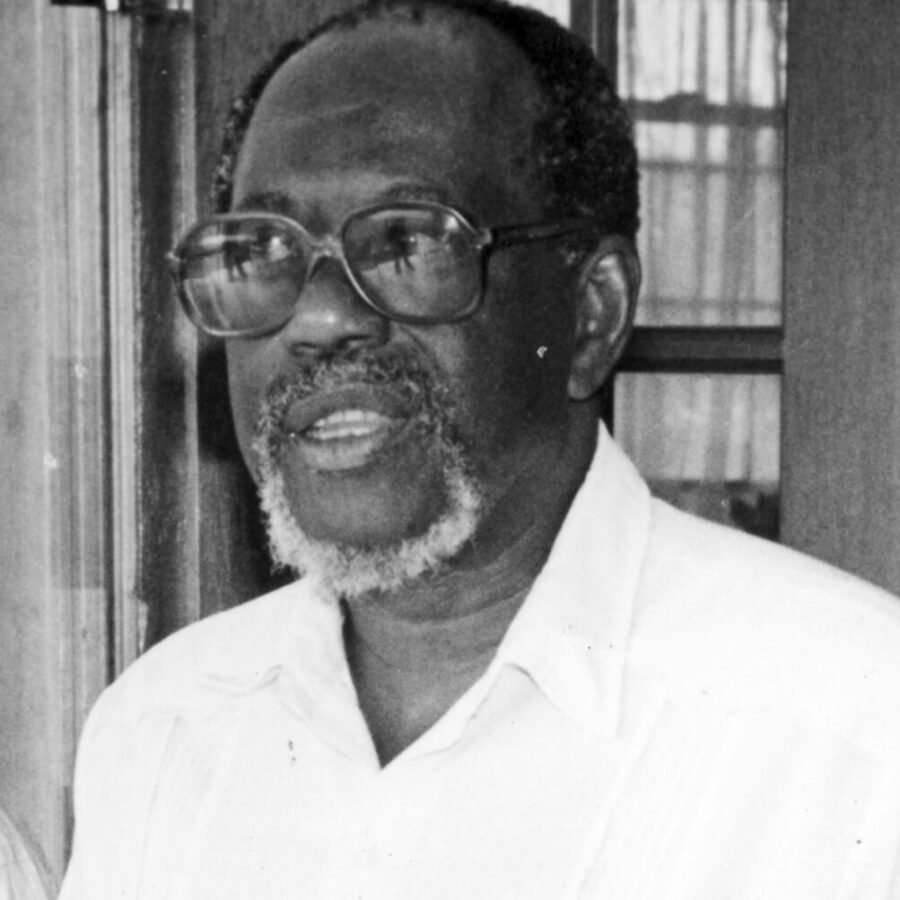
Veteran diplomat and former Foreign Minister Rashleigh Jackson had emerged as a candidate for the 1993 presidency of the UN General Assembly following the defeat of the People’s National Congress (PNC) government in the October 1992 General and Regional Elections.
According to former Commonwealth Secretary-General Sir Shridath Ramphal, Jackson had received strong regional backing for the prestigious diplomatic post. In a tribute following Jackson’s death in 2022, Ramphal recalled that Jackson had been:
“warmly endorsed” by the Heads of Government of his Caribbean region.
Despite that regional support, however, Jackson did not receive the backing of Guyana’s newly elected People’s Progressive Party/Civic (PPP/C) administration.
The decision came at a politically consequential moment. Led by Dr. Cheddi Jagan, the PPP/C had returned to government in October 1992.
Jackson, meanwhile, was among the most prominent figures in the PNC-era foreign policy establishment, having served as Guyana’s Foreign Minister for more than a decade.
His diplomatic credentials were considerable. He had also served as Guyana’s Permanent Representative to the United Nations and played a prominent role in international issues involving Namibia, apartheid, non-alignment and Guyana’s territorial controversy with Venezuela.
But his long association with the outgoing PNC administration placed his international candidacy squarely against the backdrop of Guyana’s deeply polarised political history. That political association appears to have worked against the renowned public servant’s bid.
Guyana Still Won the UN Presidency
There is an important twist to the story.
Although the PPP/C government did not back Jackson, Guyana ultimately secured the presidency of the UN General Assembly in 1993.
The successful Guyanese candidate was Ambassador Samuel Rudolph Insanally, who was elected President of the 48th session of the General Assembly on September 21, 1993.
The official UN record states that the Group of Latin American and Caribbean States had endorsed Insanally’s candidacy and that he was elected by acclamation.
Guyana’s Permanent Mission to the United Nations describes Insanally’s election as historic, noting that he became the first CARICOM representative elected President of the General Assembly. He presided over the 48th session during 1993–1994.
The UN’s records likewise list Samuel R. Insanally of Guyana as President of the 48th General Assembly session in 1993.
The “Presidency That Never Was”
The episode was later described by Sir Shridath Ramphal as:
“the Presidency that never was.”
In his tribute to Jackson following his death in 2022, Ramphal recalled that Jackson had received the support of Caribbean Heads of Government for the UN post. But despite that regional endorsement, the candidacy did not come to fruition.
“It wasn’t to be.”
The episode highlights the intersection of Guyana’s diplomatic ambitions and its domestic political divisions at the time.
Jackson had spent decades building Guyana’s international reputation and was widely regarded as one of the country’s most experienced diplomats. His record included senior representation at the United Nations and extensive involvement in some of the major international issues confronting Guyana during the Cold War era.
Yet the change of government in 1992 placed his international ambitions against the realities of Guyana’s deeply polarized political environment.
The historical record therefore presents a striking contrast: Jackson had regional support and the diplomatic credentials for the UN’s top elected diplomatic post, but the newly elected PPP/C government did not endorse his candidacy.
Guyana nevertheless captured the presidency that year through another distinguished diplomat, Samuel Insanally.
The episode remains a significant—and revealing—chapter in Guyana’s diplomatic history: a Guyanese diplomat with regional backing was unable to secure his country’s endorsement for the UN presidency, while Guyana itself ultimately occupied the post through another candidate.
That is why Jackson’s unsuccessful 1993 bid remains, in Ramphal’s memorable description, “the Presidency that never was.”