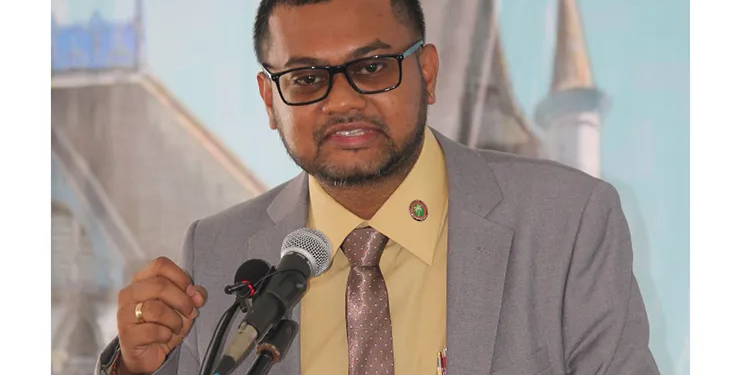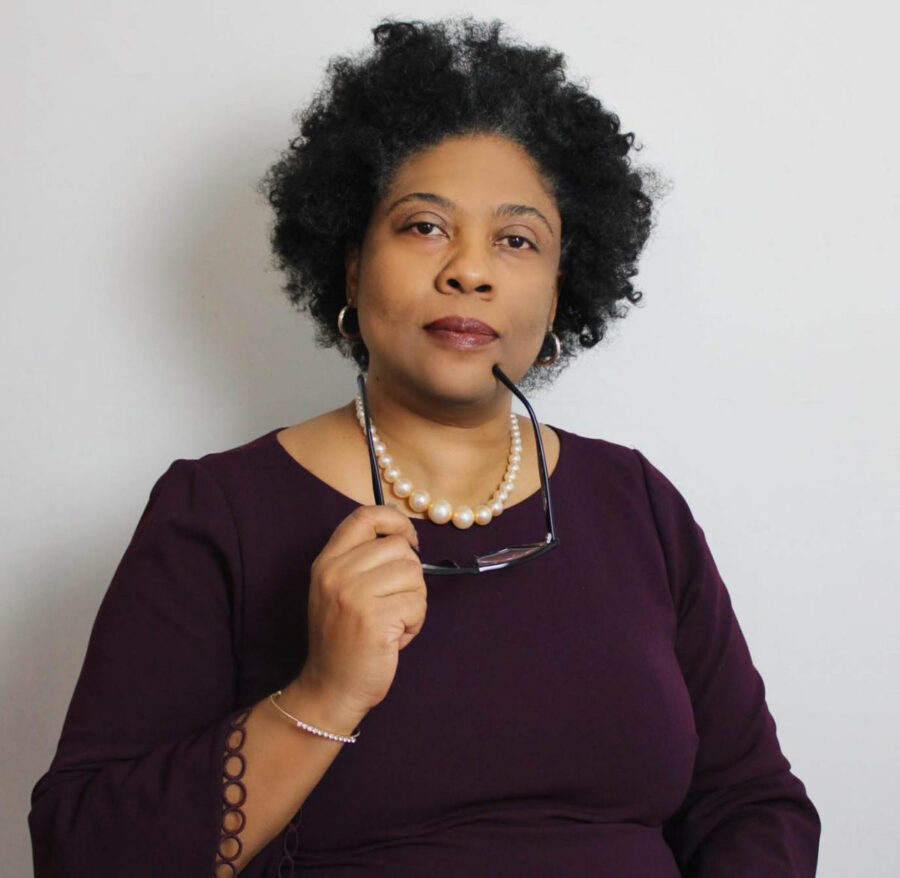
Guyana has the natural resources, human capital and financial means to build a stronger and more prosperous future, but doing so will require the country to transform its unprecedented oil wealth into broader economic opportunity and better living conditions for ordinary citizens, according to Dr. Karen Abrams, Executive Director of STEMGuyana and a longtime commentator on Guyana’s education and development challenges.
In an op-ed published August 23 in Kaieteur News, Abrams challenges the conventional explanation for poverty in developing countries and says Guyana’s experience exposes a more troubling reality.
“A nation that asks its poorest citizens to work 52-hour weeks and still leaves them in poverty does not have a resource problem. It has a design problem.”
Abrams’ argument comes as Guyana’s oil production has transformed its national finances, creating unprecedented revenues while serious concerns remain over poverty, wages, education and public services.
Working Hard, Staying Poor
Citing a Inter-American Development Bank 2025 Report of Guyana’s household survey, Abrams says about 32 per cent of Guyanese were living in extreme poverty and 58 per cent were living in poverty overall.
But the data, she argues, cuts directly against the notion that poor people are poor because they do not work.
Employment among the poor was high, according to the figures she cited — 77 per cent among the extreme poor and 83 per cent among the moderately poor.
Their working hours were also among the longest in Latin America and the Caribbean, with extreme poor workers averaging about 52 hours a week and moderately poor workers about 58 hours.
Yet their hourly earnings lagged dramatically behind those of non-poor workers.
“People are working themselves to exhaustion and still cannot climb out. That is a system problem, not a character problem.”
Abrams argues that the issue is therefore not a failure of effort but a failure of economic structures to reward that effort adequately.
For every dollar earned per hour by a non-poor Guyanese worker, she said, an extreme poor worker earned roughly 25 cents, while a moderately poor worker earned about 43 cents.
Education Failure Starts Early
Abrams extends her argument to the education system, which she says continues to reproduce inequality rather than consistently overcome it.
She said a pre-nursery diagnostic showed that roughly half of Guyana’s children entered nursery school without the expected foundational skills, while those whose parents had already introduced them to colours, letters and numbers arrived with an early advantage.
That gap, she said, becomes visible later.
In the 2019 Grade 2 assessment, only about half of learners were approaching mastery in literacy and numeracy, while just 5 per cent achieved mastery in literacy and 8 per cent in numeracy.
Abrams acknowledges improvement by Grade 6 but says the larger problem remains unresolved.
Her concern is that the system is failing to rescue too many children who enter school already behind.
The problem, she argues, cannot be reduced to a shortage of programmes or government intervention. Successive administrations have introduced initiatives, yet many underlying weaknesses persist.
Oil Wealth, Weak Foundations
Abrams says the contradiction extends far beyond education.
Guyana now has the financial resources to address major national problems, yet citizens continue to report poor water services, difficult experiences in the health system, unreliable infrastructure, low wages and limited employment opportunities.
That, she argues, points to a failure to build resilient institutions capable of translating economic growth into a better standard of living.
The countries that have successfully developed, Abrams says, did not simply acquire capital. They built institutions around research, evidence, science, data and the deliberate cultivation of talent.
“Building a strong, resilient nation requires putting the best people in the right roles.”
She argues that Guyana must create an environment in which merit matters, public policy is evidence-based and every citizen has the opportunity to develop according to ability.
The Wealth Is Here
Abrams proposes a stronger social safety net, better wages, lower taxes and a more efficient environment for business and public services. She also argues that basic government transactions should increasingly be completed online rather than through lengthy bureaucratic processes.
But her central argument is that Guyana does not need to wait for additional oil wealth, loans or foreign investment to begin fixing many of its problems.
“The resource we have failed to unlock is not in the ground. It is the return on the labour our own people are already giving.”
That is the heart of Abrams’ critique. Guyana is no longer a country that can plausibly explain its failures by pointing to scarcity alone.
The country has oil. It has workers. It has a young population. It has revenue. What it lacks, she argues, is a system capable of organising those assets effectively and distributing the benefits more widely.
“And design problems, unlike oil reserves, are entirely within our power to fix.”
Abrams closes with a challenge that places responsibility squarely on Guyana’s institutions and political leadership.
“The wealth is here. The people are already working for it. What remains is the will to build a system that finally pays them back.”
Her argument turns the national development debate on its head: Guyana’s defining challenge is no longer finding wealth, but proving that its institutions are capable of turning wealth into a better life for the people who generate it.