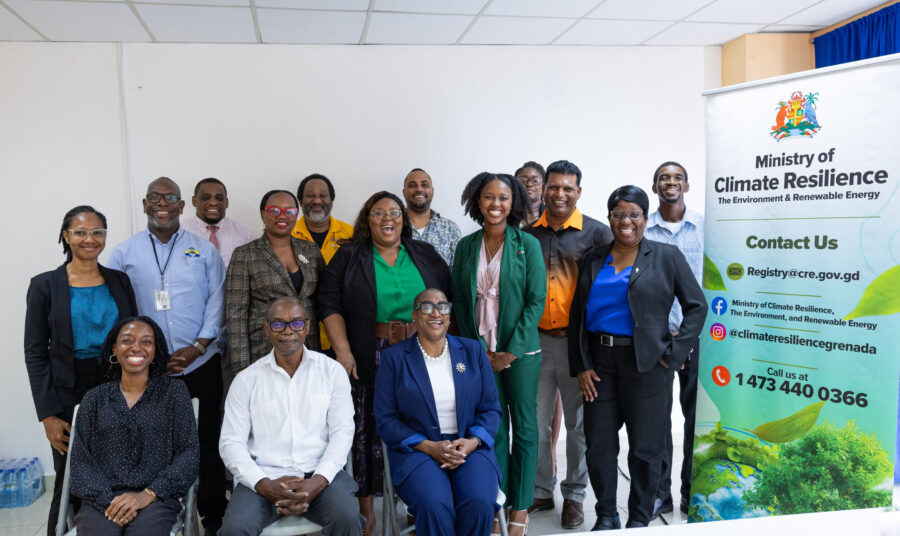
The Caribbean Community (CARICOM) Secretariat has launched a series of national consultations to build support for a Draft CARICOM Biodiversity Strategy and an accompanying Resource Mobilisation and Implementation Strategy (RMIS) aimed at strengthening how the region protects its natural resources and finances biodiversity action.
The consultations bring together government officials and other stakeholders from sectors including environment, finance, economic development, tourism, agriculture, fisheries and marine affairs, along with national biodiversity focal points and other partners.
CARICOM said the discussions are intended to review and validate the updated draft strategy, examine its priorities and identify practical mechanisms for implementation, financing, monitoring and reporting.
The consultations also seek to strengthen coordination among Member States and ensure that regional initiatives support, rather than duplicate or conflict with, national priorities.
The issue is particularly important for Caribbean countries, whose economies and communities depend heavily on coastal and marine ecosystems, agriculture, fisheries and other natural resources that are increasingly vulnerable to climate change and environmental pressures.
Speaking at a recent consultation in Grenada, Peron Johnson, Permanent Secretary in the Ministry of Climate Resilience, the Environment and Renewable Energy, stressed the close relationship between biodiversity protection, climate resilience and economic development.
“Climate resilience cannot be separated from biodiversity conservation, and biodiversity conservation cannot be separated from sustainable development. Our task is therefore to ensure that the policies, investments and actions we pursue reinforce one another.”
The regional strategy is not intended to replace national conservation plans.

Teshia JnBaptiste, Senior Project Officer, Sustainable Development, at the CARICOM Secretariat, said the regional framework is designed to help countries tackle challenges that require collective action.
“The Draft CARICOM Biodiversity Strategy is intended to complement, not replace, national biodiversity strategies and action plans. It seeks to provide a regional framework through which Member States can address common challenges, leverage partnerships, mobilise resources and advance biodiversity objectives that are often best addressed through collective regional action.”
The consultations are also examining the proposed Resource Mobilisation and Implementation Strategy, which is intended to address one of the region’s longstanding challenges — securing adequate and sustained financing to turn environmental commitments into action.
According to CARICOM, the RMIS will identify financing opportunities, strengthen regional coordination and expand technical cooperation. It is expected to help guide biodiversity investments through 2030 and beyond.
The push for a stronger regional approach comes as Caribbean governments face competing demands for economic growth, climate adaptation and environmental protection. Biodiversity loss, coastal degradation and climate-related impacts can directly affect food production, tourism, fisheries, water resources and the livelihoods of vulnerable communities.
CARICOM said the national consultations are therefore an important step toward ensuring that the final regional strategy reflects realities on the ground and provides practical support to Member States.
The process is receiving support from Deutsche Gesellschaft für Internationale Zusammenarbeit (GIZ), Germany’s main development agency, through the Promotion of Regionally Harmonised Approaches to the Protection and Sustainable Use of Biodiversity in CARICOM Member States (CARIBIO) Project.
The consultations are expected to inform the finalisation of the strategy and its implementation framework, with the broader objective of building a coordinated regional response to biodiversity challenges and strengthening the Caribbean’s capacity to protect the ecosystems on which its people and economies depend.