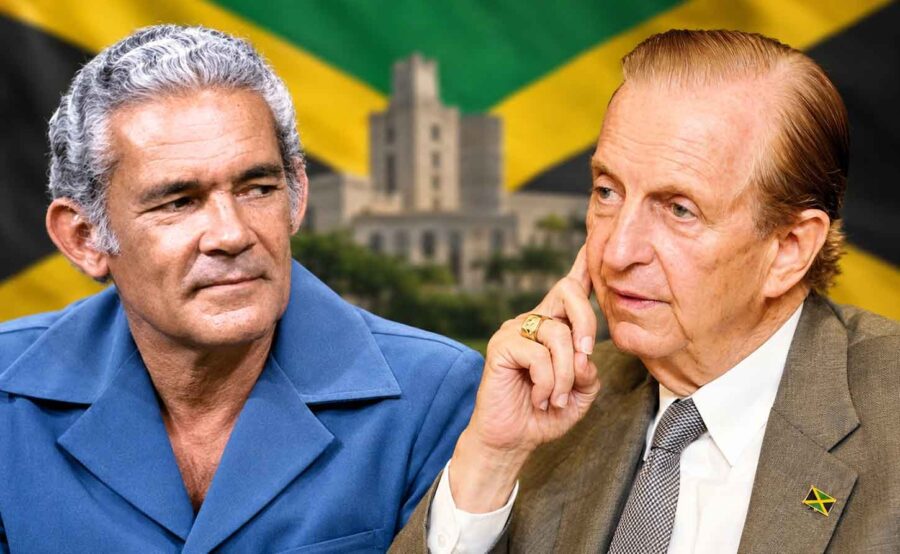
Declassified American files show the Central Intelligence Agency put a price on Jamaica’s opposition party and sent the proposal to the White House. The most damaging detail is not that the plan existed. It is the reason Washington concluded it did not need it.
The paper that named him
MONTEGO BAY, Jamaica – Calvin G. Brown | Political Analysis | In October 1979 a memorandum went up to the members of the Special Coordination Committee, the Carter administration’s most senior forum for authorising covert action. The subject line was flat and bureaucratic: Covert Action Options for Jamaica.
It had been prepared by the Central Intelligence Agency, and it stated its purpose without embarrassment. The ultimate aim, the Agency wrote, was either the political defeat of Michael Manley and the replacement of his government with one more friendly to the United States and appreciative of American interests, or, at a minimum, enough pressure on Manley and the People’s National Party to force a reversal of their drift towards Havana and Moscow.
Two options followed. Option No. 2 proposed using an international network of covert assets to condemn Manley’s Cuban and Soviet ties and to expose what the Agency called his efforts to suppress political freedom. Risk: low.
Option No. 1 was a name.
Establish direct confidential contact with Edward Seaga, leader of the main opposition party, the Jamaica Labour Party, the memorandum proposed — and provide guidance, assistance and funds to the JLP in the coming national election campaign. Risk: moderate to high. Cost: still redacted, forty-seven years on. The paper noted that a Presidential Finding would be required, the instrument by which an American president personally authorises a covert operation.
This is not a rumour retrieved from a defector’s memoir, nor a slogan sprayed on a Kingston wall. It is a United States government document, published by the State Department’s own Office of the Historian in the Foreign Relations of the United States series. Any Jamaican with an internet connection can read it tonight.
“Our ultimate aim is either the political defeat of Manley or the replacement of his government with one more friendly to the U.S. and appreciative of U.S. interests.”— CIA memorandum to the Special Coordination Committee, October 1979
What he had done to earn it
Understand first what the man in the crosshairs had actually done. Elected in 1972 on a landslide, Manley set about the unglamorous work of making independence mean something to people for whom it had so far meant very little: free secondary and university education, a national minimum wage, equal pay legislation, maternity leave with pay, a literacy campaign, land lease for small farmers, the enfranchisement of the eighteen-year-old.
Then he touched the ore. In 1974 his government imposed a production levy on bauxite, ending the arrangement under which North American aluminium companies had extracted Jamaican earth at rates set largely by themselves. Government revenue from the industry leapt from roughly US$19 million in 1973 to some US$180 million the following year. It was, in the plainest terms, a small state taking a fair price for its own patrimony.
He compounded the offence abroad. Jamaica became a founding architect of CARICOM, a loud voice for the New International Economic Order, a supporter of the MPLA in Angola and of the liberation movements in southern Africa, and an unapologetic friend of Cuba ninety miles to the north. To Washington, an English-speaking Caribbean democracy that redistributed at home and refused to take instruction abroad was not a partner, It was a pariah!
The first squeeze
The retaliation began not in the shadows but in the ledger. In June 1975 Henry Kissinger decided that no further American capital lending would be considered for Jamaica until the investment dispute between Kingston and the United States bauxite producers was satisfactorily resolved. A US$9 million rural education loan had already been deferred for a year following the imposition of the levy. State Department planners had earlier weighed tying the loan’s execution directly to the bauxite negotiations, noting among the drawbacks that Jamaica might turn round and accuse the United States of coercion. They understood exactly what they were doing.
By 1976 the word destabilisation was in every Jamaican mouth. Philip Agee, the renegade CIA officer, published a list of alleged Agency personnel in Kingston. Foreign Minister Dudley Thompson raised the charge to Kissinger’s face in Santiago. Manley declared a state of emergency in June, and won the December election with forty-seven of sixty seats. Twelve days before that vote, gunmen shot Bob Marley, his wife Rita and his manager at 56 Hope Road.
Here the record demands honesty rather than the answer we might prefer. For the 1974–76 period there is no declassified American document authorising an operation against Manley. What the files contain instead are denials, and an assessment by the State Department’s own intelligence bureau that Manley’s destabilisation campaign was an election tactic using the United States as a scapegoat for Jamaica’s problems. More awkward still: in a private conversation with the American ambassador in August 1976, Manley himself said he no longer believed anything was being done. He had once believed it, he said, but that chapter was now closed.
One document from that period does survive with genuine weight. In early December 1976 the incoming Secretary of State, Cyrus Vance, put to Kissinger a report from a source he considered highly reliable that Cuban exiles in Miami were planning an attempt on Manley’s life, and that the CIA stood behind it. Kissinger’s answer was that the Agency was behind no such thing. The allegation was serious enough to reach the top of the American government. It was never substantiated, and it should not be reported as though it were.
Nothing covert about the Fund
The most effective weapon deployed against Jamaica in those years required no station chief at all. Squeezed by the oil shock, capital flight and a collapsing tourist trade, Manley turned to the International Monetary Fund in 1977. What followed was devaluation, wage restraint, public spending cuts and a succession of performance tests, some of which Jamaica failed. In March 1980 Manley broke with the Fund. The consequences were immediate: a budget that could not be closed without shedding some eleven thousand public sector jobs, a strike at the electricity company, and much of the country in darkness.
Make the economy scream, the instruction had run in Chile. In Jamaica nobody needed to give the order. The machinery of international finance, in which the United States holds the largest single voice, did the work in the open, on headed paper, with Jamaican signatures at the bottom.
October 1979: the month it nearly happened
The covert option paper did not appear from nowhere. Through June and July 1979 Seaga had delivered a series of speeches naming Cuban and Soviet intelligence operatives said to have penetrated Manley’s government. Carter’s own Latin America man on the National Security Council, Robert Pastor, noted drily that the opposition leader obviously had very good sources, and that when Jamaicans accused the CIA of supplying them the accusation never quite took hold.
On 16 October 1979 Pastor was in Jamaica, meeting Seaga. The Daily Gleaner shortly afterwards published a list of alleged KGB and DGI agents inside the Jamaican government. The list, the American record states plainly, had been given to the newspaper by Seaga.
The following day, 17 October, President Carter wrote a handwritten note to Vance and to CIA Director Stansfield Turner. He was afraid, he said, that they were on the verge of driving Manley and Jamaica irrevocably to Cuba. He wanted a reassessment. Two days later he admitted he had been inclined to knock the hell out of Manley and support a moderate group, and had been talked out of it by Andrew Young, who told him such a policy would be suicide.
On 23 October the Special Coordination Committee met in the White House Situation Room and judged the CIA’s political proposal premature. Brzezinski ordered a full policy review instead. Option No. 1 was not approved.
“Kill it!”
It came back. In June 1980, with a Jamaican election approaching, Deputy Defence Secretary Graham Claytor pressed to revive the rejected proposals, warning that delay might produce another Grenada. His memorandum records precisely why they had been turned down the first time: it was felt that overt and non-governmental aid to the JLP had every good chance of sustaining it through an election, and that the risks of covert support outweighed the small additional benefit. An unidentified staffer scrawled two words across the top of Claytor’s paper: Kill it!
A second menu surfaced in July 1980: funding West German Christian Democrat observers for the Jamaican poll, funding the Daily Gleaner, funding the JLP, and funding the Jamaican military and police. Pastor and the CIA’s own deputy director for operations in Latin America agreed the proposals would be counterproductive; Pastor called them extraordinarily weak and evidence of a poor grasp of the political struggle inside Jamaica. They were shelved.
The Agency’s presence was hardly discreet in any case. That same month an American publication identified N. Richard Kinsman as the CIA station chief in Kingston; days later gunmen shot up his house. Meanwhile Jamaica’s ambassador in Washington, Alfred Rattray, protested that American conduct on aid — no food assistance programme budgeted for the coming year, no pledge at the Caribbean Group donors’ meeting — had created the perception that the United States wanted Manley beaten.
The year of blood
What Jamaica endured in 1980 needs no exaggeration. Official police figures put the year’s murder toll at 844, and analysts have long regarded that as conservative. Convoys were ambushed across the political divide: Manley’s team attacked in Spanish Town, Hugh Shearer’s in Falmouth, Seaga’s caravan fired on at Nannyville with a bodyguard wounded.
And on 20 May, in the small hours, the Myers Ward of the Eventide Home for the Aged on Slipe Pen Road burned. At least 146 elderly women died, the figure commonly given as 153. The building was a nineteenth-century timber structure holding more than two hundred residents against a legal capacity of 180; the fire chief had called it a tinder box. No official cause was ever determined. Nobody has ever been charged.
There is no evidence connecting Eventide to the CIA, and none connecting it to the Jamaica Labour Party as an organisation. To assert otherwise would be to dishonour those women with a story. But something else is true and is worth saying: by May 1980 this country had been ground down to a condition in which the instinct of an entire nation, on hearing that a poorhouse full of blind and crippled old women had burned, was to assume that politics had done it. That the question is still open forty-six years later is its own indictment. Nobody in Langley had to strike the match. The conditions had already been made.
What the record proves, and what it does not
Let us be exact, because precision is the only thing that makes this account unanswerable.
There is no declassified document showing that Edward Seaga took CIA money, and none showing that he asked for it. He met an American official; he passed intelligence to a newspaper; he argued to anyone who would listen that his opponent was leading Jamaica into the Soviet orbit. Politicians in opposition have done all three in every democracy on earth. He was never charged, and he denied to the end of his life that he was Washington’s instrument. That denial belongs in the record beside everything else.
Jamaican agency belongs there too. The garrison, the gun and the tribal constituency predate the Agency’s interest in this island by a generation. The PNP made its own errors — the rhetorical extravagance that frightened capital, the tolerance of a hard left that terrified the middle class, an economic programme that ran ahead of the state’s capacity to deliver it. Manley lost 1980 because Jamaicans were hungry and furious, and 87 per cent of them turned out to say so.
What the record does prove is this. The Central Intelligence Agency twice put before the President’s most senior advisers a proposal to make direct confidential contact with the leader of Jamaica’s opposition and to fund his party’s election campaign, with the explicit object of replacing the elected government of this country. The White House declined — not on principle, but on a cost-benefit calculation. Covert support was judged an unnecessary risk because overt and non-governmental pressure was already expected to do the job.
That is the sentence Jamaicans should sit with. Washington did not spare our democracy. It simply found a cheaper way.
Why this is not history
Jamaican politicians still recite the 1970s as a morality tale about socialist misadventure, as though the decade were a purely domestic act of self-harm. It was not. It was a small state’s attempt to price its own resources and choose its own friends, conducted under sustained economic pressure from the hemisphere’s dominant power, with a covert option paper sitting in a White House safe.
The architecture has not been dismantled; it has been re-equipped. Aid and market access are still leverage. Multilateral lending is still conditionality by another name. Warships still appear in Caribbean waters on missions defined in Washington. And the region’s leaders are still invited to understand that friendship with the wrong neighbour carries a price.
Manley’s real offence was never Marxism. It was the proposition that a black-majority island of two million people might set the terms on which its bauxite was sold and its allies were chosen. The files show what that proposition cost. They are open, they are free, and every Caribbean citizen should read them before the next generation is told the story wrong again.
Sources: Foreign Relations of the United States, 1977–1980, Vol. XXIII (Mexico, Cuba, and the Caribbean) and 1969–1976, Vol. E–11, Pt. 1, US Department of State Office of the Historian; CIA Freedom of Information Act Electronic Reading Room; Jamaica National Heritage Trust; contemporaneous reporting in the Jamaica Gleaner, Jamaica Observer and international wire services.