Guyana’s small-scale fishing sector is being urged to look beyond individual operations and harness the collective strength of cooperatives to improve bargaining power, access markets, strengthen livelihoods and contribute to national food security.
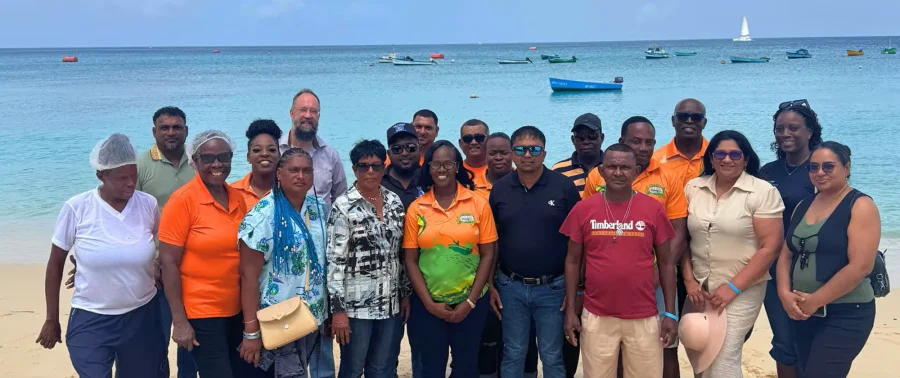
That is the focus of a regional learning exchange in Barbados, where representatives of Guyana’s fisheries cooperatives and fisherfolk organisations spent four days studying how their Caribbean counterparts organise, manage and develop their businesses.
The July 28–31 exchange was organised by the International Labour Organization (ILO), with support from the Food and Agriculture Organization of the United Nations (FAO) in Guyana, and formed part of the FISH4ACP programme.
The initiative—“Support to the cooperative movement in the artisanal fisheries subsector in the Co-operative Republic of Guyana to promote decent work and food security”—is aimed at addressing persistent weaknesses identified among Guyanese fisherfolk organisations, including governance, financial management, value addition, market access and women’s participation in leadership.
From individual fishers to collective strength
The importance of cooperatives to Guyana’s fisheries sector extends beyond administration. Properly functioning cooperatives can allow small-scale fishers to pool resources, strengthen their negotiating position, reduce individual costs, access financing and equipment, improve storage and processing, and collectively reach markets that may be difficult for individual operators to enter.
They can also give fisherfolk a stronger collective voice when engaging government and other institutions on policies affecting their livelihoods.
The Guyanese delegation included representatives from the Wakenaam Landing Site, Three Door Koker Fisherman’s Cooperative in D’Edward Village, Rosignol Fisherman Cooperative, Sheet Anchor Fisherman Cooperative, Anna Regina Fisherman’s Cooperative, Meadow Bank Greater Georgetown Fisherman Cooperative and the Guyana National Fisherfolk Organization.
Rather than relying solely on classroom instruction, the participants visited established fisherfolk organisations, government agencies, fisheries facilities and a seafood company to see the systems in operation.
“Sitting in a seminar and learning this cannot equal the ‘seeing is believing’. I’m overwhelmed with knowledge, and I’m ready to go back and implement some of what I’ve learned.”
Renita Joseph of the Meadow Bank Greater Georgetown Fisherman Cooperative said the practical exposure demonstrated what could be achieved through stronger organisation.
Participants visited the Pile Bay Fisherfolk Organization, Bridgetown Fisherfolk Association and Oistins Fisherfolk Association, examining leadership, democratic decision-making, member participation, financial accountability, collective marketing and organisational sustainability.
They also met Barbados’ Fisheries Division and Cooperatives Department to compare approaches to licensing, monitoring, cooperative oversight and institutional support.
For Rosignol Fisherman’s Cooperative Chairman Hardat Malchan, the exercise provided a benchmark against which Guyana’s progress can be measured.
“This technical exchange shows us where we are in Guyana compared to where another country is. We’re here to have a firsthand understanding of this vast comparison, and the knowledge that we gain here can tell us where we stand and where we need to be.”
Following the fish—and the money
The exchange also followed fish beyond the landing site and into the commercial value chain.
At the Bridgetown Fisheries Complex, the Guyanese participants examined landing, handling and storage facilities and the interaction among fishers, vendors and other market actors.
A visit to Shorelinez Inc., a fresh fish and seafood supplier, exposed the delegation to processing, quality control, packaging, marketing and opportunities to increase the value of fisheries products rather than selling catches primarily in their raw form.
Jeanette Harrylall of the Wakenaam Fisherfolks Group said Barbados demonstrated the potential of greater organisation and technology.
“What stood out to me was the cohesiveness among fisherfolk in Barbados, their commitment to their work and the modern technology they are using to strengthen the sector. It also reinforced for me how important it is for us to get our cooperatives up and running in Guyana so that we are better able to access support and improve the way we work.”
The lessons were not intended to flow only from Barbados to Guyana. Barbadian organisations also had an opportunity to learn from the experiences of Guyanese fisherfolk and identify common challenges across the region.
Brent Gittens, Acting Registrar of Co-operatives and Friendly Societies in Barbados, said the similarities between the two countries demonstrated the value of regional exchanges.
“Although Barbados and Guyana have different operating environments many of the fundamental issues facing cooperatives are the same. Strong governance, committed membership, effective leadership and the ability of members to work collectively are essential to building sustainable co-operative enterprises.”
Turning lessons into action
The real test now begins after the delegation returns home.
Participants are expected to use the knowledge gained in Barbados to complete or update their Cooperative Assessment Tool exercises, which will inform individual cooperative development plans and identify priority actions.
The objective is to ensure the exchange does not end with photographs, presentations and new ideas, but results in measurable improvements in how Guyana’s fisheries cooperatives operate.
For a sector that provides employment, income and food to communities across Guyana, stronger cooperatives could mean more than better-managed organisations. They could give small-scale fisherfolk greater economic leverage, improve their ability to access markets and financing, strengthen food security and create opportunities to earn more from the fish they already catch.
The ILO-FAO initiative is betting that Guyana’s fisherfolk can become stronger—not by working separately, but by learning to work together.