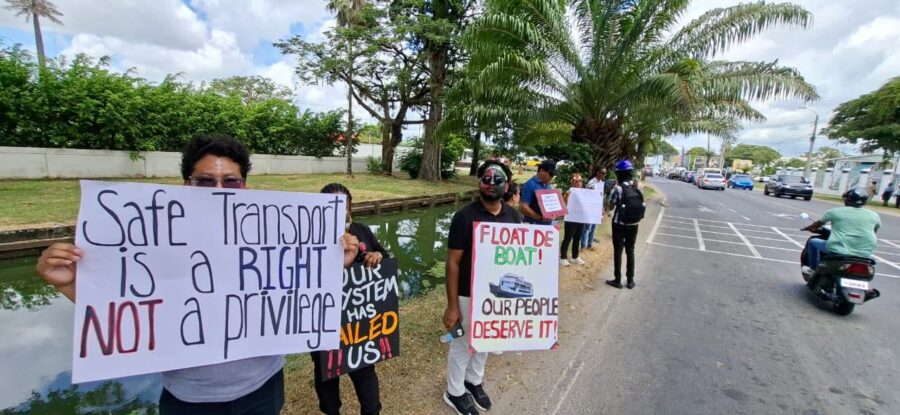
The demand for answers over the July 18 sinking of the MV Barima continues today, with the Amerindian Peoples Association (APA) returning to the streets to demand transparency, accountability and a credible investigation into Guyana’s worst maritime tragedy.
The APA will protest outside the Office of the President from 4:30 p.m. to 6:00 p.m., making clear that the tragedy has not faded from public concern.
“The Amerindian Peoples Association (APA) continues to demand accountability and transparency in the investigations into the MV Barima tragedy. Join us on Wednesday in front of the Office of the President as we show that this is a fight we’re not willing to give up!”
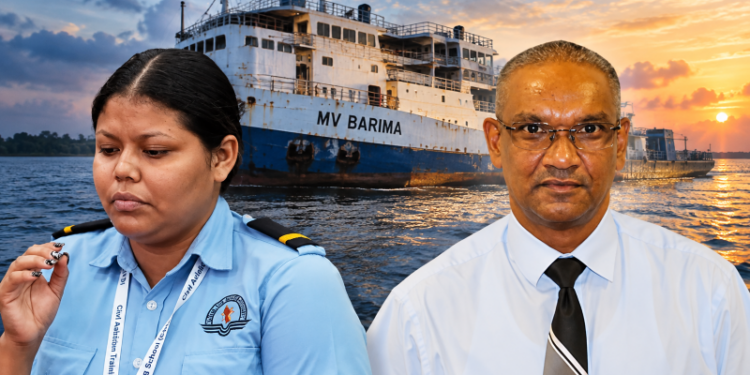
The July 18 disaster claimed 73 lives, while 76 people were rescued and 30 remained unaccounted for, according to figures reported after the sinking. The 87-year-old state-operated vessel was travelling from Georgetown to Port Kaituma in Region One when it capsized.
For Indigenous communities in Region One, the Barima was more than a vessel. It was a vital link between hinterland communities and the rest of Guyana, making questions about its safety, maintenance and operation particularly sensitive.
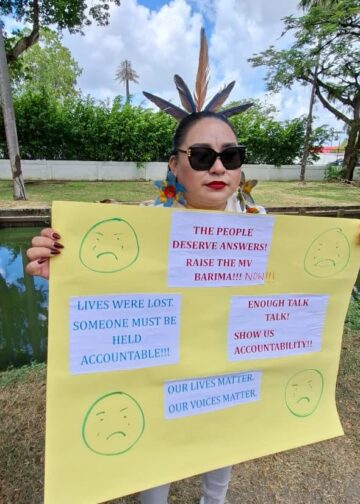
The government has established a partisan Commission of Inquiry, with President Irfaan Ali promising a full examination of the circumstances surrounding the sinking, including possible negligence and institutional failures.
Meanwhile, Captain Kevin Price, Chief Mate Rondell Dwayne Roberts and Transport and Harbours Department Goods Superintendent Delon Granderson have been charged with murder. The Director of Public Prosecutions has said the criminal proceedings can proceed alongside the inquiry.
But the charges and inquiry have not ended the public demand for answers.
Opposition parties have staged protests inside and outside Parliament, while civil society groups, trade unions and citizens have organised demonstrations and vigils. The Joint Opposition has also demanded that the inquiry be transparent, credible and independent.
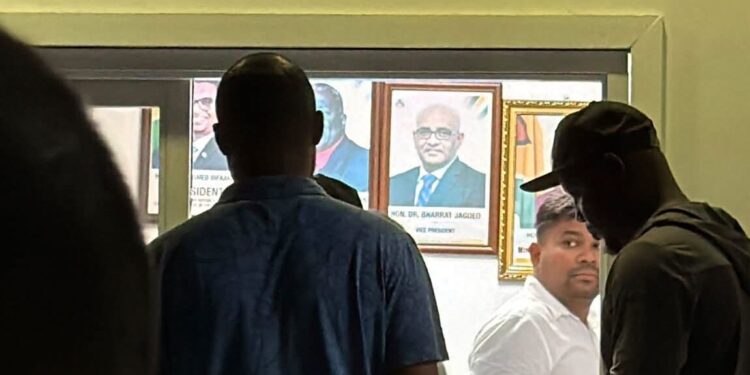
The continued protests are significant in a country often criticised for having a short political attention span. Weeks after the tragedy, however, citizens remain on the streets demanding accountability—a development that stands in sharp contrast to Vice President Bharrat Jagdeo’s controversial dismissal of sections of the Guyanese population as ‘some stupid people.’
For the families of those who died and the communities that depended on the Barima, the questions remain simple: What went wrong? Who was responsible? And why was an 87-year-old vessel allowed to continue carrying passengers on such a critical route?
Today’s APA protest is another reminder that, for many Guyanese, the Barima tragedy is not going away.