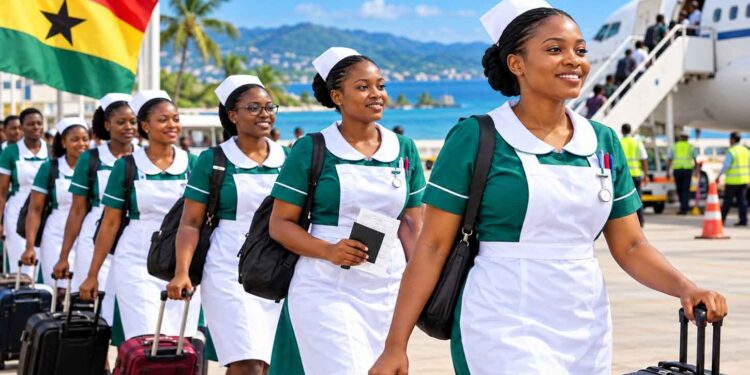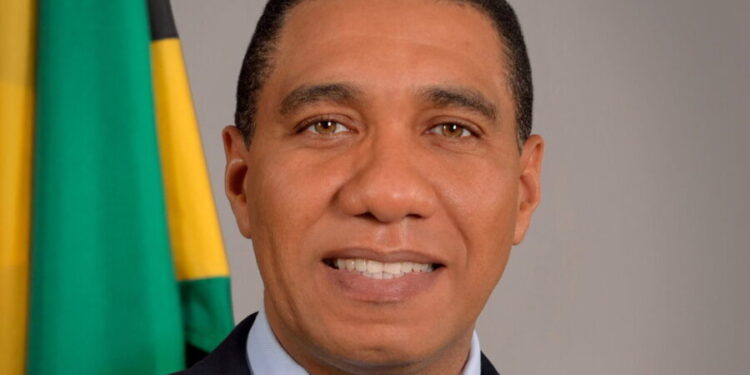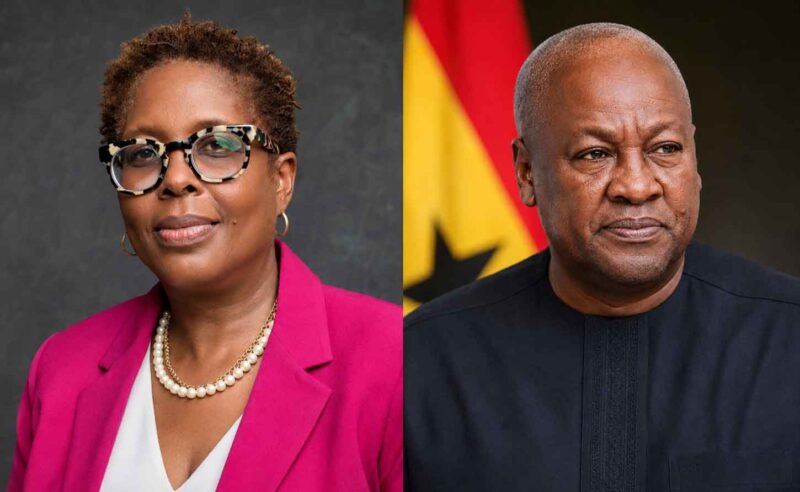
Ghana’s president addresses a special sitting of Parliament today. The Opposition wants to know why Jamaica’s name was missing from the roll of countries that put their signature to the most consequential reparatory-justice resolution in United Nations history.
MONTEGO BAY, JAMAICA |Calvin G. Brown | August 4, 2026 – When Ghana’s President John Dramani Mahama addresses a special sitting of Jamaica’s Parliament today, he will stand before legislators as the man who carried the Caribbean’s oldest grievance into the chamber of the United Nations General Assembly — and won.
He will also stand before a Government that the Opposition says has some explaining to do.
The People’s National Party has seized on Mahama’s four-day state visit — running from August 2 to 5, with the Ghanaian leader a special guest for Jamaica’s Emancipation and Independence commemorations — to press the Holness administration on a question that has quietly nagged at reparations advocates since March: why was Jamaica’s name absent from the roll of countries that co-sponsored the most consequential reparatory-justice resolution in United Nations history?
The vote Jamaica cast, and the signature it withheld
On March 25, 2026 — the International Day of Remembrance of the Victims of Slavery and the Transatlantic Slave Trade — the General Assembly adopted resolution A/RES/80/250, declaring the trafficking of enslaved Africans and racialised chattel enslavement the gravest crime against humanity.
The measure, introduced by Ghana, carried 123 votes in favour, with 52 abstentions and three against: Argentina, Israel and the United States. The United Kingdom and the European Union member states abstained — a familiar retreat by the beneficiaries of the crime.
Mahama himself introduced the text on behalf of the 54-member African Group, the largest regional bloc at the United Nations.
Jamaica voted in favour. So did every CARICOM member state.
But voting and co-sponsoring are not the same act, and PNP Chairman Dr Angela Brown Burke argues the distinction is not clerical. A vote is assent. Co-sponsorship is ownership — a nation’s name written into the historical record before the outcome is known, while the political risk is still live.
By the party’s account, the co-sponsor list ran to African member states alongside Barbados, Belize, Antigua and Barbuda, The Bahamas, Haiti, Saint Kitts and Nevis, Belarus, Brazil, Colombia and Venezuela. Jamaica — the first Caribbean country to establish a National Council on Reparation, the country whose Parliament unanimously resolved to pursue reparations from Britain — was not among them.
Three questions, no answers
Brown Burke is demanding that the Government use the occasion of Mahama’s presence to account for itself, and has placed three questions on the table: what was Jamaica’s level of participation in the discussions, consultations and negotiations preceding the vote; whether any request — formal or informal — was made to the Government, the Prime Minister, any ministry or the National Council on Reparation seeking Jamaica’s sponsorship or co-sponsorship; and if such a request was made, what considerations produced the decision to stay off the list.
The party notes pointedly that at the post-Cabinet press briefing of July 29, the Minister of Foreign Affairs described facts as the strongest antidote to misinformation. The PNP says it agrees — and that the antidote should now be administered.
“A vote is assent. Co-sponsorship is ownership.”
The awkward arithmetic of leadership
What sharpens the discomfort is that Jamaica has been anything but passive elsewhere. Kingston is preparing to petition King Charles III on September 6 — the anniversary of the Zong’s departure from West Africa — asking the monarch, as Jamaica’s head of state, to refer to the Judicial Committee of the Privy Council the question of Britain’s legal obligation to pay reparations.
The National Council on Reparation’s deputy chairman, attorney-at-law Bert Samuels, has publicly credited the March resolution with strengthening that legal position. Prime Minister Andrew Holness has accepted a seat on the High-Level Global Advisory Council on Reparatory Justice.
A government that leans on the resolution in its own pleadings, yet declined to put its name to it, invites the question the PNP is asking.
The Government’s ground
There is a case for the defence, and honesty requires stating it. Co-sponsorship is a diplomatic instrument, not a moral test; states routinely vote for texts they decline to sponsor, for reasons ranging from drafting reservations to litigation strategy.
With a Privy Council petition pending before a court seated in London, Jamaica’s lawyers may well have counselled against any act capable of being characterised as prejudging the very questions being referred.
Notably, Ghana’s Foreign Minister Samuel Okudzeto Ablakwa thanked Jamaica in May for what he called its pivotal support in voting for the resolution — gratitude for the ballot, if not for a signature.
But none of that explanation has come from the Government. The Opposition is asking Kingston to say plainly which of these considerations applied. On the day Ghana’s president speaks in Gordon House, silence is the one answer that will not survive the occasion.
WiredJA