The preliminary inquiry into the murder charges against three Transport and Harbours Department (T&HD) employees begins today at the Charity Magistrate’s Court, as public pressure continues to mount for accountability over the sinking of the MV Barima—the deadliest maritime disaster in Guyana’s history.
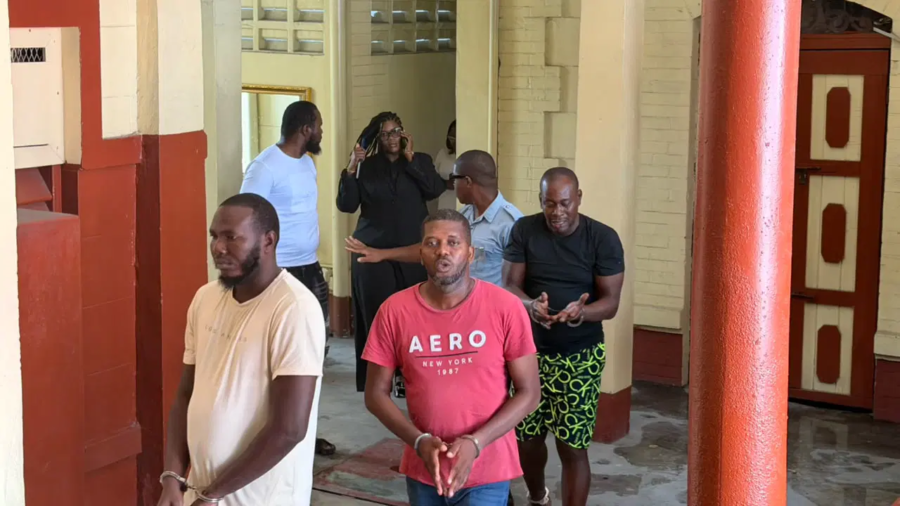
Captain Kevin Price, 40, of Melanie Damishana, East Coast Demerara; Chief Mate Rondell Dwayne Roberts, 42, of Meadow Grove, East Bank Demerara; and Goods Superintendent Delon Granderson, 33, of Fellowship, West Coast Demerara, have been jointly charged with murder in connection with the July 18, 2026 tragedy.
Prosecutors allege that the three men are responsible for the deaths of 66 named victims and other persons unknown, reflecting longstanding concerns that the MV Barima was carrying passengers who were not recorded on the official manifest.
The MV Barima departed Georgetown for Port Kaituma carrying 116 manifested passengers, 17 crew members and approximately 268 tonnes of cargo. From the outset, however, survivors and grieving relatives insisted that additional passengers had boarded the vessel but were never recorded on the official manifest, raising serious questions about passenger accountability. In the aftermath of the tragedy, the Government was forced to acknowledge that the vessel had been overloaded, that it was carrying government cargo, and that the inspection and oversight system had failed—admissions that intensified public demands for accountability over one of Guyana’s worst maritime disasters.
The three men first appeared before Chief Magistrate Judy Latchman on July 28, where they were not required to enter pleas because murder is an indictable offence. They were remanded to prison and remain in custody pending today’s proceedings.
As he was escorted from the Georgetown Magistrates’ Court after being charged, an emotional Price insisted that he should not be held criminally responsible for the tragedy, arguing that the aging 87-year-old MV Barima had long-standing mechanical deficiencies known to the authorities.
Fighting back tears, Price cried out: “I don’t deserve this, Father God. Father God, you answer my prayers this morning, answer my prayers, Father God. I don’t deserve this, please.” He also told reporters and onlookers: “Everybody knows that’s an 87-year-old vessel. The vessel got a lot of issues. The vessel don’t have a radar. The vessel don’t have a search-and-rescue transponder.”
The prosecution has triggered nationwide demonstrations, with protesters arguing that the transport workers are being made scapegoats while those responsible for regulating and overseeing maritime safety have not been held to account. Marches, candlelight vigils and picketing exercises have spread across the country demanding justice for the victims, the recovery of all those who perished, and the release of the three T&HD employees.
Public outrage intensified after the Government initially announced that the wreck would remain on the seabed, a decision widely condemned by grieving families, opposition parties and maritime experts, who argued that critical forensic evidence would remain trapped inside the vessel.
Facing sustained public pressure, and offer by Opposition Leader Azruddin Mohamed to raise the vessel, he Government reversed its position and has since issued an Expression of Interest (EOI) seeking qualified firms to salvage the MV Barima.
Many Guyanese believe the Government’s decision to raise the MV Barima came only after mounting public pressure forced it to reverse its original position of leaving the wreck on the seabed. Families of the victims, protesters and maritime observers have argued that the vessel must be treated as a crime scene so investigators can recover critical evidence and determine the true cause of the catastrophe.
Although the Government has announced a Commission of Inquiry (COI), it has yet to establish a Maritime Casualty Investigation, despite repeated calls from maritime professionals, opposition parties and civil society.
The distinction is significant. A Commission of Inquiry is designed to examine the broader circumstances surrounding an event and recommend reforms. A Maritime Casualty Investigation is a specialised technical investigation conducted under international maritime standards to determine the operational, mechanical, regulatory and human factors that caused the accident. Its purpose is to identify systemic failures and improve maritime safety, independent of criminal proceedings.
As the case opens today, many, including families, say justice will not be achieved by prosecuting the three transport workers alone. They continue to demand that accountability extend to those responsible for vessel inspections, seaworthiness certification, maintenance, regulatory oversight and the decisions that preceded one of the darkest tragedies in Guyana’s maritime history.