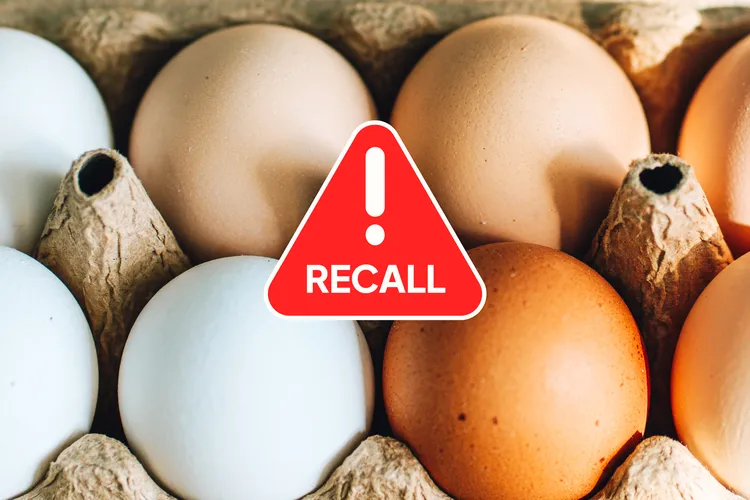
More than 19 million eggs have been recalled across six U.S. states after U.S. health officials warned they may be contaminated with Salmonella Enteritidis, a bacterium that can cause serious foodborne illness.
The recall, announced by the U.S. Food and Drug Administration (FDA) on July 22, affects white and brown eggs produced by Midwest Poultry Services, L.P. and distributed to retailers, foodservice providers and other outlets in Texas, Oklahoma, Louisiana, Arkansas, New Mexico and Mississippi.
Although the FDA said no illnesses had been linked to the recalled eggs at the time of the announcement, consumers are being urged to check their refrigerators and dispose of or return any affected products.
The recalled eggs were sold under several brand names, including Kroger, Simple Truth, Brookshire’s, Country Morning and Sunups, in a variety of carton sizes. The products carry plant codes P-1950 or 840962, Julian date codes 157 through 184, and best-by or sell-by dates ranging from July 20 to August 17, 2026.
According to the FDA, the affected eggs were sold at:
- Kroger stores in Texas and Louisiana.
- Brookshire Grocery stores in Texas, Oklahoma, Arkansas, Louisiana, New Mexico and Mississippi.
- Foodservice providers and retailers in Texas, Oklahoma and Louisiana.
- Other smaller retail outlets.
The agency advised consumers who purchased any of the recalled eggs to either throw them away or return them to the place of purchase for a refund.
Salmonella infection can cause symptoms including fever, nausea, vomiting, stomach cramps and diarrhea, which may be bloody. While most healthy people recover without treatment, the infection can be severe in young children, older adults, pregnant women and people with weakened immune systems.
Consumers who believe they may have eaten contaminated eggs are encouraged to monitor for symptoms and seek medical attention if they become ill.
The FDA continues to monitor the situation and has published a complete list of the recalled egg products, including package sizes, UPC codes and identifying information, to help consumers determine whether products in their homes are affected.


![Short dramas produced by Flytoto Culture &Technology Co draw crowds of visitors at the 23rd China-ASEAN Expo. [Photo provided to CHINA DAILY]](https://villagevoicenews.com/wp-content/uploads/2026/10/6abeef0ce4b06d4a392d76e2-750x375.jpeg)