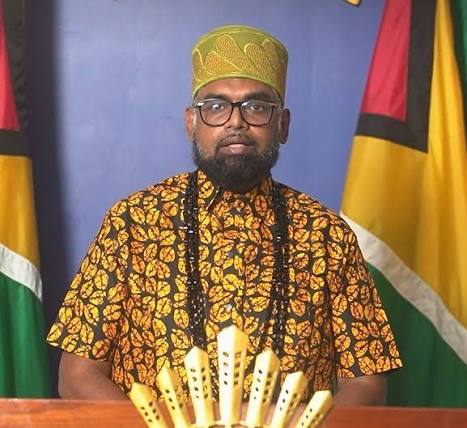
In his Emancipation Day 2026 message, the President paid tribute to the “resistance, resolve, resourcefulness and resilience” of African ancestors who endured the horrors of the transatlantic trade in captive Africans and slavery, saying they never surrendered either their dignity or their determination to be free.
He noted that following Full Emancipation on August 1, 1838, African Guyanese transformed their circumstances through the village movement, education, entrepreneurship, agriculture, mining, public service, sports and the arts, laying the foundation for the development of modern Guyana.
“The greatest honour we can pay to them is in the work we do to create a society rooted in mutual respect, genuine equality, and shared prosperity,” President Ali stated.
He urged Guyanese to continue building “a Guyana that is truly free, truly prosperous, and just for every man, woman, and child,” while encouraging citizens to draw inspiration from the sacrifices of their ancestors by renewing their commitment to peace, freedom and national unity.
The President’s appeal, however, comes as Guyana continues to grapple with deep public concerns over inequality, governance and whether the country’s unprecedented oil wealth is improving the lives of ordinary citizens.
Despite leading the world’s fastest-growing economy, many Guyanese continue to struggle with a rising cost of living, unreliable public services, inadequate healthcare, recurring power outages and widening social disparities. Opposition parties, trade unions and civil society organisations have repeatedly argued that the benefits of the country’s economic boom have not been shared equitably, particularly among vulnerable and historically marginalised communities.
Those concerns have been amplified by the MV Barima tragedy, which claimed the lives of dozens of passengers—many from Indigenous communities in Region One. The sinking of the 87-year-old state-owned ferry has become a symbol of what many Guyanese describe as the disconnect between record national wealth and the condition of essential public services. The disaster has fuelled demands for accountability and renewed scrutiny of government priorities in a country transformed by oil revenues.
For many observers, Emancipation Day is not only a celebration of freedom won through extraordinary sacrifice but also an opportunity to reflect on whether the promises of equality, justice and inclusion have been realised nearly two centuries after emancipation.
While President Ali’s message called for unity and shared prosperity, many Guyanese contend that those principles must be demonstrated through public policy, accountable governance and equitable development—not only commemorated in annual addresses.
Emancipation Day marks the end of African apprenticeship and the achievement of full freedom on August 1, 1838, commemorating the resilience of those who overcame one of history’s greatest injustices. As the nation reflects on that legacy, the observance continues to serve as a reminder that the pursuit of justice, equality and human dignity remains an ongoing responsibility for every generation.