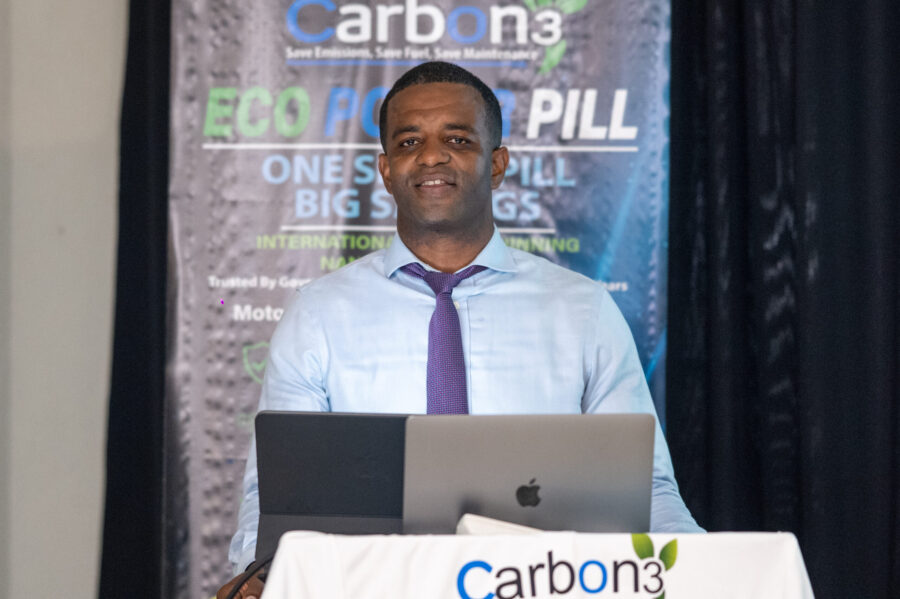
Carbon3 Global, a South Africa-based company specialising in nano-technology fuel conditioning, has officially launched its fuel-saving technology in Guyana following a live demonstration at Duke Lodge, Georgetown on Wednesday.
The technology is designed to reduce diesel, gas and bunker fuel consumption by an average of 14 per cent using existing fuel storage and delivery systems. It requires no new infrastructure, equipment modifications, or capital investment, making it easy for businesses to integrate into their current operations.
Carbon3’s nano-technology fuel conditioner is added directly to vehicle fuel tanks, existing fuel depots, refuelling stations, or vessel bunkers. It is mixed at a ratio of 1:4,000 for diesel Nano 4000 conditioner, and 1:10,000 for bunker and marine fuel (Nano 10000 conditioner). One 200-litre drum of Nano 4000 conditioner treats up to 800,000 litres of diesel, while one drum of Nano 10,000 conditioner treats up to 2 million litres of bunker fuel. The product does not require any engine modifications or changes to existing fuel supply chains.
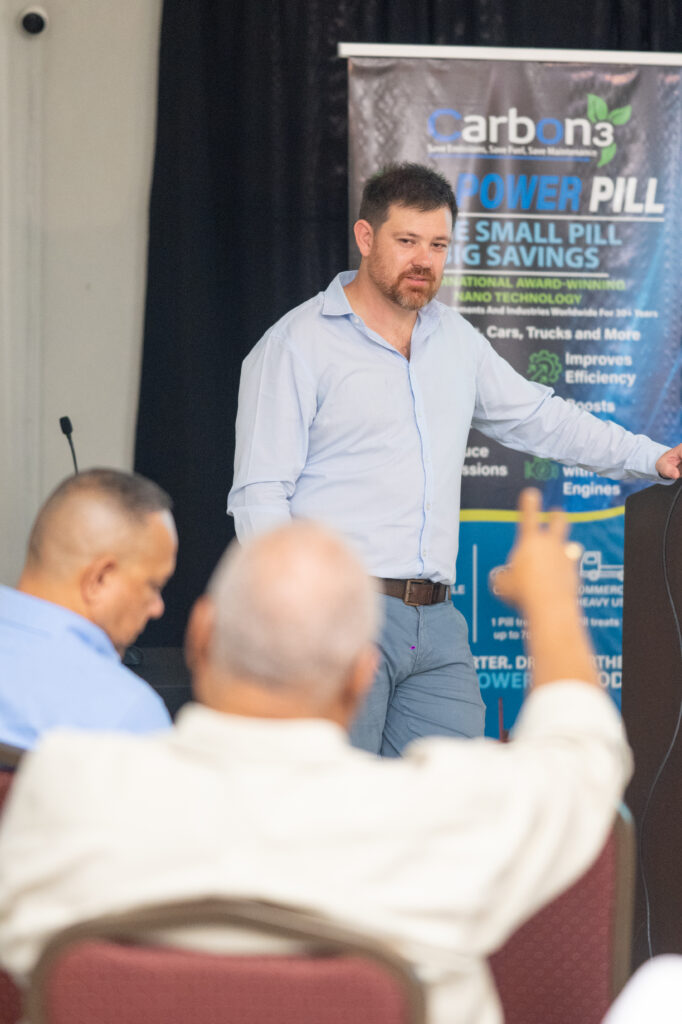
Speaking at the launch, Managing Director of Carbon3 Global, Johan Combrink, said the technology has been independently tested and verified by internationally recognised organisations, including KPMG, TÜV Germany, SGS, Shell, and Southwest Research Institute (SwRI) in Texas. He added that the product is backed by US$20 million in product liability insurance, with no claims recorded during its 30 years of commercial use.
Combrink said the technology offers significant benefits for both consumers and businesses.
“For everyday Guyanese, this means every litre of fuel goes further, helping motorists and businesses reduce fuel costs. At the same time, lower toxic tailpipe emissions contribute to cleaner air, improving public health and reducing the risk of respiratory illnesses in communities, particularly those near busy roads and industrial areas.”
He added, “For businesses and government fleets, the benefits begin from the first treated refill. Lower fuel consumption, reduced engine wear, lower maintenance costs, and longer equipment life all contribute to significant operating cost savings. Industries such as mining, agriculture, power generation, maritime transport, and construction can achieve measurable savings without any upfront investment, except the cost of the product.”
Carbon3’s authorised distributor in Guyana, Rene Hamilton, said the technology also complements Guyana’s growing leadership in climate action. He noted that Guyana has already established itself as a global leader in forest conservation through the Guyana–Norway REDD+ partnership and the Low Carbon Development Strategy (LCDS) 2030. Carbon3 now offers businesses an opportunity to reduce emissions from industrial operations and vehicle fleets while supporting the country’s broader sustainability goals.
According to the company, Carbon3 technology can reduce Scope 1 emissions by between 50 and 65 per cent at treated sites and produces measurement, reporting and verification (MRV) data compatible with internationally recognised carbon credit standards, including the Verified Carbon Standard (VCS) and Gold Standard. This enables participating businesses to document verified emissions reductions that may support future participation in voluntary carbon markets.
“Every litre of fuel saved means more money stays in the pockets of Guyanese businesses and households,” Hamilton said. “At the same time, every treated site contributes to cleaner air for surrounding communities. The technology begins delivering savings from day one while creating opportunities for businesses to generate additional value through improved fuel efficiency and verified emissions reductions.”
Carbon3 Global expects its products to be available on the Guyanese market before the end of the year. The launch and live demonstration attracted representatives from Guyana’s fuel distribution, transportation, mining, maritime, and industrial sectors, including Excel Guyana, GMining, GPL, GuySuCo, Wartsila, Muneshwar, GGMC and several local contractors and executives, reflecting strong interest in innovative technologies that reduce operating costs while supporting environmental sustainability.