Prime Minister Brigadier (Ret’d) Mark Phillips says the Executive has no role in determining judicial appointments or how the courts function, despite Guyana’s judiciary continuing to operate without substantive holders of the offices of Chancellor and Chief Justice.
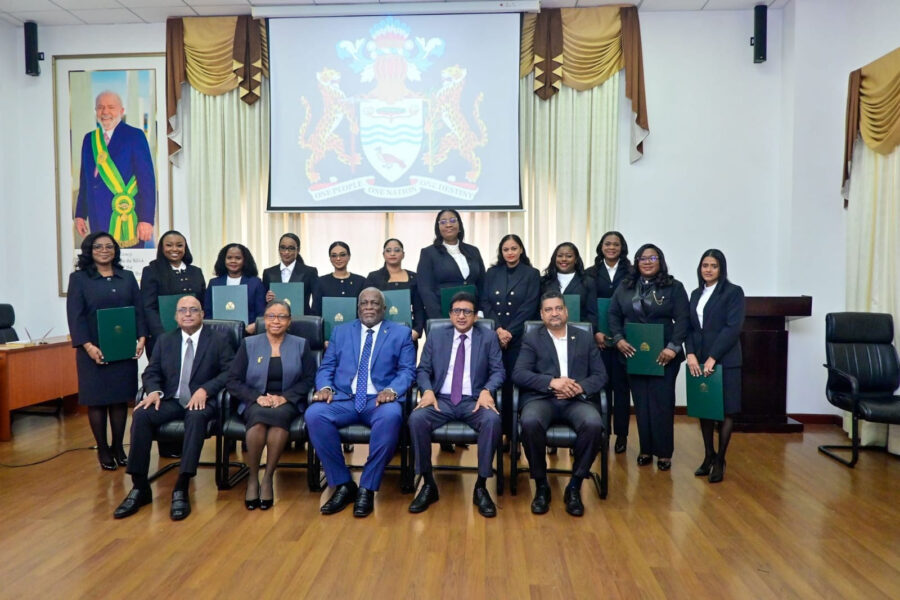
Speaking Wednesday at the swearing-in ceremony for six new magistrates and five Commissioners of Title at the Arthur Chung Conference Centre, Phillips maintained that the constitutional separation of powers remains a fundamental principle of the Government.
“We do not control the judiciary. We do not determine whom they appoint. We do not determine how they function. The judiciary must remain functionally independent. It is a fundamental constitutional concept which we embrace,” the Prime Minister said.
His remarks come as Guyana continues to face longstanding criticism over its failure to appoint a substantive Chancellor of the Judiciary since 2005. The office of Chief Justice has also been held in an acting capacity since 2017. The prolonged vacancies stem primarily from Article 127(1) of the Constitution, which requires the President to obtain the agreement of the Leader of the Opposition before appointing a Chancellor and Chief Justice. Successive administrations and opposition leaders have been unable to reach consensus, leaving the country’s highest judicial offices in a state of prolonged uncertainty.
The continued reliance on acting appointments has attracted sustained criticism from legal scholars, the Bar and the Caribbean Court of Justice (CCJ), Guyana’s final appellate court. The CCJ has repeatedly warned that prolonged acting appointments are incompatible with the principles of judicial independence because they deny judicial office holders the security of tenure that underpins an independent judiciary. The regional court has observed that extended acting appointments create the perception that judges remain dependent on the Executive for confirmation, a situation capable of undermining public confidence in the impartial administration of justice.
Against that reality, Phillips argued that the Executive’s responsibility is to provide the judiciary with the resources necessary to administer justice rather than interfere in its operations.
He said that between 2020 and 2026, the Government had made what he described as the largest investment in the judiciary since Independence.
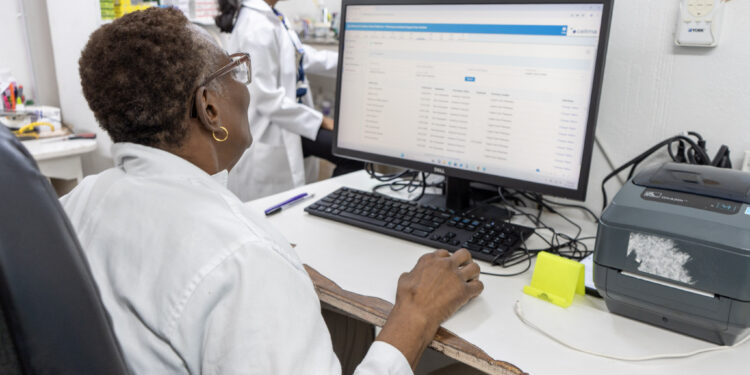
“More courthouses have been built and rehabilitated, litigation is now almost wholly electronic in the High Court, the Court of Appeal and the Caribbean Court of Justice, and the executive has worked with the judiciary to ensure the appointment of the greatest number of judicial officers since independence,” he stated.
Phillips also linked a strong judiciary to economic growth, saying investor confidence depends heavily on the administration of justice.
“Investors, both local and international, are severely influenced by the state of this crucial arm of government. After all, the safety of their investments lies with a competent, independent, and reliable judiciary,” he said.
During the ceremony, Ocelisa Marks, Nikkisha Logan, Jimelle Joseph, Shareefah Parks, Taneisha Saygon and Caressa Henry were sworn in as magistrates. Five Commissioners of Title—Deputy Registrar Alicia Lowenfield, Magistrates Annette Singh, Alisha George and Shivani Lalaram, along with Attorney-at-Law Utieka John—also took their oaths of office.
While the Government continues to point to investments in court infrastructure, digitisation and the appointment of judicial officers, the Caribbean Court of Justice (CCJ) has made clear that acting appointments cannot substitute for resolving one of the judiciary’s most enduring constitutional deficiencies. More than two decades after Guyana last had a substantive Chancellor and nearly a decade after the Chief Justice began serving in an acting capacity, the country’s highest courts remain without permanent leadership, a situation the CCJ has indicated weakens the institutional independence of the judiciary and public