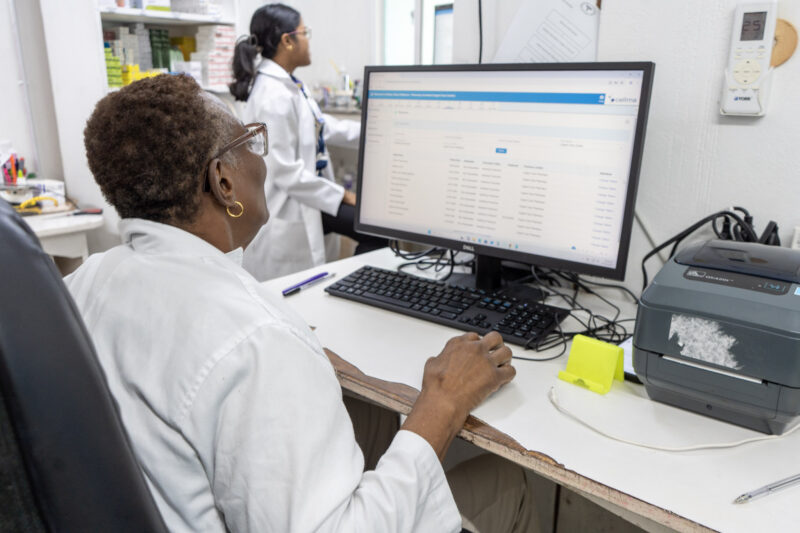
The Georgetown Public Hospital Corporation (GPHC) has begun expanding its electronic health record system to outpatient clinics at its main campus, following the transition of its Urgent Care Centre to a fully paperless system in August.
The move is intended to streamline patient registration, improve record-keeping and make access to medical services more efficient. However, its success will ultimately depend on whether these improvements translate into a better experience for patients navigating Guyana’s public healthcare system.
In a press release, GPHC said its Urgent Care Centre (UCC), formerly the Medical Outpatient Department, went live with the Electronic Health Record (EHR) system on August 22, 2026. It is the second facility under the corporation’s supervision to implement the platform.
As of October 7, the centre had recorded 5,024 patient encounters and registered 3,679 new patients. Doctors, nurses, pharmacists, laboratory personnel and registration staff received training before implementation, and all patient records at the centre are now documented electronically.
Four outpatient clinics next in line
The next phase will cover the Medical, Eye, Paediatrics and Surgical clinics on the ground floor of the GPHC Main Campus.
Mass registration commenced on October 7 at three locations: the Pharmacy Foyer, the Eye Clinic area and the Medical Clinic.
GPHC is urging members of the public who may require services at the hospital to register in advance and bring their national identification for identity verification and accurate record creation.
According to the corporation, patients who register ahead of the clinics’ transition will not have to repeat the registration process when the system goes live. They will instead provide their Medical Record Number (MRN) and proceed directly to triage.
The initiative is expected to reduce repetitive administrative steps and improve the movement of patients through the hospital.
Technology must address wider healthcare challenges
The introduction of electronic records comes against the backdrop of longstanding pressures confronting Guyana’s public healthcare system, including concerns about waiting times, access to specialist services, staffing capacity, the availability of medicines and diagnostic services, and the quality and consistency of care across regions.
For patients, the challenge is not simply registering at a hospital. It is obtaining timely consultations, completing laboratory tests, accessing prescribed medication and receiving appropriate treatment without unnecessary delays or repeated visits.

Electronic records could help clinicians access patient histories more efficiently, reduce reliance on paper files and improve coordination between departments. Accurate records may also help prevent duplication and support continuity of care when patients return for treatment.
However, digitisation alone cannot resolve shortages of trained personnel, inadequate equipment, medicine stock-outs or limited access to specialist care. Its effectiveness will depend on reliable technology, adequate staff training, data protection and the ability of departments to use the system consistently.
GPHC has not provided figures on whether the new system has reduced waiting times or improved clinical outcomes since its introduction.
As the rollout advances, measurable results will be important in determining whether the investment is delivering meaningful benefits to patients.
The hospital’s electronic health record initiative represents a step towards modernising healthcare delivery. The ultimate test, however, will be whether patients experience shorter waits, more coordinated treatment and more reliable access to the services they need.
For Guyanese seeking care in an already pressured public health system, administrative modernisation must be accompanied by improvements in the availability, accessibility and quality of healthcare itself.