One of the defining features of any healthy democracy is the existence of a strong and effective opposition. Governments must never be immune from scrutiny, and those entrusted by the electorate to serve in opposition have both a constitutional right and a democratic obligation to question, investigate, and challenge the actions of those in office.
However, that responsibility carries with it an equally important obligation to distinguish between suspicion and proof, allegation and evidence, political rhetoric and established fact.
Recent public statements concerning President Irfaan Ali’s private farm have generated public interest, headlines and intense political discussion. If there are legitimate concerns regarding compliance with the law, financial disclosures, procurement, environmental approvals, taxation, or any other matter of public interest, those concerns deserve to be examined through the appropriate constitutional and legal mechanisms.
But in a nation governed by the rule of law, accusations alone cannot become convictions in the court of public opinion.
Guyana has travelled this road before.
In the period leading up to the 2015 General and Regional Elections, the then opposition, I included mounted a vigorous campaign centred on allegations of widespread corruption within the incumbent administration. The Guyanese people were repeatedly assured that once in government, evidence would be uncovered, those responsible would be prosecuted, and several ministers and public officials would ultimately face imprisonment.
Upon assuming office, the APNU+AFC Government established institutions and strengthened investigative mechanisms, including the Special Organised Crime Unit (SOCU) and later the State Assets Recovery Agency (SARA), both of which were vested with significant investigative and legal powers to examine allegations of financial crimes, illicit enrichment, and the recovery of state assets.
Yet, despite years of investigations, extensive state resources, and broad statutory authority afforded to these agencies, the sweeping allegations made during the campaign did not culminate in the widespread criminal convictions or imprisonment that many Guyanese had been led to expect. While various investigations were undertaken and some matters proceeded through the courts, the broader political narrative advanced during the campaign was never matched by equivalent judicial outcomes.
This historical experience offers an important lesson for every political actor, regardless of party affiliation.
In a constitutional democracy, allegations may trigger investigations, but they are not substitutes for evidence. Suspicion may justify scrutiny, but it cannot replace proof. Political speeches may influence public opinion, but they cannot replace the rigorous evidentiary standards required by the courts.
That is precisely why every allegation whether made against President Irfaan Ali, a government minister, an opposition parliamentarian, or any public official must ultimately be tested against verifiable facts, documentary evidence, independent investigation, and due process.
The Guyanese people deserve better than a political culture where every accusation is immediately treated as proof of corruption before any competent authority has had the opportunity to investigate the facts. Such an approach weakens public confidence in democratic institutions and risks reducing accountability to little more than political spectacle.
Equally, public office should never shield anyone from legitimate scrutiny. Presidents, ministers, parliamentarians, and public officials must all be held to the highest standards of integrity and transparency. Where credible evidence exists, investigations should proceed professionally, independently, and without fear or favour. If wrongdoing is established by the courts, accountability must follow.
Conversely, where allegations remain unsupported by credible and verifiable evidence, fairness and justice require restraint. The presumption of innocence is not a political convenience; it is a fundamental principle of democratic governance and the rule of law.
Guyana stands at a pivotal stage in its development. Our unprecedented economic transformation presents extraordinary opportunities, but it also demands a higher standard of political leadership. Citizens expect serious debate about improving healthcare, education, public security, constitutional reform, infrastructure, youth employment, economic diversification, and ensuring that the nation’s growing wealth benefits every Guyanese.
An opposition earns credibility not by the volume of its accusations but by the quality of its evidence and the strength of its policy alternatives. Likewise, a government earns public trust through openness, accountability, and a willingness to answer legitimate questions with transparency.
As our democracy continues to mature, political discourse must mature with it. Guyana cannot afford a politics driven by emotion, speculation, suspicion, or innuendo. It must be guided by facts, evidence, and the impartial application of the law.
The lesson from our recent political history is clear: allegations may capture headlines, but only evidence secures convictions. Political narratives may excite supporters, but only facts withstand judicial scrutiny.
The Guyanese people deserve a politics that rises above personalities and embraces principles; one where truth prevails over speculation, institutions prevail over theatrics, and evidence not assumption remains the ultimate measure of accountability.
For in the end, democracy is not strengthened by who shouts the loudest. It is strengthened by who proves their case.
That is the standard worthy of Guyana, and it is the standard to which every political leader, regardless of party, should willingly submit.
Yours respectfully,
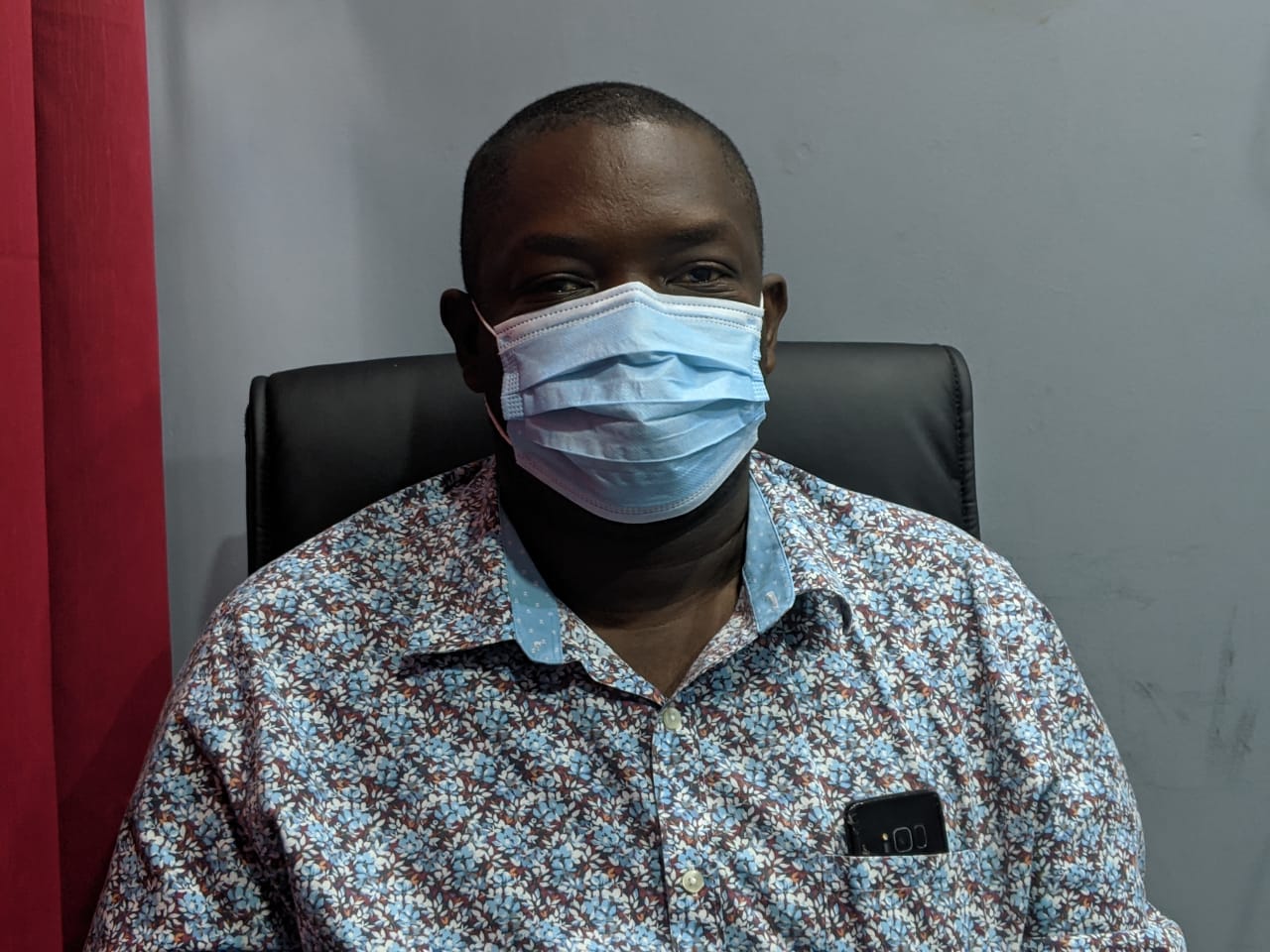
Jermaine Figueira Former Member of Parliament



![File Photo: This screen grab taken from video footage shared by the US Central Command on social media platform X and made available via AFPTV on July 13, 2026 purportedly shows US strikes against Iranian military installations. [Photo/Agencies]](https://villagevoicenews.com/wp-content/uploads/2026/07/6a582de8a310986e1019a893-120x86.jpeg)