The United Nations Development Programme (UNDP), with funding from the European Union, has announced a new round of training aimed at strengthening Guyana’s criminal justice system, even as some citizens continue to express concerns about public confidence in the country’s justice institutions.
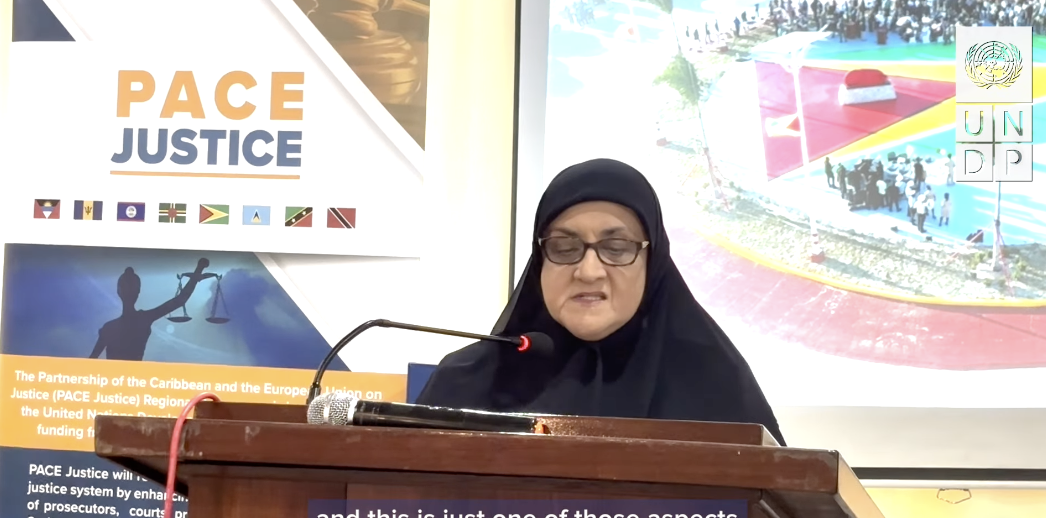
According to the UNDP, approximately 70 justice sector professionals, including prosecutors, investigators and police officers, recently participated in training designed to improve criminal trials, appeals, evidence management, inter-agency coordination and prosecution-ready case preparation.
The initiative forms part of the European Union-funded Partnership of the Caribbean and European Union on Justice (PACE Justice) Project, which seeks to strengthen criminal justice systems and improve access to justice across the region.
Among those participating were Director of Public Prosecutions Shalimar Ali-Hack, SC, Deputy Director of Public Prosecutions Diana O’Brien, Assistant Superintendent Roopnarine Ramnarine and several police inspectors.
According to the UNDP, the training was intended to foster closer collaboration between police and prosecutors, reduce case delays, minimize dismissals resulting from procedural weaknesses, and improve the overall efficiency of the justice system.
The organization also noted that four senior members of the Guyana Police Force recently benefited from regional and international training opportunities, exposing them to advanced investigative techniques and technologies that could strengthen criminal investigations in Guyana.
“With our partners, we’re building a more efficient, responsive, and resilient justice system that upholds the rule of law and delivers better outcomes for the people of Guyana,” the UNDP stated.
The announcement generated discussion on social media, with one anonymous commenter welcoming the involvement of an international organization while expressing skepticism about the current state of Guyana’s justice system.
“I am happy to see this effort by an international agency because Guyana’s justice system has been captured by the PPP,” the commenter wrote, before alleging political influence over prosecutorial decisions and citing several high-profile matters, including the deaths of Adrianna Younge, Courtney Crum-Ewing, the Henry and Singh boys, allegations involving former and current government ministers, and court rulings that the commenter claimed had not been respected by the government.
The commenter concluded by expressing hope that the initiative would improve the justice system but added, “I’m not optimistic.”
The anonymous comments reflect concerns that have been raised at various times by opposition figures, civil society organizations and members of the public regarding judicial independence, prosecutorial discretion and the administration of justice. Government officials have consistently rejected allegations that the justice system is politically directed and maintain that Guyana’s institutions operate independently in accordance with the Constitution and the law.
The UNDP initiative comes at a time when public confidence in justice systems remains an important issue across many developing democracies. International development agencies have increasingly focused on strengthening investigative capacity, prosecutorial effectiveness, judicial efficiency and institutional accountability as key components of good governance and the rule of law.
Whether such technical assistance will translate into greater public confidence in Guyana’s justice system remains to be seen, but the programme represents another investment by international partners in improving the country’s criminal justice institutions.