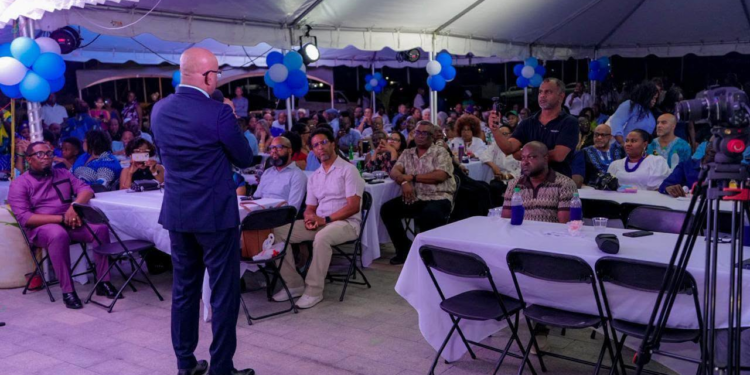
Every few weeks another youth conference arrives. Another summit. Another forum. Another consultation. Another panel discussion about youth empowerment, innovation, leadership, entrepreneurship, or national development. The banners change. The sponsors change. The venue changes. The reality facing most young Guyanese does not.
Many of us attended schools that struggled to provide consistent quality education. We sat in overcrowded classrooms, dealt with teacher shortages, and prepared for examinations with limited resources. We completed certificates, diplomas, degrees, and training programmes only to discover that qualifications alone are no guarantee of opportunity. We enter a labour market where wages often fail to keep pace with the cost of living. Many young people who work full-time still cannot afford a home, cannot afford land, and cannot afford to start a family. Many continue to live with their parents well into adulthood because independence has become economically unrealistic. Yet every few weeks we are invited to sit and listen to another discussion about youth development. Young people do not need another conference. Young people need a better life.
We live in a country that is becoming wealthier by every economic measure, yet many young people feel increasingly locked out of that prosperity. We watch contracts, appointments, scholarships, opportunities, and access circulate among the same circles. We are told that merit matters, but many have concluded that connections matter more. We see the same faces on the stage, the same organizations, the same representatives, and the same carefully selected youth delegates. The same individuals somehow find themselves at every conference, every overseas trip, every consultation, every photograph, and every opportunity while thousands of ordinary young Guyanese remain invisible.
The tragedy is not simply exclusion. The tragedy is that a generation is being taught to confuse obedience with excellence. Too often the young people displayed before us as examples of success are not independent thinkers, innovators, creators, entrepreneurs, or advocates. They are presented as role models precisely because they have mastered the art of compliance. They wait patiently for approval, for invitations, for endorsements, and for instructions about when they may speak and when they must remain silent. That is not leadership. It is dependency. A country cannot succeed if its young people are trained to seek permission before expressing an opinion. A country cannot progress if access to opportunity depends on political comfort rather than talent, initiative, and courage.
Many young people have also learned another uncomfortable lesson. In a profoundly unequal society, power extends far beyond government offices. Ministers, senior officials, and politically connected figures possess enormous influence. Business leaders, sponsors, and institutions understand this reality. Young people know the stories. They know what happens when certain voices become too critical. They know how opportunities disappear, how funding dries up, and how doors quietly close. They know that sponsors can receive phone calls. They know that organizations and individuals can find themselves isolated because they refused to remain silent. Whether these actions are explicit or implied is almost beside the point. The perception exists, and it shapes behaviour. The result is a culture of caution where too many talented young people learn that silence is safer than honesty.
At the same time, the spaces where young people can simply enjoy being young continue to shrink. Recreation facilities remain inadequate. Affordable entertainment options are limited. Cultural life often feels constrained and underdeveloped. The cost of living continues to rise while wages struggle to keep pace. For many young Guyanese, daily life is a constant negotiation between ambition and frustration. We are told to work harder, to be patient, and to trust that our time will come. But patience becomes difficult when young people can clearly see who is advancing and why. It becomes difficult when the rewards of economic growth appear concentrated among those who are already well connected.
The frustration that exists among many young Guyanese is not primarily political. It is economic, social, and generational. It is the frustration of watching a rapidly growing economy while feeling increasingly disconnected from its rewards. It is the frustration of seeing billions of dollars announced while struggling to find meaningful opportunities. It is the frustration of hearing endless speeches about empowerment while confronting barriers that remain firmly in place. That is why so many conferences feel hollow. The discussion inside the conference room often bears little resemblance to the reality outside it.
The problem facing young people is not a lack of dialogue. Guyana has no shortage of speeches, consultations, forums, and summits. What young people lack are pathways. Pathways into business ownership. Pathways into leadership. Pathways into meaningful employment. Pathways into public service. Pathways into innovation. Pathways into prosperity. If those pathways existed, young people would not care how many conferences were held. The uncomfortable truth is that a growing number of young Guyanese no longer want speeches about empowerment. They want empowerment itself. They no longer want conversations about opportunity. They want opportunity.
More than 200,000 young Guyanese will come of voting age by 2030. Many of them have spent their entire lives hearing promises. Many are no longer interested in slogans, branding exercises, carefully managed consultations, or staged displays of youth participation. They are measuring outcomes. They are comparing words with reality. They are asking who benefited, who was excluded, and why. That generation deserves better than another conference. It deserves a future. It deserves an economy that rewards effort, talent, and initiative rather than proximity to power. Most of all, it would be foolish to assume that this generation is not paying attention. The young people of Guyana are watching carefully, and they are beginning to understand that if they want a different future, they may have to demand one.