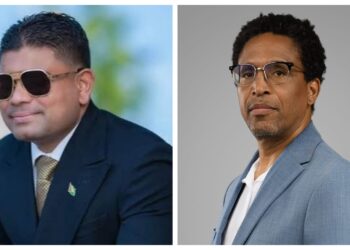
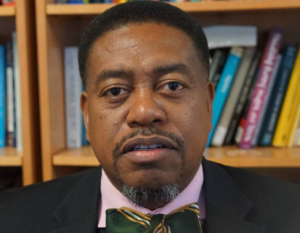
Mathematician, educator and social commentator Dr. Terrence Richard Blackman has warned that Guyana’s fragmented opposition risks undermining democratic accountability at a time when the country is experiencing unprecedented oil wealth, arguing that the challenge facing the nation is no longer one of resources but of governance.
In a lengthy essay published in the Guyana Business Journal, Blackman contends that Guyana’s oil boom has transformed the country’s economic fortunes while simultaneously exposing weaknesses in its political institutions.
At the end of April 2026, Guyana’s Natural Resource Fund (NRF) surpassed US$4 billion for the first time. Offshore oil production, which averaged around 700,000 barrels per day in 2025, has since exceeded 900,000 barrels daily and is projected to climb to approximately 1.25 million barrels per day by the end of this year. Meanwhile, the government’s 2026 budget draws heavily on oil revenues, with almost US$2.5 billion expected to be withdrawn from the NRF to finance public spending.
Against that backdrop, Blackman argues that the defining question of the oil era is not whether Guyana possesses wealth, but whether the country has the democratic safeguards and accountability mechanisms necessary to prevent that wealth from becoming concentrated in the hands of a political few.
“A democracy is not only a procedure for choosing those who govern. It is also a mechanism for keeping them honest,” Blackman wrote, adding that this function depends on the existence of a credible political alternative capable of challenging those in power.
The essay examines the dramatic political shifts that followed the 2025 General and Regional Elections, which fundamentally altered Guyana’s opposition landscape.
The elections saw We Invest in Nationhood (WIN), a party formed only months before the polls, secure 16 seats in the 65-member National Assembly and become the Official Opposition. A Partnership for National Unity (APNU), led by the People’s National Congress Reform (PNCR), secured 12 seats, while the Alliance For Change (AFC), once a coalition partner in government, failed to win parliamentary representation.
Blackman argues that the resulting divisions have weakened the opposition’s ability to function as an effective counterweight to the governing People’s Progressive Party/Civic (PPP/C).
He points to the January standoff in the National Assembly when APNU members walked out rather than support WIN Leader Azzrudin Mohamed as Leader of the Opposition despite his party holding the largest share of opposition seats.
According to Blackman, the effects of the division now extend beyond political rivalry and into the functioning of state institutions.
He notes that disputes surrounding representation on the Guyana Elections Commission (GECOM) have become entangled in the unresolved question of opposition leadership and legitimacy. With Local Government Elections constitutionally due and funding already allocated in the national budget, Blackman warns that opposition fragmentation is beginning to affect the operation of critical democratic institutions.
In recent weeks, political commentators, civil society voices and even some opposition leaders have urged the various opposition parties to unite, arguing that a fragmented opposition could diminish its chances of mounting an effective challenge to the governing PPP/C and holding it accountable.
Drawing on game theory and the work of American economist Thomas Schelling, Blackman argues that Guyana’s opposition has become trapped in what he describes as a “coordination game.”
Under Guyana’s electoral system, opposition parties can remain divided and still retain parliamentary representation, but fragmentation virtually guarantees that none can individually mount a successful challenge for executive power.
“The opposition thus sits in what Thomas Schelling would have recognised at once as a coordination game with two equilibria,” Blackman wrote, arguing that one outcome leaves the governing party dominant indefinitely while the other requires opposition forces to coordinate their efforts.
Rather than advocating another coalition centred on a single political leader, Blackman rejects what he calls the politics of “coronation.”
He argues that previous efforts at opposition unity have failed because they focused first on determining who should lead rather than identifying shared national objectives around which cooperation could be built.
“A unity built as a coronation — a contest over who wears the crown — founders on the very rivalries it was meant to transcend,” he wrote.
Instead, Blackman proposes what he describes as “coordination without coronation”—a model in which opposition parties work together on concrete national projects without first resolving leadership battles.
Among his proposals is the creation of an independent public accounting mechanism to track every dollar entering and leaving the Natural Resource Fund, monitor oil production, scrutinize cost-recovery claims under the Stabroek Block Production Sharing Agreement and provide independent oversight of public spending.
He also argues that opposition-controlled municipalities and regions should become showcases of transparent governance through open procurement, published budgets and measurable development outcomes.
However, the centrepiece of Blackman’s proposal is the establishment of a rule-based citizen’s dividend funded by oil revenues.
Drawing on the example of Alaska’s Permanent Fund Dividend, which has distributed a share of oil wealth directly to residents for more than four decades, Blackman proposes a formula-driven payment that would provide every Guyanese with an equal share of the country’s petroleum wealth.
The proposal is presented as an alternative to government cash-transfer programmes.
While acknowledging that the PPP/C administration’s $100,000 cash grant, Because We Care grants, pension increases and other social transfers have provided tangible benefits to households, Blackman argues that they remain discretionary payments dependent on government policy choices.
“A gift is not a right,” he wrote.
Blackman argued that a citizen’s dividend would create a permanent entitlement that could not be exploited for political gain, guaranteeing every Guyanese a direct and equal share of the country’s oil wealth, regardless of political affiliation, ethnicity, or geographic location.
The commentator ultimately argues that Guyana’s future depends less on opposition personalities and more on whether political actors can build institutions capable of safeguarding the country’s vast resource wealth.
His essay frames the challenge confronting the opposition not as a struggle for leadership but as a test of whether it can develop credible alternatives, strengthen democratic oversight and create mechanisms that ensure oil revenues benefit citizens rather than political interests.
Readers can access Dr. Blackman’s full essay, “On the Two Equilibria of Guyana’s Opposition, and the Development Project that Could Break the Deadlock,” at the Guyana Business Journal for a detailed examination of his proposals and analysis.