Regional leaders will gather in Saint Lucia next month for the Fifty-First Regular Meeting of the Conference of Heads of Government of the Caribbean Community (CARICOM), a summit expected to address a range of pressing regional issues against the backdrop of emerging diplomatic and political tensions within the 15-member bloc.
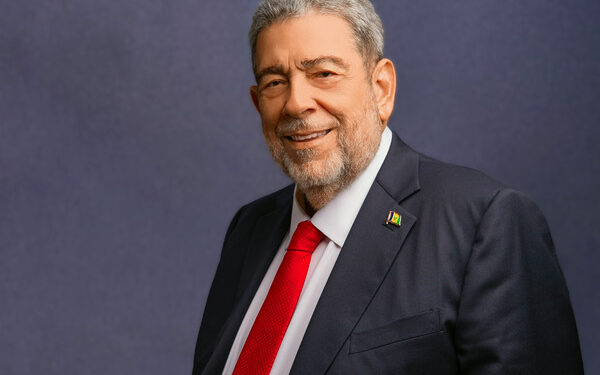
According to the CARICOM Secretariat, the meeting will be held in Gros Islet, Saint Lucia, from July 5-8, 2026, under the chairmanship of Saint Lucia’s Prime Minister Philip J. Pierre, who assumes the rotating CARICOM chairmanship on July 1.
The summit will officially open on July 5 with a ceremony at Sandals Saint Lucia featuring addresses by Prime Minister Pierre, outgoing CARICOM Chairman and Prime Minister of Saint Kitts and Nevis Dr. Terrance Drew, and CARICOM Secretary-General Dr. Carla Barnett.
Heads of Government will then engage in business sessions from July 6-8 before concluding with a closing press conference.
The meeting comes at a significant moment for the regional integration movement as CARICOM grapples with issues ranging from food security, climate change, energy challenges and regional security to questions surrounding Caribbean unity on foreign policy matters.
Founded on July 4, 1973, through the signing of the Treaty of Chaguaramas, CARICOM was established by Barbados, Guyana, Jamaica and Trinidad and Tobago. The regional movement was spearheaded by four leaders widely regarded as the founding fathers of CARICOM: Forbes Burnham of Guyana, Errol Barrow of Barbados, Michael Manley of Jamaica and Dr. Eric Williams of Trinidad and Tobago.
The organisation’s objectives include promoting economic integration and cooperation among member states, coordinating foreign policy, fostering sustainable development, improving standards of living and strengthening the Caribbean’s collective voice in international affairs.
Today, CARICOM comprises Antigua and Barbuda, The Bahamas, Barbados, Belize, Dominica, Grenada, Guyana, Haiti, Jamaica, Montserrat, Saint Kitts and Nevis, Saint Lucia, Saint Vincent and the Grenadines, Suriname, and Trinidad and Tobago. Its associate members are Anguilla, Bermuda, the British Virgin Islands, the Cayman Islands and the Turks and Caicos Islands.
CARICOM also has five Associate Members: Anguilla, Bermuda, British Virgin Islands, Cayman Islands and Turks and Caicos Islands. These territories participate in many of the Community’s programmes, meetings and regional initiatives, although they do not enjoy the same voting rights and decision-making authority as CARICOM’s 15 full member states.
Headquartered at Turkeyen, Greater Georgetown, Guyana, CARICOM remains the Caribbean’s premier regional integration institution.
This year’s summit is expected to unfold amid growing scrutiny of relations between Guyana and Trinidad and Tobago, two of CARICOM’s founding members.
Recent differences have emerged over regional responses to international issues, including the treatment of Cuba by the United States. Trinidad and Tobago was notably absent from a CARICOM statement condemning U.S. measures against Cuba, a country that has long been regarded as one of the Caribbean’s closest allies and strongest supporters, particularly in the fields of healthcare, education and technical cooperation.
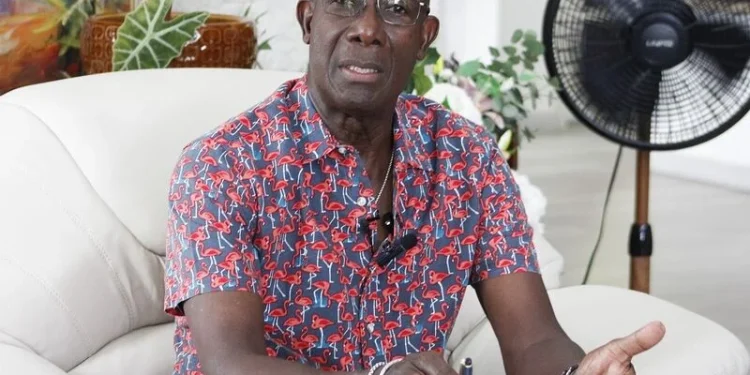
Observers have also pointed to reported differences regarding the future leadership of the CARICOM Secretariat. Trinidad and Tobago’s Prime Minister Kamla Persad-Bissessar has publicly signaled reservations about Secretary-General Dr. Carla Barnett serving another term, a position that has generated discussion within regional diplomatic circles ahead of the summit.
While CARICOM has historically sought to project unity on major regional and international issues, the recent disagreements have highlighted differing national priorities among member states at a time when the region faces increasing geopolitical pressures.
In addition to formal deliberations, Saint Lucia will host the 19th CARICOM Road Run/Walk ahead of the summit’s opening. The event brings together professional and amateur athletes from across the region and promotes health, wellness and the positive role of sport in Caribbean society.
The Saint Lucia summit will test CARICOM’s ability to preserve regional unity amid growing policy disagreements and geopolitical pressures. With tensions surfacing between key member states and critical decisions looming on issues ranging from energy and food security to foreign policy and regional leadership, the meeting could prove one of the most consequential in recent years.