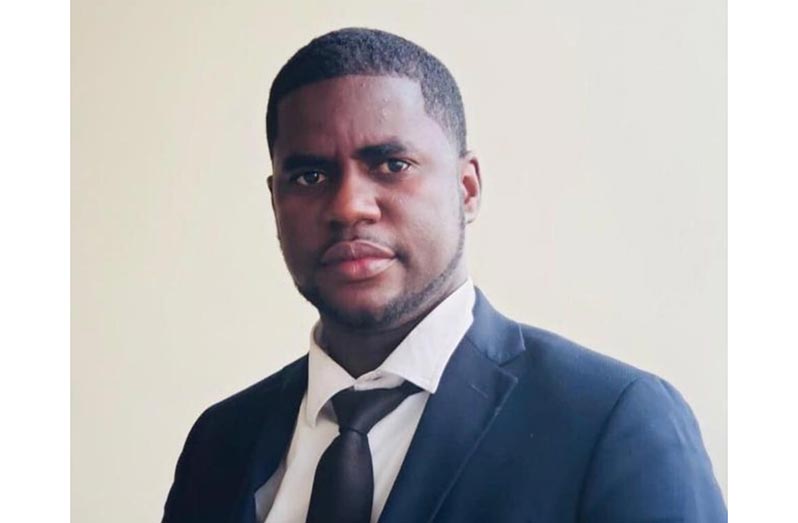
Attorney-at-law Darren Wade, who contested the presidency of the Guyana Bar Association, has questioned the legitimacy of the Association’s recent elections, alleging procedural irregularities, a lack of transparency and government influence while signaling a legal challenge to the outcome.
The challenge follows the election of a new Bar Council at the Association’s 47th Annual General Meeting (AGM), held on May 29 via the Zoom online platform.
In a social media statement issued after the results were announced, Wade alleged that the election process was fundamentally flawed and that objections raised by his team before and during the AGM were ignored.
“The Government packed the Bar elections with its eligible lawyers,” Wade stated. “In blatant disregard of the rules, the returning officer forged ahead, ignoring our objections to this press of Government-aligned voters.“
Wade also complained that requests for critical election information were not addressed before voting took place.
“Since [the week prior], we have demanded the list of electors, the identity of the returning officer, and the established voting modalities, but received nothing,” he said.
According to Wade, his group participated in the elections under protest and is now preparing to challenge the outcome through legal action.
“We participated in this process under protest. These elections are unlawful, and they will see us in court,” he declared.
As debate over the election intensified, Wade subsequently published portions of the Bar Association’s rules governing membership, subscriptions and participation in elections. The rules state that attorneys-at-law engaged in private practice are eligible for membership upon payment of the prescribed annual subscription fees. They also outline the various fee structures and eligibility requirements for members seeking to vote, nominate candidates, contest positions and otherwise participate in the Association’s affairs.
While Wade has publicly questioned the composition of the electorate and the administration of the election, he has not specifically alleged that individual attorneys who voted were ineligible under the Association’s rules. Rather, his concerns appear to centre on transparency, access to information and the handling of objections raised before the election.
The controversy emerged after a slate led by attorney-at-law Arudranauth Gossai defeated a competing slate headed by Wade.
According to a statement issued by the Bar Association, the AGM recorded the highest membership attendance in the organisation’s history. The Association said the turnout reflected the continued engagement, support and interest of members in its affairs.
Gossai, who served as Second Vice-President on the outgoing Council, was elected President. Former President Kamal Ramkarran was elected First Vice-President, while Teni Housty was elected Second Vice-President.
Yashmini Singh was re-elected Secretary, Samuel Glasgow was elected Treasurer and Mohanie Anganoo was elected Assistant Secretary. Other members elected to the Council include Senior Counsel Robin Stoby and Jamela Ali, along with Horatio Edmondson, Rea Harris, Chevy Devonish and Ron Motilall.
The Guyana Bar Association is one of the country’s most influential professional organisations and has frequently spoken on issues relating to constitutional governance, judicial independence, legal reform and the rule of law. As a result, questions about the integrity of its own electoral process are likely to attract significant attention within the legal fraternity and the wider public.
Neither the newly elected Council nor Returning Officer Rajendra Jaigobin has publicly responded to Wade’s allegations. If court proceedings are initiated, the dispute could place the Bar Association’s electoral procedures and governance framework under judicial scrutiny.
![Haitians deported from the US land in Cap-Haitien, Haiti, on August 27 [Ketlain Difficile/AP Photo]](https://villagevoicenews.com/wp-content/uploads/2026/09/haiti-750x375.webp)