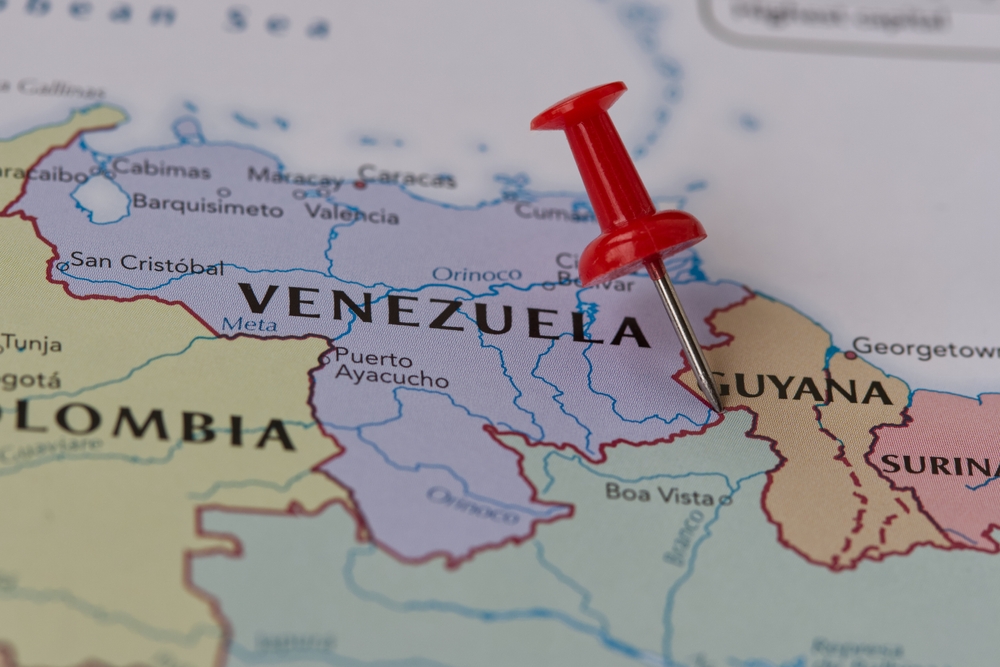
By Mark DaCosta- The People’s National Congress Reform (PNCR) has taken aim at the People’s Progressive Party/Civic (PPP/C) for its apparent failure to develop a coherent strategy regarding the Guyana/Venezuela territorial controversy. Dated May 5, 2026, the PNCR statement underscores a growing frustration with President Irfaan Ali’s government, asserting that its diplomatic missteps have left the nation vulnerable in an increasingly challenging geopolitical landscape.
The PNCR has explicitly commended the David Granger-led A Partnership for National Unity and Alliance for Change (APNU +AFC) coalition government for its proactive approach, particularly for bringing the territorial controversy before the International Court of Justice (ICJ). By contrasting past efforts with the current administration’s lackluster initiatives, the opposition party highlights a profound sense of disillusionment with the PPP’s foreign policy. The PNCR’s critique revolves around the notion that President Ali’s administration exhibits an alarming absence of foresight and a fundamental lack of preparation regarding foreign relations and national security.
In a previous April 30 statement, the PNCR articulated its concerns over the actions — or rather inactions — of the PPP government. According to the PNCR, a recent letter from President Ali to the Secretary-General of CARICOM was a mere reactive measure, necessitated by a substantial policy vacuum. The opposition party condemned this shift to what they described as “reactive letters,” articulating that President Ali’s administration has ignored previous warnings about the need for a more assertive foreign policy. They have expressed that “Guyana needed to take action not only to defend its territorial integrity but also its place in the region,” a position these leaders feel has not been adequately addressed by the PPP.
The PNCR is keen to remind citizens that the case before the ICJ reinforces Guyana’s legitimate claim to its territory, asserting that “Essequibo is Guyana.” They argue that Venezuela’s assertions lack credibility, highlighting the absence of historical or legal evidence to substantiate their claims. As they underscore the significance of this case, they express concern that the government is not prepared for the repercussions of Venezuela’s stated refusal to acknowledge the ICJ’s ruling. This reflects a deep-seated anxiety about the enduring threat posed by Venezuela, which the PNCR categorises as an adversary intent on usurping Guyanese territory.
Moreover, the opposition party emphasises the necessity of economic diplomacy as a vital tool in combating Venezuelan ambitions. They argue that the current administration has neglected to foster relations within CARICOM states that could reinforce regional support against external threats. The PNCR asserts that previous opportunities for economic partnerships and initiatives have been overlooked, urging the PPP to act decisively to engage CARICOM nations in mutual cooperation. They ask, “Why has the PPP not deliberately created similar opportunities for CARICOM States to build deeper economic partnership and regional loyalty?”
As the PNCR outlines its position, they take aim at the current government’s lack of vision and perceived incompetence, labelling it a “national security risk.” They recount how the PPP’s negligence in diplomacy could have dire consequences for the nation’s territorial integrity and international standing.
In a broader context, the PNCR repeatedly warns that if the government’s present foreign policy direction continues, Guyana’s long-term interests are at risk. With economic developments that should theoretically strengthen our nation, a more cohesive and assertive foreign policy is essential to safeguard against the ambitions of adversarial states.
In an era where foreign relations dictate the security and prosperity of states, the PNCR calls upon the government to abandon its current course and embrace a robust strategy that prioritises national welfare.