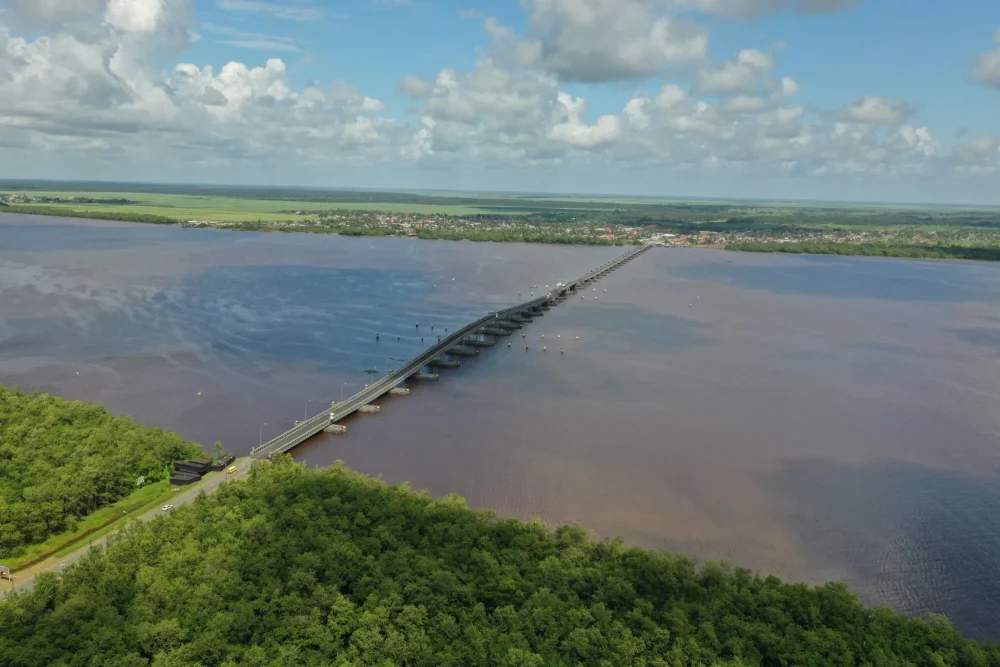
By Mark DaCosta- The ongoing plans for the construction of a new Berbice River Bridge have raised significant concerns regarding the future of New Amsterdam, a town that has long been a vital hub for commerce and community activities in Berbice. According to the APNU Coalition, the approach adopted by the current People’s Progressive Party (PPP) government may very well lead to the marginalisation of this historic regional capital, with profound negative economic and social repercussions.
APNU says that while modern infrastructure is essential for progress, the proposed development seems to intentionally bypass New Amsterdam. This strategy could result in transforming a once-thriving commercial centre into a peripheral and inconsequential place, thereby threatening its vital economic activity.
The coalition highlights the potential effects of redirection of traffic and commerce away from New Amsterdam, warning that this could lead directly to the economic stagnation experienced in other areas where similar infrastructures have been constructed without thoughtful urban revitalisation plans.
Plans for the new high-span bridge, designed to integrate wider trade corridors such as roads, have been unveiled alongside ambitious highway expansions. APNU fears that these developments signal the purposeful migration of economic activity from New Amsterdam to Palmyra, which boasts a predominantly East-Indian population.
This concentration of development raises alarm bells about the long-term viability of New Amsterdam’s businesses and livelihood, as the flow of traffic and customers could diminish significantly. In other words, The APNU Coalition fears that reduced traffic through New Amsterdam could result in transforming it decreased economic activity and hardship for small businesses that depend on people passing through.
In the words of APNU, “Our Concern is that New Amsterdam, the regional capital and a historic commercial centre, stands to lose vital economic activity as traffic is redirected.” The coalition argues that a decision-making process that overlooks the interests of New Amsterdam could result in the loss of revenue and opportunities for local businesses, vendors, transport operators, and service providers.
Furthermore, APNU highlights a lack of transparency surrounding the project. “There has been insufficient public disclosure of the final alignment, access roads, and mitigation plans for New Amsterdam,” emphasising the necessity for governmental engagement with local residents and stakeholders. Without meaningful consultations, the voices of those who are directly affected by these developments risk being ignored.
The coalition’s stance is clear: infrastructure development should unify rather than displace. They are calling for transparency and accountability from the government to ensure that the bridge and associated infrastructure contribute to collective growth. They urge the government to “publish the full route alignment and traffic impact assessments for the new bridge and highway system“, as well as to develop a strategic economic plan for New Amsterdam that focuses on incentives for business retention and growth.
There is a palpable tension between the aspirations for new development and the needs of existing communities, particularly those of New Amsterdam. The construction of the bridge, while promising improved connectivity, could inadvertently or deliberately sideline a town that has historically played a crucial role in the region’s economic landscape.
As APNU rightly points out, “We believe infrastructure must unite development, not displace it.” The coalition worries that the heavy investment in Palmyra could create an imbalance in economic growth, diverting resources and opportunities towards newly rich enclaves while leaving New Amsterdam’s residents struggling to adapt.
In an effort to mitigate the potential negative repercussions of this ambitious project, APNU has urged the government to engage in “structured consultations with residents, businesses, and local authorities before final decisions are implemented.” This call for engagement is not just about transparency; it is about ensuring that the unique needs of New Amsterdam are recognised and addressed, fostering an environment where both new and existing developments can thrive together.
The future of our nation hinges not only on the ambitious plans of the government but also on how inclusively these plans are executed. The APNU Coalition continues to advocate for an approach that prioritises the voices and needs of communities like New Amsterdam, as they navigate the complex dynamics of growth amidst modernisation. Only through balanced, people-centred planning can we ensure a future that emphasises unity and collaboration rather than division and neglect.