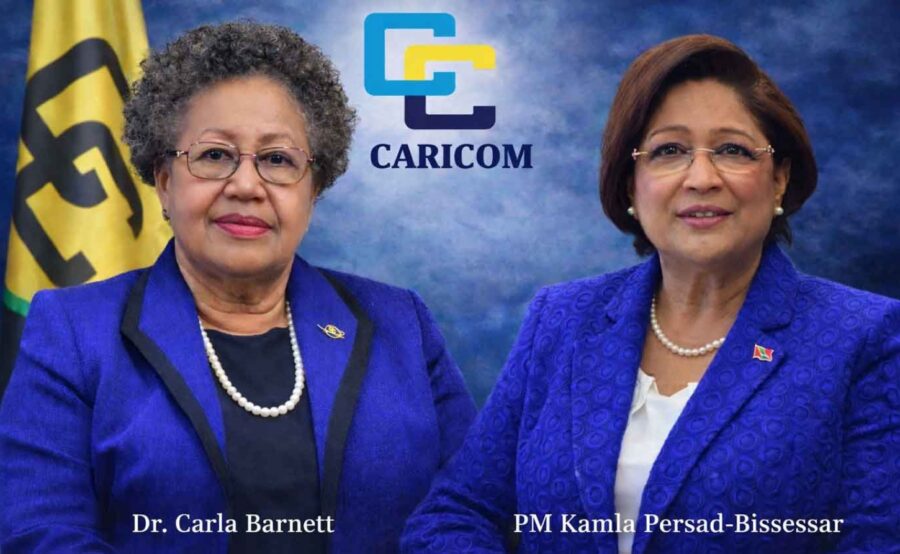
By Calvin G. Brown (WiredJA) — When Trinidad and Tobago Prime Minister Kamla Persad-Bissessar stepped to the podium at the Fiftieth Regular Meeting of the Conference of Heads of Government in Basseterre, St. Kitts and Nevis, in February, she did not come bearing olive branches.
By most accounts, she came bearing grievances — publicly airing what she characterised as an institutional complaint against the CARICOM Secretariat, in a setting usually reserved for the discreet diplomacy of regional solidarity.
What followed in the weeks after would expose a breathtaking contradiction at the heart of Port of Spain’s position: a government that telegraphed its opposition to CARICOM Secretary General Dr. Carla Barnett’s reappointment well in advance of the vote, then turned around and cried foul when the vote proceeded without them.
The facts, as they are now publicly established, are not particularly flattering to the Persad-Bissessar administration.

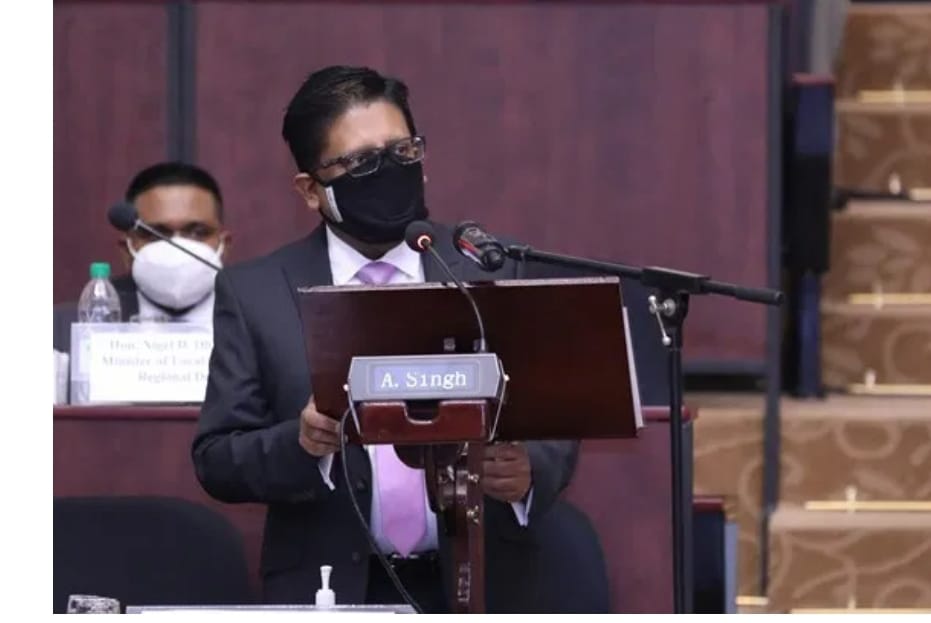
Trinidad and Tobago’s CARICOM and Foreign Affairs Minister Sean Sobers has insisted that his country was “deliberately uninvited” to the leaders’ retreat on Nevis where the reappointment was confirmed, and that three letters of protest sent to the relevant authorities have been met with total silence.
He invoked Article 11.2 of the Revised Treaty of Chaguaramas, which allows a head of government to designate a representative, and Article 27, which grants that representative full voting rights. On the surface, it is a coherent legal argument.
But the surface, as any seasoned journalist in this region knows, is rarely where the full story lives.
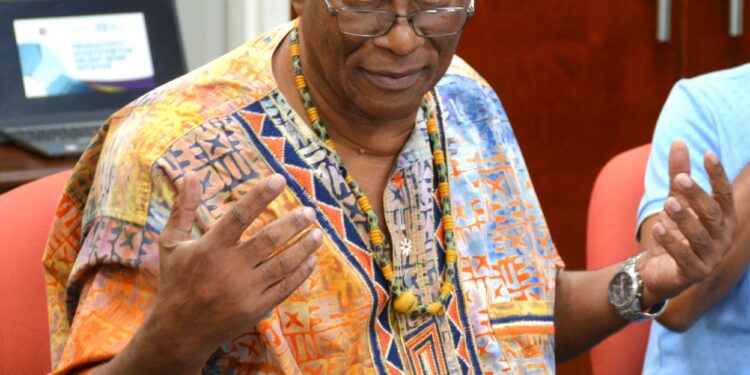
Enter Dr. Ralph Gonsalves — attorney, former Prime Minister of St. Vincent and the Grenadines for nearly a quarter century, CARICOM insider, and a man who has sat in more of those caucus rooms than most.
Speaking on his party’s radio station on Wednesday, Gonsalves, who until recently was CARICOM’s longest serving head of government, did not merely express scepticism about Trinidad’s position.
He methodically dismantled it, clause by clause, with the measured precision of a man who not only helped write the rules but took the Caribbean Community Act to his own parliament for domestic ratification.
His first and most devastating point concerned Minister Sobers himself. According to Gonsalves, CARICOM Chairman and St. Kitts and Nevis Prime Minister Dr. Terrance Drew had personally travelled to Port of Spain to court Persad-Bissessar’s attendance at the summit — a remarkable act of diplomatic deference to a leader who had, by all accounts, been publicly “bashing CARICOM.”
Both leaders subsequently described those discussions as “very fruitful,” and Persad-Bissessar committed publicly to attending. She did. She even delivered an opening address — one that, according to Gonsalves, “undermined so many things in CARICOM.”
Then came the retreat on Nevis, the island component of the twin-island Federation, accessible by a boat ride that takes approximately five minutes. Persad-Bissessar would not be making the crossing. Her designated replacement? Minister Sobers. His reason for declining? Seasickness.
One does not need to be a maritime lawyer to appreciate the absurdity of this position. Gonsalves, to his credit, stated it plainly: “You ever take a boat? It’s five minutes between St. Kitts and Nevis. I’ve taken that trip many, many times. So he absented himself, and nobody else was nominated who wouldn’t get sick to attend the meeting.”
No replacement was sent. No alternative delegation head was named. The government of a country that contributes 22 per cent of CARICOM’s annual budget — a figure Sobers has cited with considerable indignation — sent nobody to a caucus where the Secretary General’s future was to be decided. And then, having voluntarily vacated the field, it declared the result illegitimate.
Gonsalves went further, turning to the treaty itself with the authority of a signatory. He cited Section 28 on voting procedures: decisions are taken by affirmative vote, but crucially, paragraph two provides that abstentions do not impair a decision’s validity provided three-quarters of the membership vote in favour. Paragraph three goes even further — omission by a member state from the vote shall itself be deemed an abstention.
In plain language: if you don’t show up, the vote is still valid. The Chaguaramas Treaty, the very document Trinidad and Tobago is waving as its shield, appears to contain the sword that cuts its own argument down.
Trinidad’s invocation of Article 24 — which governs the Office of the Secretary General — has also been questioned. Gonsalves noted pointedly that Article 24 sets out the functions of the Secretary General; it does not govern the voting procedures by which that appointment is made. Those procedures are addressed elsewhere in the treaty, and they appear to have been followed.
What compounds Port of Spain’s credibility problem is the broader context. This dispute did not emerge in a vacuum. Persad-Bissessar arrived in Basseterre already on record as a critic of the Secretariat and the regional integration process. The CARICOM chairman had essentially made a diplomatic house call to keep her at the table. She attended, she spoke, she left before the retreat — and her minister declined to cross a five-minute stretch of Caribbean water in her stead.
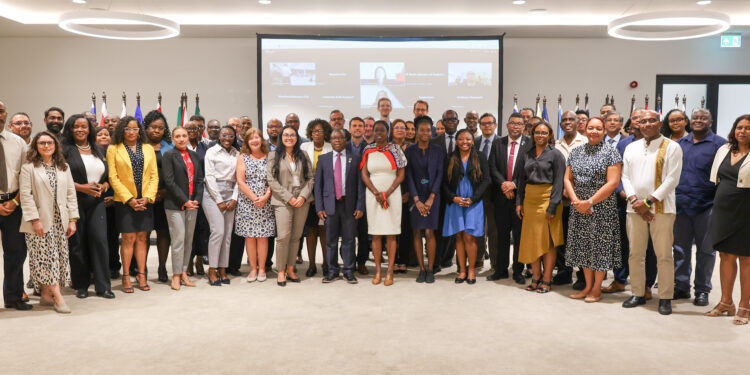
The reappointment of Dr. Barnett then proceeded by the required majority, with the prime ministers of The Bahamas and Antigua and Barbuda also absent but their ministers — Foreign Minister E.P. Chet Greene and Foreign Minister Fred Mitchell — reportedly in attendance as their governments’ authorised representatives.
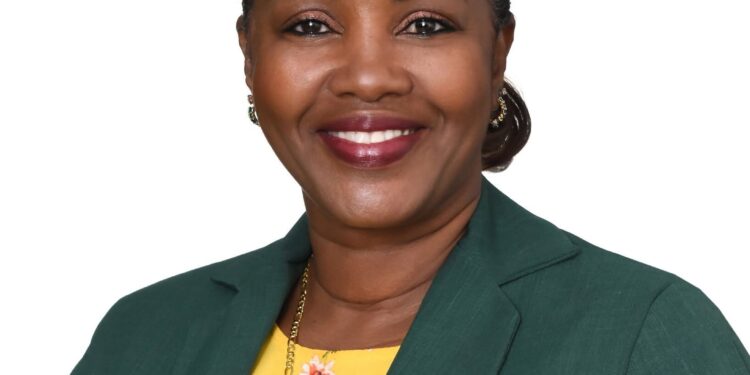
Dr. Barnett, for her part, has been placed in an invidious position of none of her own making. As Gonsalves observed: “It is unfortunate that the government of Trinidad and Tobago has put such a distinguished public servant like Dr. Carla Barnett in this embarrassing position.”
The Secretary General — the eighth in CARICOM’s history, appointed by unanimous consent in 2021 — now finds her second term contested not on the merits of her stewardship, but on the procedural grievances of a member state that, by the available evidence, opted out of the very process that would determine it.
Persad-Bissessar has warned that the CARICOM Secretariat should “expect no quarter” from her government until the matter is transparently resolved. She has called for an emergency meeting of the Community Council and floated the prospect of fresh elections for the position.
Gonsalves, however, has signalled that CARICOM heads may themselves convene to address the controversy — and that if the required majority holds firm, the reappointment will stand.
The Prime Minister of Trinidad and Tobago is, of course, entitled to fight for her country’s interests within the framework of the Treaty. She is entitled to demand procedural transparency and accountability. What she is not entitled to do — and what the record suggests she is doing — is manufacture a procedural crisis to reverse a decision her government’s own inaction allowed to be made without it.
The Revised Treaty of Chaguaramas is not a document that rewards selective engagement. You cannot absent yourself from a vote, cite seasickness as justification, send no replacement, and then invoke treaty protections to nullify the outcome. The Caribbean people, and CARICOM’s institutional integrity, deserve better than that.
Dr. Barnett has been reappointed. The treaty, it would appear, says so. And all the political thunder from Port of Spain may ultimately amount to little more than noise across a very short stretch of water.