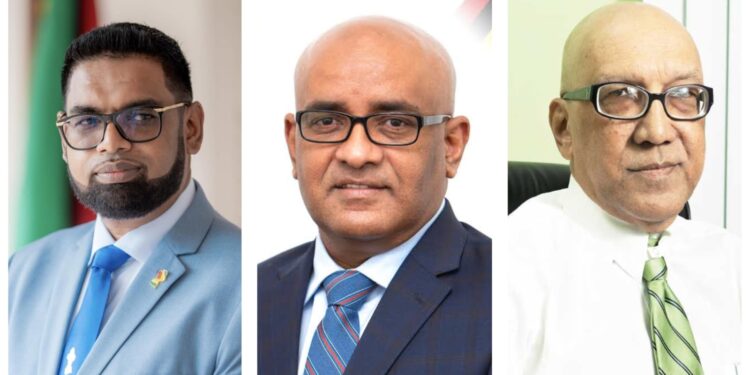
The opposition party We Invest in Nationhood (WIN), which holds 16 seats—the largest share of the opposition’s 29 seats in Guyana’s 65-member National Assembly—has issued a sharp public statement alleging financial improprieties and internal irregularities at the Office of the Auditor General, prompting renewed scrutiny of public accountability mechanisms.
In a social media post referencing the 2025 audit cycle and 2026 budget allocations, the party—led by billionaire businessman and Opposition Leader Azruddin Mohamed—claimed:
“$108M under transport and travel at the Office of the Auditor General is where monies are siphoned off from. More corruption under the PPP.”
WIN further alleged:
“Minister Ashni Singh, the people of Guyana are watching as the Office of the Auditor General transforms into a family business.”
The party contended that $108 million allocated for transport and travel in the 2026 national budget was being misused, stating:
“The level of nepotism and corruption within this office has reached a breaking point, as $108 million was allocated in the 2026 budget to transport and travel, for the enjoyment of the friends and family of Ashni’s wife, Geeta Singh.”
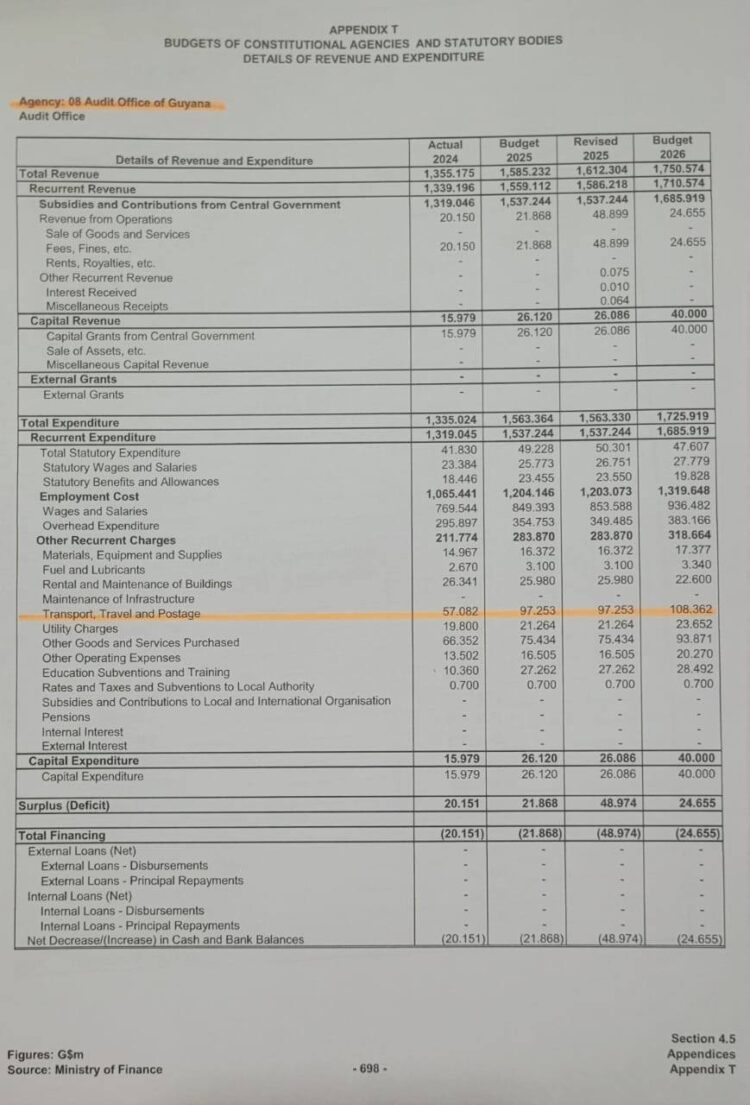
Per the data (below) The ‘Transportation, Travel and Postage’ allocation increased from $57.086 million in 2024 to $108.362 million in 2026, representing an approximate 89.8% increase, nearly doubling over the period.
The post also referenced an alleged relationship within the public sector, stating that Geeta Singh is reportedly the wife of Finance Minister Dr. Ashni Singh and serves as an Audit Director within the Office of the Auditor General, raising concerns from the party about potential conflicts of interest. These claims have not been independently verified.
Additionally, the post raised concerns about staffing and compensation practices within the agency, alleging disparities in overtime approvals:
“Of the $936 million allocated for employment costs, staff reported that Mr. Arun Gopaul receives overtime approval year-round, while others are limited to six weeks to two months.”
WIN also made claims regarding the use of travel funds and internal pressure on staff, asserting:
“The personal travel fund being used by Ms. Geeta Singh and her loyalists includes weekend trips to Morocubai and Aruba. A staff member was reportedly pressured to sign off on payments that were evidently not work-related.”
The statement questioned the purpose of some outreach trips:
“Why Morocubai? Many times, they go to far-flung Amerindian communities under the guise of spreading awareness on the work of the Audit Office, when their presence and awareness is most needed in ministries and government agencies in the city.”
Further, the party alleged interference in audit work, stating:
“When the Head of Forensic Audit, Mr. K. Spinger, tried to do his job by investigating the Hosororo School, he was told by Mr. Sharma to ‘know his place,’ in other words, keep quiet.”
WIN concluded:
“It is clear that accountability is being traded for political loyalty. WIN calls for an immediate and independent investigation.”
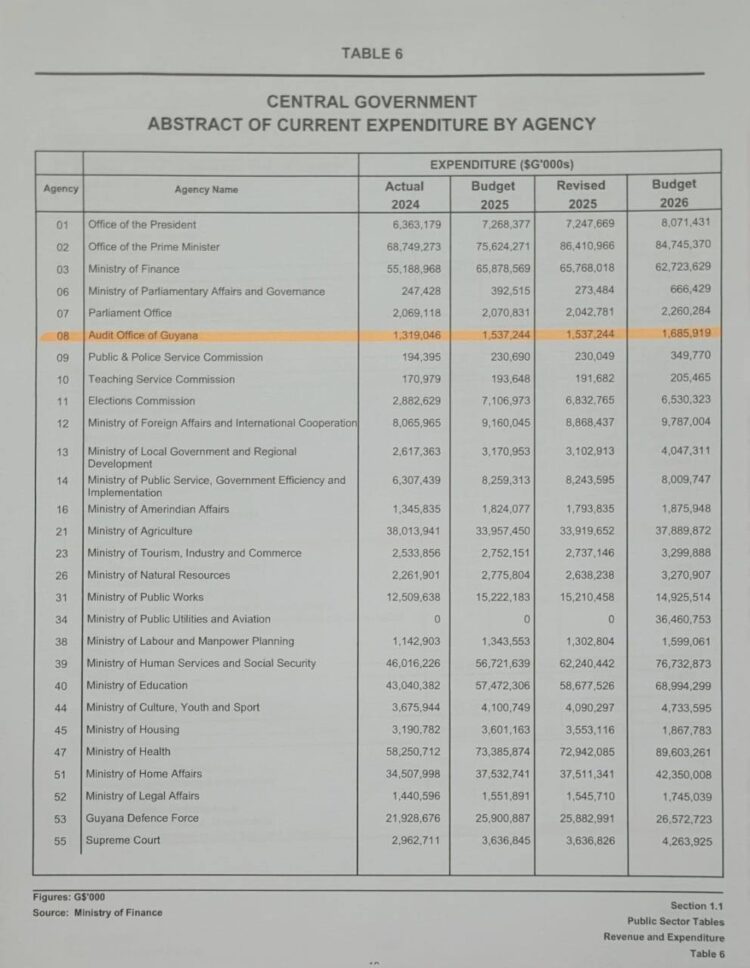
The Auditor General’s Office saw expenditure rise from $1,319.046 million in 2024 to $1,685.919 million in 2026, reflecting an approximate 27.8% increase over the period.
No Official Response Yet
As of publication, there has been no public response from Finance Minister Dr. Ashni Singh, the Office of the Auditor General, or any of the individuals named in the allegations.
Broader Accountability Questions
The allegations, if proven, would raise serious concerns about governance, transparency, and the integrity of public financial oversight institutions—particularly the Office of the Auditor General, which is constitutionally mandated to scrutinize government spending.
Guyana’s public accountability framework depends heavily on the independence and credibility of that office. Allegations of political interference, nepotism, or misuse of funds—especially within such an institution—carry significant implications for public trust.
At the same time, analysts caution that claims circulating in the political arena, particularly via social media, require careful verification. Calls for an independent probe, as urged by WIN, may intensify pressure on authorities to address the matter publicly.
Call for Investigation
Amid escalating tensions over transparency and public accountability, WIN’s call for “an immediate and independent investigation” sharpens the national spotlight on one of the country’s most critical oversight institutions. Whether these allegations withstand scrutiny or collapse under verification, the moment demands clarity, credibility, and decisive action—because public trust in the stewardship of state resources, and the integrity of those tasked with guarding it, now hangs in the balance.